
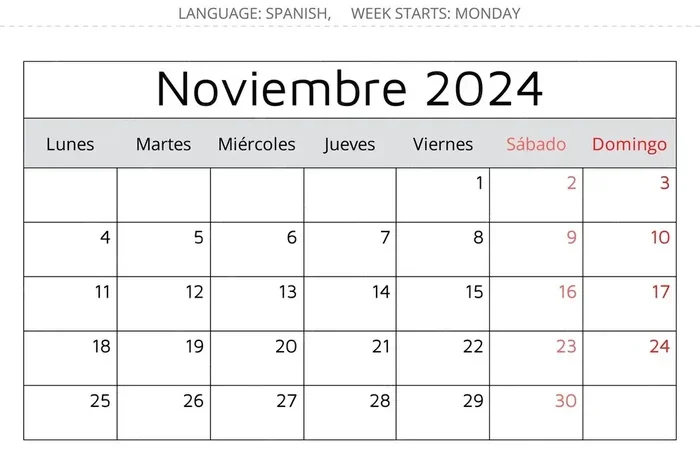
Learning how to say November in Spanish is simple and fun. The word is noviembre, and with the right pronunciation guide, you can sound just like a native speaker. This article covers everything from phonetic spelling to cultural context, so you can use the word with confidence in real conversations.
If you have ever searched how to say November in Spanish, you are in the right place. This guide will walk you through everything you need to know about the Spanish word for November. You will learn the correct pronunciation, common mistakes, and cultural context. By the end, you will feel confident saying noviembre like a native speaker.
Whether you are planning a trip to Spain or Mexico, or you simply want to expand your Spanish vocabulary, this article covers it all. We break down the sounds, provide practice tips, and share fun facts about the month. No prior language experience is needed. Just follow along, and you will master this word in no time.
Learning a new language starts with the basics. Months of the year are among the first words you should memorize. They come up in daily conversation, travel, and even work settings. So let us dive into the november translation in Spanish and make it stick.
Key Takeaways
- Noviembre is the Spanish word for November: It is straightforward and closely related to the English spelling.
- Pronunciation follows simple rules: Each letter has a consistent sound, making Spanish words predictable.
- Castilian and Latin American Spanish differ slightly: The c and z sounds vary by region.
- November has rich cultural significance: From Día de los Muertos to late autumn holidays, the month is full of traditions.
- Common mistakes are easy to avoid: Watch your vowel sounds and always use the correct article.
- Practice with real conversations: Listening and repeating is the fastest way to improve your Spanish pronunciation.
📑 Table of Contents
- The Spanish Word for November: Noviembre
- How to Pronounce November in Spanish
- Months of the Year in Spanish
- Tips for Saying Spanish Months Like a Native
- November in Spanish-Speaking Cultures
- Common Mistakes to Avoid
- Comparison: Castilian vs. Latin American Spanish
- Quick Tips for Mastering Noviembre
- Expert Insights on Learning Spanish Months
- Conclusion
The Spanish Word for November: Noviembre
The Spanish word for November is noviembre. It looks very similar to the English word, and that is not a coincidence. Both words come from the Latin novem, meaning nine. In the old Roman calendar, November was the ninth month. Even after January and February were added, the name stuck.
What Does Noviembre Mean?
Noviembre simply means the eleventh month of the year in the modern calendar. In English, November is the month that marks the transition into late autumn. In Spanish-speaking countries, the season is different depending on the hemisphere. In the Southern Hemisphere, noviembre falls in early spring.
If you are curious about how other months translate across languages, check out our guide on translate to English in Hindi meaning for more translation insights. Understanding how months work across different languages builds a strong foundation for language learning.
How the Word Sounds in Spanish
The word noviembre has four syllables: no-vien-bre. The stress falls on the second syllable, “vien.” This is important because Spanish stress rules are consistent. Most words ending in a vowel or “n” are stressed on the second-to-last syllable.
Here is a quick phonetic breakdown:
- No — sounds like “noh”
- Vien — sounds like “byen” (the v sounds like a soft b)
- Bre — sounds like “breh”
When you put it together, it sounds like “noh-BYEEN-breh.” Practice saying it slowly, then speed up as you get comfortable.
How to Pronounce November in Spanish
Spanish pronunciation is one of the most phonetic languages in the world. This means words are pronounced exactly as they are spelled. Once you learn the letter sounds, you can pronounce almost any word correctly. That makes learning how to say noviembre much easier than you might think.
Breaking Down the Syllables
Let us go through each letter in noviembre and its sound:
- N — pronounced like the English “n” as in “no.”
- O — pronounced like the “o” in “go.” It is a pure vowel sound.
- V — in Spanish, the letter v is pronounced like a soft “b.” It is not the English “v” sound. Your lips touch gently, and you release air softly.
- I — pronounced like the “ee” in “see.”
- E — pronounced like the “e” in “bed.”
- N — same as the first letter.
- B — again, a soft “b” sound, just like the v.
- R — this is a single tap of the tongue against the roof of the mouth. It is not the strong rolling “rr” sound.
- E — pronounced like the “e” in “bed.”
When you put all of these together, you get “noh-bee-EN-breh.” The emphasis is on the bolded syllable. Say it a few times out loud, and you will start to feel natural with it.
Common Pronunciation Challenges
English speakers often struggle with a few sounds in Spanish. Here are the most common ones when saying noviembre:
- The V sound: Many English speakers say “v” too hard. In Spanish, keep your lips relaxed. The sound should be gentle, almost like a soft “b.”
- The R sound: The single “r” in “noviembre” is a quick tap. Do not roll it. If you roll it, it sounds like the double “rr,” which is a different sound entirely.
- The vowel sounds: Spanish vowels are pure and short. Do not add extra sounds like you might in English. The “e” is always “eh,” never “ee” or “ay.”
These small details make a big difference. Native speakers notice correct vowel sounds right away, so practice them early.
Months of the Year in Spanish
Saying months in Spanish is a great way to build your vocabulary fast. All twelve months are similar to their English counterparts, which makes them easier to remember. Let us look at the full spanish months list and then focus on how they compare.
Full List of Spanish Months
Here is a complete list of all twelve months in Spanish:
- Enero — January
- Febrero — February
- Marzo — March
- Abril — April
- Mayo — May
- Junio — June
- Julio — July
- Agosto — August
- Septiembre — September
- Octubre — October
- Noviembre — November
- Diciembre — December
Capitalization Rules in Spanish
One big difference between English and Spanish is capitalization. In Spanish, months and days of the week are not capitalized unless they start a sentence. So you would write “noviembre” with a lowercase “n” in the middle of a sentence. This is a common mistake for English speakers learning the spanish language.
Also, unlike English, you do not usually add “the” before months in Spanish. You simply say “En noviembre” to mean “In November.” This is a small but important grammar point to remember.
Tips for Saying Spanish Months Like a Native
Mastering how to pronounce Spanish words takes practice, but it does not have to be boring. Here are some proven tips that will help you sound more natural when you say noviembre and other months.
Listen and Repeat
The fastest way to improve your spanish pronunciation is to listen to native speakers. You can use podcasts, YouTube videos, or language apps. Pay attention to how the speaker says each syllable. Then repeat what you hear. Do this five to ten times for each word.
When you listen to native speakers, you will notice how smoothly the syllables flow together. Spanish has a musical rhythm, and the months fit right into that flow. Try to match that rhythm when you practice.
Practice With Real Conversations
Do not just practice alone. Find a language partner or join a conversation group. When you talk about your plans for the month, say noviembre out loud. For example, you might say “Tengo un viaje en noviembre” (I have a trip in November).
If you are texting a friend and want to invite them to a November event, you might type something like “WYO meaning what you on this November?” — and you can learn more about text abbreviations in our guide on WYO meaning in text. Using new words in real conversations helps them stick in your memory.
Use Flashcards for Memorization
Flashcards are a simple but powerful tool for memorizing Spanish vocabulary. Write the English month on one side and the Spanish month on the other. Shuffle them and test yourself every day. In just a few weeks, all twelve months will feel automatic.
In Lieu of Memorization, Use Context
Instead of just memorizing words in isolation, try learning them in context. For example, instead of just repeating “noviembre,” write a short sentence like “En noviembre hace frío” (In November it is cold). This method works better for long-term memory. You can learn more about this approach in our article on in lieu of meaning, which explains how context changes the way we learn.
Record Yourself
Record yourself saying noviembre and compare it to a native speaker. You might be surprised by the differences. Recording helps you hear your own mistakes and fix them quickly. Do this once a week, and you will see clear progress.
November in Spanish-Speaking Cultures
Knowing how to say noviembre is only part of the story. Understanding what the month means in Spanish-speaking cultures adds depth to your language learning. Let us explore some of the traditions and events that make November special.
Holidays and Events in November
November is a big month across the Spanish-speaking world. Here are some important events:
- Día de los Muertos (Day of the Dead) — celebrated on November 1 and 2 in Mexico and other Latin American countries. Families honor their loved ones with altars, food, and flowers.
- El Día de la Revolución — celebrated in Mexico on November 20. It marks the start of the Mexican Revolution.
- Black Friday — has become a major shopping event in Spain and Latin America, similar to the United States.
- Thanksgiving — celebrated in the United States on the fourth Thursday of November. Many Spanish speakers in the US celebrate this tradition alongside their own cultural events.
When you talk about these events, you will naturally use the word noviembre a lot. That is a great way to practice in a meaningful context.
Seasonal Words Related to November
November brings specific weather and seasonal changes depending on the region. Here are some useful seasonal words related to noviembre:
- El otoño — autumn (fall)
- El frío — the cold
- Las hojas — the leaves
- La lluvia — the rain
- El paraguas — the umbrella
These words are perfect for describing what happens during noviembre. Try making sentences with them to build your vocabulary even further.
Common Mistakes to Avoid
Even motivated learners make mistakes. Here are the most common errors English speakers make when saying noviembre in Spanish, along with how to fix them.
Mispronouncing the Vowel Sounds
The biggest mistake is treating Spanish vowels like English vowels. In English, the letter “e” can sound like “ee,” “eh,” or even “ay” depending on the word. In Spanish, every vowel has one sound, and it never changes. The “e” in noviembre is always a short “eh” sound.
If you pronounce it like the English “ee,” native speakers may not recognize the word. Keep your vowel sounds short and pure.
Forgetting Gender and Articles
In Spanish, every noun has a gender. “Noviembre” is a masculine noun, so you should use the article “el” before it. Say “el noviembre” when you are talking about the month in general. This is a small detail, but it matters for sounding natural.
Also, remember that months are not capitalized in the middle of a sentence. Writing “Noviembre” with a capital “N” in the middle of a sentence is a common error for beginners.
Adding Unnecessary Syllables
English speakers sometimes add extra syllables to Spanish words. For example, you might be tempted to say “no-vee-em-bray” with an extra syllable. The correct pronunciation is “noh-bee-EN-breh” — four syllables only. Keep it clean and simple.
Comparison: Castilian vs. Latin American Spanish
Spanish sounds slightly different depending on where it is spoken. Here is a quick comparison of how noviembre is pronounced in two major dialects:
| Feature | Castilian Spanish (Spain) | Latin American Spanish |
|---|---|---|
| V and B Sounds | V and b are distinct in some regions | V and b are generally the same soft sound |
| C and Z Sounds | Ceceo: “c” and “z” sound like “th” in “think” | Seseo: “c” and “z” sound like “s” |
| Pronunciation of Noviembre | “noh-BYEEN-breh” with a soft b | “noh-BYEEN-breh” with a soft b |
| Speed and Rhythm | Slightly faster in some regions | Varies by country; generally smooth |
The good news is that the pronunciation of noviembre is very similar in both dialects. Whether you are speaking with someone from Madrid or Mexico City, they will understand you perfectly.
Quick Tips for Mastering Noviembre
- Tip 1: Practice the “b” sound by gently pressing your lips together and releasing air. Do not press your teeth against your lower lip like you do in English.
- Tip 2: Break the word into syllables: no-vien-bre. Master each part before putting them together.
- Tip 3: Say the word in a full sentence. For example: “Mi cumpleaños es en noviembre” (My birthday is in November).
- Tip 4: Listen to a native speaker say the word at least five times before you try to repeat it.
- Tip 5: Practice every day for just five minutes. Consistency beats long study sessions.
Expert Insights on Learning Spanish Months
Language experts agree that the best way to learn months in Spanish is through repetition and real-world use. Flashcards and apps are helpful tools, but nothing replaces actual conversation. When you use the word noviembre in a real dialogue, your brain creates stronger memory connections.
Experts also recommend focusing on pronunciation early. Bad habits are hard to break, so get the sounds right from the start. If you are unsure about your pronunciation, consider working with a tutor or using a language exchange app. Even a few minutes of feedback can make a huge difference.
Another expert tip is to group related words together. When you learn “noviembre,” also learn the words for autumn, cold, rain, and harvest. This creates a web of related vocabulary that supports each other in your memory.
Conclusion
Learning how to say November in Spanish is a small but rewarding step in your language journey. The word noviembre is easy to spell, easy to pronounce, and full of cultural meaning. With the tips and practice methods in this guide, you can say it confidently in any conversation.
Remember to focus on the soft “b” sound, keep your vowels pure, and practice in real sentences. Whether you are talking about travel plans, holidays, or just the weather, noviembre is a word you will use again and again. Keep practicing, stay curious, and enjoy the process of learning Spanish.
Every new word you learn brings you closer to fluency. So go ahead, say “noviembre” out loud, and feel proud of your progress. The Spanish-speaking world is waiting to hear you speak.
Frequently Asked Questions
How do you say November in Spanish?
The Spanish word for November is noviembre. It is pronounced “noh-BYEEN-breh” with four syllables. The stress falls on the second syllable, and the v sounds like a soft b.
Is November the same in all Spanish-speaking countries?
The word noviembre is the same across all Spanish-speaking countries. However, the pronunciation may vary slightly between Castilian Spanish (Spain) and Latin American Spanish. The differences are minor and do not affect understanding.
Do Spanish months get capitalized?
No. In Spanish, months and days of the week are written in lowercase unless they start a sentence. So you would write “noviembre” with a small “n” in the middle of a sentence, unlike in English where “November” is always capitalized.
What is the easiest way to remember how to say November in Spanish?
The easiest method is to break the word into syllables: no-vien-bre. Practice saying each syllable slowly, then speed up. Saying it in a full sentence like “Mi cumpleaños es en noviembre” also helps cement the word in your memory.
Are there any cultural events in November worth knowing about?
Yes! November is a significant month in many Spanish-speaking countries. Día de los Muertos (Day of the Dead) is celebrated on November 1 and 2 in Mexico. El Día de la Revolución is observed on November 20 in Mexico. These events give the month rich cultural meaning.
What are some seasonal words to use with noviembre?
Useful seasonal words include “el otoño” (autumn), “el frío” (cold), “las hojas” (leaves), and “la lluvia” (rain). These words help you describe the weather and atmosphere during noviembre in natural conversation.