
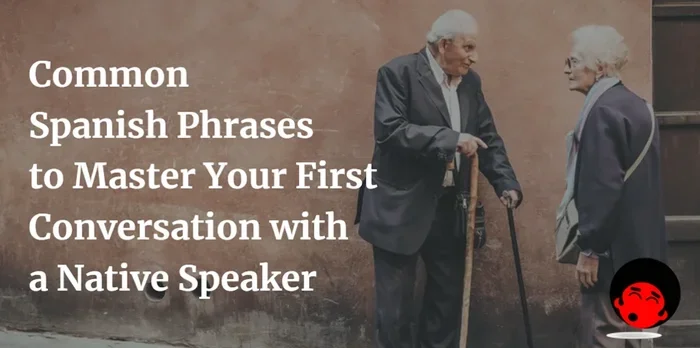
Learning how to say how old in Spanish is a must for any beginner. The most common phrase is “¿Cuántos años tienes?” which directly asks someone’s age. You will also learn how to answer age questions, use alternative expressions, and avoid common mistakes. This guide covers everything from basic vocabulary to real-life conversation tips. By the end, you will feel confident asking and answering age questions in Spanish.
Have you ever found yourself in a Spanish-speaking country and wondered how to ask someone’s age? Maybe you are planning a trip to Mexico, Spain, or any Spanish-speaking region. Or perhaps you are just starting your Spanish language journey and want to build your vocabulary. Whatever the reason, knowing how to say how old in Spanish is a fundamental skill.
Age questions come up in casual chats, formal interviews, and even when filling out forms. The good news is that asking about age in Spanish is simpler than you might think. Once you learn a few key phrases, you will use them every day. Let us dive into everything you need to know about age in Spanish expressions.
When you first start learning a new language, basic questions like “how old are you” are essential. In English, we simply ask “How old are you?” But in Spanish, the structure is a bit different. The phrase ¿Cuántos años tienes? is the most common and widely used way to ask someone’s age. It literally translates to “How many years do you have?” This might sound odd at first, but it makes perfect sense once you understand how the language works.
Another useful phrase is ¿Cuántos años tiene usted? which is the formal version. You use this when speaking to someone older, a stranger, or in a professional setting. The difference between “tienes” and “tiene” comes down to respect and formality. Think of it like switching between “you” and “you (formal)” in English, but Spanish makes it more obvious through verb changes.
If you are curious about translation tools or want to understand how phrases like this work across languages, you might enjoy learning about translate to english in hindi meaning as well. It shows how different languages handle basic questions in unique ways.
Key Takeaways
- Cuántos años tienes? is the standard way to ask someone’s age in Spanish.
- You can answer age questions using “Tengo [number] años” which means “I am [number] years old.”
- There are informal and formal ways to ask about age depending on the situation.
- Understanding age-related vocabulary helps you in everyday Spanish conversations.
- Avoid common translation mistakes by learning how Spanish structures age questions differently.
- Practice with real examples and dialogue to build confidence fast.
📑 Table of Contents
- Common Ways to Ask About Age in Spanish
- How to Answer “How Old Are You?” in Spanish
- Age-Related Vocabulary and Expressions in Spanish
- Common Mistakes to Avoid When Talking About Age in Spanish
- Quick Tips for Practicing Spanish Age Phrases
- Expert Insights on Learning Spanish Age Expressions
- Conclusion
Common Ways to Ask About Age in Spanish
Spanish offers several ways to ask about someone’s age. Each one fits a different context, whether casual or formal. Let us break them down so you can pick the right one for any situation.
1. ¿Cuántos años tienes?
This is the go-to phrase for informal situations. Use it with friends, peers, children, or anyone you are close to. The verb “tienes” is the second-person singular form of “tener,” which means “to have.” So when you say “¿Cuántos años tienes?” you are literally saying “How many years do you have?”
Here are some examples of how this phrase fits into real conversations:
- — ¿Cuántos años tienes? (How old are you?)
- — Tengo veinticinco años. (I am twenty-five years old.)
- — ¿Cuántos años tienes tú? (How old are you?)
2. ¿Cuántos años tiene usted?
This is the formal version of the same question. Use “usted” instead of “tú” when speaking to someone you respect or do not know well. The verb form changes to “tiene” to match the formal pronoun. This is important in Spanish-speaking cultures where respect and politeness matter a lot.
For example:
- — ¿Cuántos años tiene usted, señora? (How old are you, ma’am?)
- — Tengo sesenta años. (I am sixty years old.)
3. ¿Qué edad tienes?
This phrase uses the word “edad,” which means “age.” It is another common way to ask someone how old they are. While “¿Cuántos años tienes?” is more popular, “¿Qué edad tienes?” is equally correct and widely understood.
Both phrases work great in casual settings. You might hear native speakers use either one depending on their region or personal preference. Neither is wrong, so feel free to use whichever sounds more natural to you.
4. ¿Qué edad tiene usted?
This is the formal version of the “¿Qué edad tienes?” question. It follows the same pattern as the other formal options. Use “usted” and “tiene” to show respect.
Quick Tip: In many Spanish-speaking countries, people do not ask about age as directly as English speakers do. It can sometimes be considered impolite, especially with women. Always consider the context and your relationship with the person before asking.
How to Answer “How Old Are You?” in Spanish
Asking is only half the battle. You also need to know how to respond when someone asks you your age. The answer structure in Spanish is straightforward and easy to remember.
The Basic Answer Format
To answer an age question in Spanish, you use the verb “tener” (to have) followed by your age and the word “años” (years). The formula is simple:
Tengo + [number] + años.
This literally means “I have [number] years.” It might sound a little unusual if you are used to saying “I am [number] years old” in English, but this is how Spanish speakers express age naturally.
Here are some practical examples:
- Tengo veinte años. (I am twenty years old.)
- Tengo treinta y cinco años. (I am thirty-five years old.)
- Tengo dieciséis años. (I am sixteen years old.)
- Tengo cuarenta y dos años. (I am forty-two years old.)
Answering with Specific Numbers
Let us look at how numbers work in age answers. Spanish numbers follow a logical pattern once you learn the basics. Here are some key numbers you will need:
- Uno (One)
- Diez (Ten)
- Veinte (Twenty)
- Treinta (Thirty)
- Cincuenta (Fifty)
- Cien (One hundred)
For ages between these numbers, you combine them. For example, “twenty-five” is “veinticinco,” and “thirty-three” is “treinta y tres.” Once you know these basic numbers, forming age answers becomes very easy.
Sometimes people ask about age in text messages using shortcuts or abbreviations. If you have ever wondered about text slang and what different abbreviations mean, you might find it interesting to explore what wyo meaning in text stands for. Text language can be tricky, and understanding these shortcuts helps you navigate digital conversations better.
Age-Related Vocabulary and Expressions in Spanish
Knowing how to ask and answer age questions is just the beginning. Spanish has a rich set of age-related vocabulary and expressions that will make your conversations more natural and fluent.
Key Words Related to Age
- Años — Years
- Edad — Age
- Joven — Young
- Viejo/a — Old
- Niño/a — Child
- Adolescente — Teenager
- Adulto/a — Adult
- Mayor — Older/Elder
- Menor — Younger/Minor
- Cumpleaños — Birthday
Useful Age-Related Phrases
Beyond just asking “how old,” there are many phrases related to age that you will find helpful:
- ¿Cuándo cumples años? — When is your birthday?
- Tengo un año. — I am one year old. (For babies)
- Es de la misma edad que yo. — He/She is the same age as me.
- ¿Qué edad tienes tú? — What age are you?
- Soy mayor de edad. — I am of legal age.
These expressions will help you navigate conversations about age with confidence. You will hear them in movies, shows, and real-life interactions with native speakers.
How “Tener” Works for Age
The verb “tener” (to have) is the backbone of age expressions in Spanish. This is one of the biggest differences between English and Spanish. In English, we say “I am 25 years old,” using the verb “to be.” In Spanish, you say “Tengo 25 años,” using “to have.”
This might feel strange at first, but it becomes second nature with practice. “Tener” is also used for many other expressions in Spanish, such as being hungry (“tengo hambre”) or being tired (“tengo sueño”). Once you understand this pattern, a whole world of Spanish expressions opens up to you.
If you are interested in how different languages handle expressions of meaning and alternative phrasing, you might enjoy reading about in lieu of meaning to understand how languages offer different ways to say the same thing.
Common Mistakes to Avoid When Talking About Age in Spanish
Even with the best intentions, learners often make mistakes when discussing age in Spanish. Here are the most common errors and how to avoid them.
1. Using “Ser” Instead of “Tener”
This is the number one mistake beginners make. In English, you say “I am 30 years old.” So it is tempting to say “Soy treinta años” in Spanish. But that is wrong. Always use “tener” (to have), not “ser” (to be).
Wrong: Soy veinte años.
Right: Tengo veinte años.
2. Forgetting “Años”
Some learners say “Tengo veinte” without adding “años.” While native speakers might understand you, it is incomplete and sounds unnatural. Always include “años” when stating your age.
3. Using the Wrong Verb Form
Remember that “tienes” is for “tú” (informal you) and “tiene” is for “usted” (formal you). Using the wrong form can make your speech sound either too casual or too stiff for the situation.
4. Asking About Age Inappropriately
In many Spanish-speaking cultures, asking someone’s age — especially a woman — can be considered rude. Use your judgment and consider the relationship before asking. When in doubt, it is better to let the other person share their age voluntarily.
Quick Tips for Practicing Spanish Age Phrases
Now that you know the phrases, it is time to practice. Here are some quick and effective ways to build your confidence with age-related Spanish vocabulary.
1. Practice with a Partner
Find a language exchange partner or a friend who is also learning Spanish. Take turns asking each other “¿Cuántos años tienes?” and practicing your answers. Real conversation is the fastest way to improve.
2. Write Daily Age Dialogues
Write short dialogues between two people meeting for the first time. Include age questions and answers. Re-read them every day until they feel natural.
3. Listen to Native Speakers
Watch Spanish-language shows or listen to podcasts. Pay attention to how native speakers ask and answer age questions. Mimic their pronunciation and rhythm.
4. Use Flashcards
Create flashcards with age-related phrases on one side and the English translation on the other. Review them during your commute or while waiting in line.
5. Label Your Environment
Write Spanish age phrases on sticky notes and place them around your home. Seeing them every day will reinforce your memory without any extra effort.
Expert Insights on Learning Spanish Age Expressions
Language experts agree that age expressions are among the first things you should master in any new language. They are practical, frequently used, and relatively simple to learn. The key is consistent practice and real-world application.
One expert tip is to focus on the verb “tener” and its various conjugations. Once you master “tengo,” “tienes,” “tiene,” “tenemos,” and “tienen,” you can handle almost any age-related conversation. These forms cover all the basic pronouns in Spanish.
Another tip is to pay attention to regional differences. In Spain, people might use slightly different expressions than in Latin America. For example, some regions prefer “¿Qué edad tienes?” over “¿Cuántos años tienes?” Both are correct, but being aware of regional preferences helps you sound more natural.
Remember that language learning is a journey. You do not need to be perfect from day one. Every conversation you have, every phrase you practice, brings you closer to fluency. Celebrate small wins and keep pushing forward.
Conclusion
Learning how to say how old in Spanish is a valuable skill for any language learner. From the basic “¿Cuántos años tienes?” to more formal expressions like “¿Cuántos años tiene usted?” — you now have a solid toolkit. You know how to ask, how to answer, and how to navigate age-related conversations with confidence.
Remember to use “tener” instead of “ser” when talking about age. Always include “años” for completeness. And be mindful of cultural norms around asking someone’s age. With consistent practice and real-world use, these phrases will become second nature.
Start using these expressions today. Whether you are traveling, chatting with a friend, or simply practicing on your own, every interaction is a chance to improve. The more you use these age in Spanish phrases, the more natural they will feel. Keep learning, keep practicing, and enjoy the journey of mastering the Spanish language.
Frequently Asked Questions
What is the most common way to ask someone’s age in Spanish?
The most common way is “¿Cuántos años tienes?” for informal settings and “¿Cuántos años tiene usted?” for formal situations. Both phrases are widely used and understood across all Spanish-speaking countries.
Do you use “ser” or “tener” when talking about age in Spanish?
You always use “tener” (to have) when talking about age in Spanish. The structure is “Tengo [number] años,” which means “I am [number] years old.” Using “ser” (to be) for age is a common mistake that beginners should avoid.
Is it rude to ask someone’s age in Spanish-speaking countries?
It can be. In many Spanish-speaking cultures, asking about age — especially to women or older adults — may be considered impolite. Use your judgment and consider your relationship with the person before asking directly.
How do you say “I am twenty-five years old” in Spanish?
You say “Tengo veinticinco años.” Remember to use “tengo” (I have) followed by the number and “años” (years). This is the standard and natural way to state your age in Spanish.
Are there different ways to ask about age in Spanish besides “¿Cuántos años tienes?”
Yes. You can also say “¿Qué edad tienes?” or “¿Qué edad tiene usted?” for the formal version. Both are correct and commonly used, though “¿Cuántos años tienes?” is the most popular choice among native speakers.
How can I practice age-related Spanish phrases effectively?
Practice with a language partner, write daily dialogues, listen to native speakers in shows or podcasts, and use flashcards. Consistent real-world practice is the best way to make these phrases feel natural and automatic.
=== INTERNAL LINKS ===