
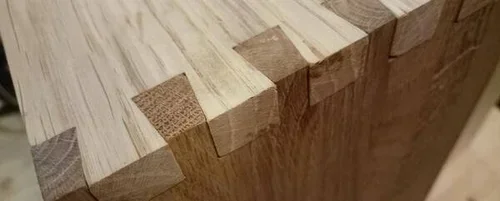
The dovetail meaning refers to a woodworking joint shaped like a dove’s tail, known for its exceptional strength and beauty. Dovetail joints interlock two pieces of wood using angled pins and tails that resist pulling apart. This woodworking joint has been used for centuries in furniture making and remains a hallmark of quality craftsmanship.
Key Takeaways
- Dovetail joints are one of the strongest and most beautiful connections in wood joinery.
- There are several types, including through dovetail, half-blind dovetail, and sliding dovetail.
- You can cut dovetails by hand or with a dovetail jig and router.
- These joints are commonly used in drawer construction and high-quality furniture making.
- Understanding the dovetail meaning helps you appreciate why master woodworkers value this technique so highly.
- Common mistakes include wrong angles, poor layout, and rushing the cuts.
📑 Table of Contents
What Does Dovetail Meaning Mean In Woodworking?
The dovetail meaning in woodworking is simple but powerful. A dovetail is a joint shaped like a dove’s tail, with interlocking wedge-shaped cuts. When you pull two pieces together, the angled shape locks them tight. This woodworking joint has been around for thousands of years and is still considered the gold standard in fine wood joinery.
So what makes the dovetail meaning so special? It all comes down to strength. Unlike butt joints or screws, dovetails resist being pulled apart. The angled pins and tails create a mechanical lock that gets tighter over time. This is why you will find dovetail joints in quality drawers, cabinets, and chests.
When people talk about the dovetail meaning, they are usually referring to both the shape and the function. The shape looks like a series of fan-like fingers. The function is to join two boards at a right angle with incredible holding power. Whether you are a beginner or a seasoned woodworker, understanding this joint is essential.
The Basic Anatomy Of A Dovetail Joint
A standard dovetail has two parts. The tails are the wide, angled cuts on one board. The pins are the narrow, angled cuts on the other board. The pins fit into the spaces between the tails. This interlocking design is what gives the dovetail meaning its legendary strength.
The angle of the tails typically ranges from 1:6 to 1:8. This means for every inch of width, the tail slopes one unit over six or eight units. The angle creates friction that holds the joint together without any glue. Of course, wood glue makes it even stronger.
Why Dovetails Are The Gold Standard In Wood Joinery
The dovetail meaning goes beyond just looks. These joints are built to last. In fact, many antique pieces of furniture still have their original dovetails intact after hundreds of years. No other simple joint can match that kind of durability.
Here is why dovetails stand out among woodworking techniques:
- Mechanical strength: The interlocking shape prevents pulling apart.
- No need for fasteners: Screws or nails are not required.
- Visual appeal: The pattern is beautiful and shows craftsmanship.
- Longevity: These joints can last for generations.
- Versatility: They work for drawers, boxes, cabinets, and more.
When you understand the dovetail meaning, you start to see why it is the first joint taught in woodworking schools. It combines form and function in a way few other joints can match.
Types Of Dovetail Joints
Not all dovetails are the same. The dovetail meaning covers several different variations, each with its own purpose. Let us explore the most common types you will encounter in furniture making and woodworking joints.
Through Dovetail
The through dovetail is the most classic version. Both the tails and pins are visible on the outside of the joint. This style is often used where the joint will not be seen, such as the back of a drawer or box. It is the easiest to cut and the most dramatic to look at.
When you see a handmade drawer with exposed dovetails on all sides, that is most likely a through dovetail. The dovetail meaning in this context is both structural and decorative. It is a clear sign of skilled craftsmanship.
Half-Blind Dovetail
The half-blind dovetail hides the tails from view. Only the pins show on the front face. This style is perfect for drawer fronts where you want a clean, seamless look. The dovetail meaning here shifts from pure decoration to practical, hidden strength.
Half-blind dovetails are more challenging to cut. You need to be precise with your layout and cuts. But the result is a joint that looks clean and professional. This is the go-to choice for quality dresser and cabinet drawers.
Sliding Dovetail
A sliding dovetail joins a board to the edge of another board at a right angle. Instead of two separate pieces interlocking, one piece slides into a slot cut into the other. The dovetail meaning in this variation is about alignment and reinforcement.
Sliding dovetails are commonly used in table tops, bookcase shelves, and cabinet frames. They prevent the shelf from twisting or splitting. This joint is incredibly strong in tension and is a favorite among woodworking techniques experts.
Full-Blind Dovetail
The full-blind dovetail is the most advanced type. Neither the tails nor the pins are visible from any outside surface. This joint is used in high-end furniture making where every surface must look perfect. The dovetail meaning here is pure craftsmanship with no visible evidence of the joint.
Cutting a full-blind dovetail requires exceptional skill and precision. Even small mistakes will show. This is why master woodworkers take pride in this joint. It represents the highest level of wood joinery ability.
How Dovetail Joints Are Made
Making a dovetail joint is one of the most satisfying challenges in woodworking. The dovetail meaning becomes real when you hold two boards together and see them lock perfectly into place. There are two main ways to create these joints: by hand or with a dovetail jig.
Hand-Cut Dovetails
Hand-cutting dovetails is the traditional method. It requires a dovetail saw, chisels, a marking gauge, and a sharp pencil. The process starts with laying out the tails and pins on the wood. You cut along the lines, remove the waste, and then use the tails as a template to mark the pins.
Hand-cut dovetails take practice. Your first few attempts may not be perfect. That is completely normal. The key is to take your time and focus on clean, precise cuts. Over time, your hands will learn the rhythm. The dovetail meaning truly comes alive when you feel the satisfying fit of a hand-cut joint.
Here are some tips for successful hand-cut dovetails:
- Use a sharp dovetail saw for clean cuts.
- Mark your lines clearly before cutting.
- Remove waste in small sections, not large chunks.
- Test fit often and pare away small amounts of wood.
- Use a marking knife, not a pencil, for the finest lines.
Using A Dovetail Jig With A Router
If hand-cutting is not your thing, a dovetail jig is a great alternative. A jig holds the wood in place and guides a router to cut the pins and tails. This method is much faster and produces consistent results.
There are many dovetail jig options on the market. Some are simple and affordable. Others are more complex and offer more adjustability. The dovetail meaning does not change whether you cut by hand or use a jig. The joint is still strong and beautiful.
Using a router with a jig is ideal for production work or when you need many joints quickly. Many professional cabinet makers use this method. It does not mean the joint is less valuable. It simply means the woodworker chose efficiency without sacrificing quality.
Where Dovetail Joints Are Used
The dovetail meaning is most visible in certain woodworking projects. These joints are not just decorative. They serve a real structural purpose in many types of furniture and cabinetry.
Drawer Construction
The most common use for dovetails is in drawer construction. A drawer experiences a lot of stress every time it is opened and closed. A dovetail joint holds up under this repeated stress. This is why quality drawers always feature dovetails on at least the front corners.
When shopping for furniture, look for visible dovetails on the drawer fronts. This is a strong indicator of quality construction. The dovetail meaning in drawer making is all about durability and long-term performance.
Furniture Making And Cabinets
Beyond drawers, dovetails are used in many types of furniture making. Tables, cabinets, chests, and bookcases all benefit from dovetail joinery. In cabinet making, dovetails are often used to attach the back panel to the sides.
The dovetail meaning in furniture extends beyond strength. It is also a mark of quality. Hand-crafted dovetails show that the maker invested time and skill into the piece. This attention to detail is what separates handmade furniture from mass-produced items.
Timber Framing And Larger Projects
In timber framing, dovetails are used to connect large beams. The dovetail meaning scales up beautifully for bigger projects. A through dovetail in a timber frame can hold heavy loads for decades without any metal fasteners.
This style of joinery is common in barns, timber frame homes, and traditional buildings. The joint relies purely on the shape of the wood and friction. It is a testament to the power of simple, well-executed wood joinery.
Tools You Need For Dovetail Joinery
Getting started with dovetail joinery does not require a huge workshop. The dovetail meaning is accessible to anyone willing to learn. Here is a list of the essential tools you will need.
- Dovetail saw: A thin, fine-toothed saw designed for precise cuts.
- Chisels: Sharp bench chisels in sizes like 1/4 inch and 1/2 inch.
- Marking gauge: Used to scribe consistent lines across the wood.
- Marking knife: Creates precise layout lines that saws can follow.
- Dovetail jig: Optional but helpful for router-based dovetail cutting.
- Router: Needed if you are using a jig system.
- Clamps: Hold pieces in place during fitting and glue-up.
- Wood glue: Adds extra strength to any dovetail joint.
You do not need expensive tools to start. A basic set of chisels, a good saw, and a marking gauge are all you need for hand-cut dovetails. The dovetail meaning is about the skill, not the price of your tools.
Common Mistakes And How To Avoid Them
Even experienced woodworkers make mistakes with dovetails. Understanding the dovetail meaning also means knowing what can go wrong and how to fix it.
Wrong Dovetail Angle
The most common mistake is using the wrong angle. Standard dovetails use a 1:6 angle for softwood and 1:8 for hardwood. Using the wrong angle weakens the joint. Always check your angle before you start cutting.
Poor Layout
Rushing the layout leads to uneven joints. Take your time to mark every line carefully. Use a marking knife instead of a pencil for the most accurate results. The dovetail meaning depends on precision from the very first mark.
Removing Too Much Waste
It is tempting to chisel out large chunks of waste wood. This often leads to cutting into the pins or tails. Remove waste in thin layers. Go slow and test fit often. Patience is the most important tool in dovetail joinery.
Ignoring Wood Movement
Wood expands and contracts with changes in humidity. If you do not account for this, your joints may loosen or crack over time. Choose wood glue that allows for some movement, and always orient your grain correctly.
Key Takeaways
- Dovetail joints are one of the strongest and most beautiful connections in wood joinery.
- There are several types, including through dovetail, half-blind dovetail, and sliding dovetail.
- You can cut dovetails by hand or with a dovetail jig and router.
- These joints are commonly used in drawer construction and high-quality furniture making.
- Understanding the dovetail meaning helps you appreciate why master woodworkers value this technique so highly.
- Common mistakes include wrong angles, poor layout, and rushing the cuts.
Frequently Asked Questions
What is the dovetail meaning in simple terms?
The dovetail meaning is a woodworking joint where two interlocking wedge-shaped cuts fit together like puzzle pieces. The shape resembles a dove’s tail, which is where the name comes from. This joint is famous for its strength and resistance to pulling apart.
Why are dovetail joints so strong?
Dovetail joints are strong because of their angled shape. When two pieces are pulled apart, the angle creates friction that locks them together. This mechanical advantage means the joint gets tighter under stress, not weaker. No screws or nails are needed for basic strength.
What is the difference between a through dovetail and a half-blind dovetail?
A through dovetail shows both the tails and pins on the outside of the joint. A half-blind dovetail hides the tails so only the pins are visible. The dovetail meaning is the same, but the half-blind version is used when you want a cleaner look on the front face of a drawer.
Can beginners learn to cut dovetails?
Absolutely. Beginners can learn to cut dovetails with patience and practice. Start with a dovetail jig if you want easier, more consistent results. As you gain confidence, try hand-cutting for a more traditional experience. The dovetail meaning is about the journey as much as the result.
What tools do I need for hand-cut dovetails?
You need a dovetail saw, a set of sharp chisels, a marking gauge, and a marking knife. A bench vise to hold your work is also very helpful. You do not need expensive tools to start. The dovetail meaning is about skill and care, not tool cost.
Are dovetail joints still used in modern woodworking?
Yes, dovetail joints are more popular than ever in modern woodworking. Both hand-cut and machine-cut dovetails are used in high-quality furniture making today. The dovetail meaning has not changed. It remains the go-to joint for strength and beauty in drawers, cabinets, and fine furniture.
=== CONCLUSION ===
The dovetail meaning is more than just a shape or a joint. It represents centuries of woodworking wisdom and the pursuit of excellence in wood joinery. Whether you are building a simple drawer or a handcrafted cabinet, dovetails add strength, beauty, and lasting value to your work.
Understanding the dovetail meaning helps you appreciate the craft behind every quality piece of furniture. From the classic through dovetail to the hidden half-blind joint, each variation serves a purpose and tells a story of skill and dedication.
Start by practicing the basics. Cut a few through dovetails by hand or try a dovetail jig with your router. Focus on clean layout and patient cutting. Over time, you will develop the confidence and skill to tackle more advanced variations. The dovetail meaning rewards those who invest the effort. Your joints will be stronger, your furniture will last longer, and your craftsmanship will speak for itself.
Embrace the dovetail meaning in your own woodworking journey. Let it guide your approach to every joint you make. The beauty of this technique is that it never stops teaching. Every cut is a chance to get better, and every finished joint is a testament to your growing skill as a woodworker.