
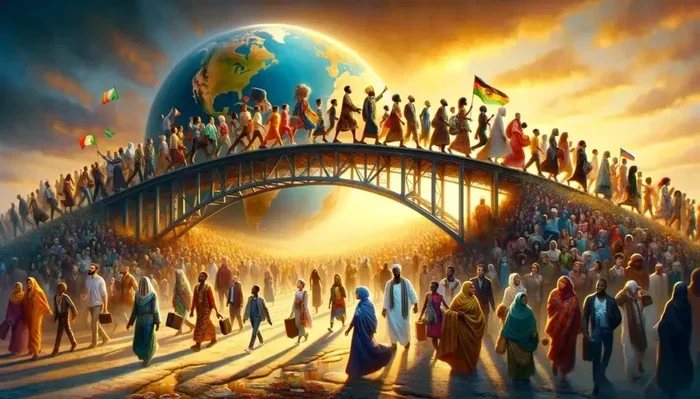
The diaspora meaning refers to large groups of people who leave their homeland and settle in other parts of the world. This term has deep historical roots and today describes millions of people across every continent. Understanding diaspora meaning helps us appreciate how migration shapes culture, identity, and global economics.
The diaspora meaning might seem simple at first glance. But when you dig deeper, you find a rich, layered concept that connects millions of people across the globe. At its core, diaspora meaning describes communities of people who left their original homeland and now live spread across different countries. This is not just a geography lesson. It is a story about identity, resilience, and human connection.
When people talk about diaspora meaning, they often think of historical events. Wars, famines, slavery, and political unrest forced entire populations to leave their homes. But today, diaspora meaning also covers people who moved for work, education, or love. The concept has evolved, but the emotional thread stays the same. People carry their homeland with them, even thousands of miles away.
Why does diaspora meaning matter so much right now? Because diaspora communities shape the world we live in every single day. They influence food, music, language, politics, and business. Understanding diaspora meaning helps us see the world through a wider, more connected lens. Whether you belong to a diaspora group or not, this topic touches your life more than you might think.
Key Takeaways
- Diaspora meaning: A diaspora is a scattered population with a shared homeland or national identity.
- Historical roots: The word originated from the Greek word for “scattering” and was first used for the Jewish exile.
- Global impact: Diaspora communities drive cultural exchange, economic growth, and political change worldwide.
- Identity matters: Diaspora identity blends heritage with new cultural influences, creating unique hybrid cultures.
- Economic power: Diaspora remittances and investments support home countries in massive ways.
- Everyone connects: Almost every nation has a diaspora story, making this topic relevant to all of us.
📑 Table of Contents
- What Does Diaspora Meaning Really Mean?
- The History and Origin of the Word Diaspora
- Major Diaspora Examples Around the World
- Why Diaspora Communities Matter
- How Diaspora Identity Shapes Culture
- The Economic Impact of Diaspora Groups
- What Does Diaspora Meaning Mean for You Personally?
- Common Mistakes People Make About Diaspora Meaning
- Expert Insights on Diaspora Meaning
- Key Takeaways
- Conclusion
What Does Diaspora Meaning Really Mean?
The diaspora meaning in simple terms is the dispersion of people from their original homeland. The word comes from the Greek word “diaspeirein,” which means to scatter or spread about. When you understand diaspora meaning, you understand a fundamental part of human history.
Here is how most scholars define diaspora meaning: a group of people who share a common ethnic or national identity but live outside their ancestral homeland. They often maintain strong ties to their place of origin. These ties show up in language, religion, food, traditions, and a deep sense of belonging.
Not every migration creates a diaspora. Diaspora meaning specifically refers to groups that feel a lasting connection to their homeland. A tourist visiting another country is not part of a diaspora. But a family that settles in a new country for generations while still honoring their roots? That fits the diaspora meaning perfectly.
The diaspora meaning also carries emotional weight. It is not just about where people live. It is about how they see themselves. Many diaspora members feel pulled between two worlds. They belong to their new home, but a part of them always reaches back to where they or their ancestors came from.
Key Elements of Diaspora Identity
To fully grasp diaspora meaning, you need to understand what makes a diaspora group distinct. Several key elements define most diaspora communities:
- Shared origin: Members come from the same homeland or region.
- Scattered settlement: They live across multiple countries, not just one place.
- Connection to homeland: They maintain emotional, cultural, or political ties to their origin.
- Collective identity: Members often see themselves as part of a larger group.
- Memory and narrative: Stories about the homeland and the journey of migration are passed down through generations.
These elements help scholars and everyday people understand diaspora meaning in a more structured way. Not every group that moves countries checks all these boxes. But the ones that do form powerful, lasting communities.
The History and Origin of the Word Diaspora
The history behind diaspora meaning is fascinating. The word first appeared in English in the early 20th century. It came from the Greek term that described the scattering of Jewish people after the Babylonian exile. This historical event shaped how the world understood diaspora meaning for centuries.
Originally, diaspora meaning was closely tied to the Jewish experience. The Jewish diaspora began around 586 BCE when Babylonian forces destroyed Jerusalem and exiled many residents. Over the following centuries, Jewish communities spread across the Middle East, Europe, Africa, and beyond. Diaspora meaning became synonymous with this journey of survival and faith.
But over time, scholars expanded diaspora meaning to include other groups. The African diaspora, caused by the transatlantic slave trade, became a major area of study. Indian, Chinese, Irish, and Armenian diasporas also gained recognition. Each group added new layers to the diaspora meaning we understand today.
How Diaspora Meaning Evolved Over Time
The evolution of diaspora meaning shows how language adapts to human experience. In the early days, the term focused mainly on forced displacement. People were scattered against their will. The diaspora meaning carried pain, loss, and resilience.
As globalization grew, diaspora meaning broadened. Scholars started studying voluntary migration too. People who moved for better opportunities also became part of the discussion. Today, diaspora meaning includes both forced and voluntary displacement. It recognizes that migration is complex and deeply personal.
The diaspora meaning also expanded geographically. Early studies focused on Western countries. Now, researchers study diaspora communities in Asia, Africa, Latin America, and the Middle East. This shift made diaspora meaning a truly global concept that reflects the full human experience of migration.
Major Diaspora Examples Around the World
Looking at real-world examples makes diaspora meaning much easier to understand. Every continent has significant diaspora groups. Let us explore some of the most well-known ones.
The Jewish Diaspora
The Jewish diaspora is perhaps the most well-known example of diaspora meaning in action. After the Roman destruction of Jerusalem in 70 CE, Jewish communities spread across Europe, North Africa, and the Middle East. Today, Jewish diaspora communities exist in nearly every country. They maintain strong cultural, religious, and linguistic ties to Israel and historic Jewish homeland regions.
The African Diaspora
The African diaspora represents one of the largest forced migrations in history. Through the transatlantic slave trade, millions of Africans were brought to the Americas, Europe, and the Caribbean. Diaspora meaning in this context carries deep historical pain but also incredible resilience. African diaspora communities have profoundly shaped music, art, cuisine, and politics worldwide.
The Indian Diaspora
India has one of the largest diaspora populations in the world. The Indian diaspora spans the Middle East, North America, Europe, Southeast Asia, and Africa. Many Indians migrated for work, education, or better opportunities. Diaspora meaning for the Indian community often centers on cultural preservation, remittances, and strong family bonds across borders.
The Chinese Diaspora
Chinese diaspora communities have existed for centuries. From the 19th-century gold rush to modern-day migration, Chinese people settled across Asia, North America, Australia, and Europe. Diaspora meaning for Chinese communities often involves themes of entrepreneurship, cultural pride, and maintaining traditions like Lunar New Year celebrations abroad.
The Irish Diaspora
The Irish diaspora is closely tied to the Great Famine of the 1840s. Millions of Irish people left their homeland for the United States, Canada, Australia, and Britain. Diaspora meaning for the Irish community carries themes of survival, political activism, and cultural celebration through music, dance, and storytelling.
The Armenian Diaspora
The Armenian diaspora formed largely after the Armenian Genocide in 1915. Armenians scattered across the Middle East, Europe, and the Americas. Diaspora meaning here is deeply tied to remembrance, cultural preservation, and the hope of eventual return to historic Armenia.
Why Diaspora Communities Matter
Understanding diaspora meaning goes beyond definitions. It helps us see why diaspora communities matter so much in today’s world. These groups are not just statistics. They are living, breathing communities that drive real change.
Cultural Exchange and Enrichment
Diaspora communities bring their traditions to new countries. They share food, music, art, festivals, and languages. This cultural exchange enriches societies everywhere. When you eat sushi in New York or celebrate Diwali in London, you are experiencing the impact of diaspora communities.
Diaspora meaning in this context highlights the creative contributions of displaced communities. They do not just preserve their culture. They blend it with new influences, creating something fresh and vibrant. This cultural fusion is one of the most beautiful outcomes of migration.
Political Influence and Advocacy
Diaspora communities often play powerful political roles. They advocate for their homeland’s rights, raise awareness about conflicts, and influence foreign policy. Many diaspora groups lobby their adopted countries to support their homeland diplomatically or economically.
The diaspora meaning in politics is significant. Diaspora members vote, organize, and mobilize. They bring global issues to local attention. Their voices shape how governments respond to international crises and humanitarian needs.
Economic Contributions
Diaspora communities contribute enormously to both their host countries and their homelands. They start businesses, create jobs, and pay taxes. They also send remittances back home. In many developing countries, diaspora remittances make up a significant portion of the national GDP.
Diaspora meaning in economics shows that migration is not a one-way loss. It creates financial flows that benefit multiple countries. The money diaspora members send home supports families, funds education, and builds infrastructure. This economic impact is one of the most practical reasons diaspora meaning matters.
How Diaspora Identity Shapes Culture
Diaspora identity is one of the most fascinating aspects of diaspora meaning. When people move from their homeland, they do not simply abandon their culture. They adapt it. They blend it. They create something new while honoring what came before.
The Balance Between Heritage and Assimilation
Every diaspora member faces a balancing act. On one side, there is the desire to fit into a new society. On the other side, there is the pull to maintain cultural roots. This tension shapes diaspora identity in powerful ways.
First-generation immigrants often hold tightly to their traditions. They speak their native language at home, cook traditional meals, and celebrate homeland holidays. Second and third generations often blend more. They might celebrate both their parents’ traditions and their new country’s customs.
Diaspora meaning captures this beautiful complexity. It is not about choosing one identity over another. It is about holding multiple identities at once. A person can be proudly Indian and proudly American. They can be both Nigerian and British. Diaspora meaning embraces these blended identities.
Language and Diaspora Communities
Language plays a huge role in diaspora identity. Many diaspora communities work hard to preserve their native languages. They set up weekend schools, community classes, and family traditions that keep their mother tongue alive.
At the same time, diaspora members often adopt the language of their new home. This creates fascinating linguistic blends. Think of Spanglish in Latino communities or Hinglish among Indian diaspora members. These hybrid languages are living proof of how diaspora meaning shapes everyday life.
Food as a Cultural Bridge
Food is one of the most powerful expressions of diaspora meaning. Diaspora communities open restaurants, share recipes, and introduce new flavors to their adopted countries. Food becomes a bridge between cultures. It tells stories about homeland, memory, and belonging.
Think about how Thai food became popular worldwide through Thai diaspora communities. Or how Italian food spread globally through Italian migration. Diaspora meaning lives on every plate. It is served hot, shared with friends, and passed down through generations.
The Economic Impact of Diaspora Groups
The economic side of diaspora meaning is massive and often overlooked. Diaspora communities are economic powerhouses in both their host countries and their homelands. Let us break down the numbers and impacts.
Remittances: Money That Moves the World
Remittances are money that diaspora members send back to their home countries. According to the World Bank, global remittances reached over $600 billion in recent years. This money supports millions of families and entire local economies.
For many developing countries, remittances from diaspora communities are a lifeline. They fund healthcare, education, housing, and small businesses. The diaspora meaning here is clear: migration creates financial flows that lift communities and reduce poverty.
Entrepreneurship and Innovation
Diaspora communities are incredibly entrepreneurial. They start businesses at higher rates than native-born populations in many countries. These businesses create jobs, drive innovation, and strengthen local economies.
Think about the tech industry in Silicon Valley. A huge percentage of successful startups were founded by members of diaspora communities. Diaspora meaning in business shows that migration fuels innovation and economic growth on a global scale.
Diaspora Bonds and Investment
Some countries issue diaspora bonds to raise money from their overseas communities. These bonds let diaspora members invest directly in their homeland’s development. It is a powerful way to channel diaspora meaning into tangible economic growth.
Countries like India, Israel, and Nigeria have successfully used diaspora bonds. These financial tools connect diaspora members to their homeland in a practical, impactful way. They turn emotional ties into real economic development.
What Does Diaspora Meaning Mean for You Personally?
You might be wondering how diaspora meaning connects to your own life. The answer is simpler than you think. Almost everyone is touched by diaspora in some way.
If you or your ancestors migrated from one place to another, you are part of a diaspora story. If you grew up eating foods from another culture, listening to music from another land, or speaking a language that is not your country’s main one, you already understand diaspora meaning on a personal level.
Diaspora meaning teaches us empathy. It reminds us that every person has a story of movement, adaptation, and belonging. In our increasingly connected world, understanding diaspora helps us build bridges across cultures and borders.
You do not need to belong to a diaspora group to care about diaspora meaning. It is a topic that belongs to all of us. It shapes the cities we live in, the food we eat, the music we enjoy, and the communities we build together.
Quick Tips for Exploring Diaspora Meaning in Your Life
- Ask family questions: Talk to older relatives about where your family came from and why they moved.
- Try diaspora food: Visit restaurants from different diaspora communities and learn the stories behind the dishes.
- Read diaspora literature: Books by diaspora authors offer deep insights into diaspora meaning and identity.
- Attend cultural events: Festivals, concerts, and community gatherings are wonderful ways to experience diaspora culture firsthand.
- Support diaspora businesses: Shopping at diaspora-owned businesses is a practical way to honor and support these communities.
Common Mistakes People Make About Diaspora Meaning
Even though diaspora meaning is straightforward, people still make mistakes when discussing it. Being aware of these errors helps us talk about diaspora communities with more respect and accuracy.
Mistake 1: Confusing all migration with diaspora. Not every person who moves countries is part of a diaspora. Diaspora meaning specifically involves a lasting connection to a homeland and a shared group identity.
Mistake 2: Thinking diaspora only means forced migration. While many diasporas started with forced displacement, diaspora meaning today includes voluntary migration too. People who choose to move still form diaspora communities.
Mistake 3: Assuming diaspora members are disconnected from their homeland. This is rarely true. Most diaspora communities maintain strong ties through visits, remittances, media, and cultural practices. Diaspora meaning is built on connection, not disconnection.
Mistake 4: Treating all diaspora groups the same. Every diaspora has its own unique history, challenges, and strengths. Lumping them together erases important differences. Understanding diaspora meaning means appreciating each group’s individual story.
Mistake 5: Ignoring the positive contributions of diaspora communities. Diaspora groups do not just need support. They give back enormously to their host countries and homelands. Diaspora meaning is as much about contribution as it is about challenge.
Expert Insights on Diaspora Meaning
Scholars and researchers have spent decades studying diaspora meaning. Their work reveals patterns and insights that deepen our understanding of this topic.
Dr. Robin Cohen, a leading diaspora scholar, identified seven recurring characteristics of diaspora groups. These include a collective myth or memory of homeland, a desire for eventual return, and a sense of solidarity with co-ethnic members in other countries. His work helped formalize diaspora meaning in academic circles and made it accessible to a wider audience.
Another important insight comes from the concept of “transnationalism.” This idea suggests that diaspora members do not fully belong to either their homeland or their host country. Instead, they create a third space that bridges both. Diaspora meaning in this context is about building connections that transcend borders.
Experts also emphasize that diaspora meaning is not static. It changes with each generation. First-generation immigrants often have a very different relationship to their homeland than their grandchildren. Understanding these shifts helps us appreciate the full depth of diaspora meaning.
Modern technology has also transformed diaspora meaning. Social media, video calls, and messaging apps allow diaspora members to stay connected to their homeland in real time. This constant connectivity creates new forms of diaspora identity that previous generations could not have imagined.
Key Takeaways
- Diaspora meaning: A diaspora is a scattered population with a shared homeland or national identity living outside their origin.
- Historical roots: The word originated from Greek and was first used for the Jewish exile, but now covers many groups worldwide.
- Global examples: Jewish, African, Indian, Chinese, Irish, and Armenian diasporas are among the most prominent worldwide.
- Cultural impact: Diaspora communities enrich host societies through food, music, art, language, and traditions.
- Economic power: Remittances, businesses, and investments from diaspora groups drive significant economic activity.
- Identity is complex: Diaspora identity blends heritage with new influences, creating unique hybrid cultures across generations.
- Everyone connects: Understanding diaspora meaning helps us see the shared human experience of migration and belonging.
Conclusion
The diaspora meaning is far more than a dictionary definition. It is a living, breathing story of human resilience, adaptation, and connection. Every diaspora community carries the memory of its homeland while building something new in a foreign land. This dual identity is not a weakness. It is a source of incredible strength and creativity.
When we explore diaspora meaning, we open ourselves to a deeper understanding of the world. We see how migration has shaped every continent, every culture, and every cuisine we enjoy. We recognize the contributions of diaspora communities in business, art, science, politics, and everyday life.
Diaspora meaning reminds us that borders are more porous than they seem. People have always moved, always adapted, always carried pieces of home with them. In our modern, interconnected world, understanding diaspora meaning is not just academic. It is essential. It helps us build more empathetic, inclusive, and connected communities.
So the next time you hear the word diaspora, remember its full weight. Think about the millions of people who left everything behind and built new lives while keeping their roots alive. Think about the food on your plate, the music in your ears, and the neighbors who carry stories from faraway places. Diaspora meaning is all around us. It always has been. And it always will be.
Take what you have learned about diaspora meaning and share it. Talk to someone from a diaspora community. Ask their story. Listen with curiosity and respect. Because understanding diaspora is not just about learning a term. It is about understanding what it means to be human in a world that is always on the move.
Frequently Asked Questions
What is the simple definition of diaspora?
A diaspora is a group of people who share a common homeland but now live scattered across different countries. The diaspora meaning centers on the idea that these people maintain strong cultural, emotional, or political ties to their place of origin, even after generations of living abroad.
Where does the word diaspora come from?
The word “diaspora” comes from the Greek word “diaspeirein,” which means to scatter or spread about. It was first used in English to describe the Jewish exile from ancient Israel. Over time, scholars expanded diaspora meaning to include many other displaced and migrated communities around the world.
What are some well-known diaspora examples?
Some of the most prominent examples include the Jewish diaspora, the African diaspora, the Indian diaspora, the Chinese diaspora, the Irish diaspora, and the Armenian diaspora. Each group has a unique history, but they all share the core elements of diaspora meaning: a shared origin, scattered settlement, and ongoing ties to their homeland.
How do diaspora communities impact their host countries?
Diaspora communities enrich host countries in many ways. They bring cultural diversity, start businesses, fill labor gaps, and contribute to innovation. They also send remittances back to their homelands, which supports families and economies abroad. The diaspora meaning in economics is profound and far-reaching.
Is diaspora only about forced migration?
No. While many diasporas began with forced displacement, such as slavery or war, diaspora meaning today includes voluntary migration too. People who move for work, education, or personal choice can still form diaspora communities if they maintain lasting ties to their homeland and share a collective identity.
How can I learn more about my own diaspora background?
Start by talking to family members about your heritage and migration history. Visit cultural centers, attend community events, and explore diaspora literature and media. You can also research online resources from universities and cultural organizations that study diaspora meaning and specific diaspora groups in depth.