
The valhalla meaning goes far deeper than most people realize. It refers to the majestic hall where fallen warriors feast and fight for eternity under Odin in Norse mythology. Understanding the valhalla meaning opens a window into how ancient Nordic culture viewed heroism, death, and honor.
When you hear the word valhalla, what comes to mind? Maybe you think of brave Vikings with shields and axes. Perhaps you picture a grand hall filled with feasting and endless battle. The valhalla meaning carries centuries of history, myth, and cultural power.
But the valhalla meaning is much more than a cool-sounding word from old stories. It represents how ancient Norse mythology viewed courage, death, and the afterlife. For the Vikings, how you died mattered just as much as how you lived. A heroic death could earn you a place in the most celebrated hall in all of the Norse gods realm.
In this article, we will explore the full valhalla meaning from every angle. You will learn where the word comes from, who gets to go there, and what life inside looks like. We will also compare Valhalla to other Viking afterlife options and look at how this ancient idea still shapes our world today.
Key Takeaways
- Valhalla was a real belief: Ancient Vikings truly believed fallen warriors went to this hall ruled by Odin.
- The word has deep roots: It comes from Old Norse and connects to Norse mythology and warrior culture.
- Not everyone went there: Only the bravest slain warriors chosen by Valkyries earned a place.
- Daily life in Valhalla was intense: Warriors feasted by day and fought by night, then healed by morning.
- Ragnarok is the endgame: Even Valhalla warriors will fight in the final battle of the Norse gods.
- The concept still inspires us: The valhalla meaning lives on in modern culture, from movies to tattoos.
- It was about more than fighting: Honor, community, wisdom, and sacrifice were all part of the valhalla meaning.
📑 Table of Contents
- What Is the Valhalla Meaning? Understanding the Basics
- Who Gets to Enter Valhalla? The Role of the Einherjar
- Life Inside Valhalla: What Happened Every Day?
- Valhalla vs. Other Viking Afterlife Realms
- The Symbolic Valhalla Meaning in Modern Times
- The Deeper Spiritual Valhalla Meaning
- Key Takeaways
- Conclusion
What Is the Valhalla Meaning? Understanding the Basics
The valhalla meaning comes from Old Norse roots. The word “Valhalla” translates to “Hall of the Slain” or “Hall of the Fallen.” In simple terms, it is a great hall where Odin, the chief of the Norse gods, welcomes the bravest warriors who died in battle.
Think of it as the ultimate reward for a heroic death. When a warrior fell in combat, Valkyries — powerful female figures — would choose who to bring to Valhalla. These chosen warriors became known as the Einherjar. They were the elite of the elite in Norse mythology.
The valhalla meaning was not just about fighting, though. It was about honor, glory, and living a life worth remembering. The Vikings believed that a good death in battle was the only way to reach this sacred place. Dying of old age or sickness did not qualify for the heavenly hall.
The Old Norse Origins of the Word
The word Valhalla comes from Old Norse “Valhöll.” “Val” means the slain or the fallen. “Höll” means hall or dwelling. So the original valhalla meaning was quite literal — it was simply the hall for the fallen.
In ancient Norse mythology, language held deep power. The names of sacred places carried meaning. The Vikings believed that speaking the name of Valhalla honored the warriors who lived and died by the sword. This is why the word has survived for over a thousand years and still carries weight today.
Today, people across the world still use the word Valhalla. It appears in movies, video games, books, and even tattoo art. But the valhalla meaning in modern culture often loses its original depth. Understanding the roots helps us appreciate what it truly meant to the Vikings and their Nordic culture.
Quick Tip: Remember that “Valhalla” and “Valhöll” are the same word. “Valhöll” is the Old Norse spelling, while “Valhalla” is the modern English version. Both carry the same valhalla meaning and the same weight in mythology legends.
Who Gets to Enter Valhalla? The Role of the Einherjar
Not every warrior who died in battle went to Valhalla. The valhalla meaning included a strict selection process. Only the bravest and most honorable slain warriors earned a spot. This selection was done by the Valkyries.
The Valkyries were divine maidens who served Odin. They rode to the battlefields and chose who would live and who would die. The ones they chose to bring to Valhalla were called the Einherjar. These were the warriors who would prepare for Ragnarok, the end of the world.
Ragnarok is the final battle in Norse mythology. It is a great conflict where the Norse gods will fight their greatest enemies. The Einherjar in Valhalla will join Odin and the other gods in this ultimate fight. So the valhalla meaning was tied directly to the fate of the entire world and the Viking afterlife.
The Criteria for Entry
What made a warrior worthy of the valhalla meaning? The Vikings had clear expectations for those seeking a place in the heavenly hall:
- You had to die in battle: Dying peacefully in your sleep did not qualify. The Vikings believed only violent death in combat opened the door to Valhalla and its eternal battle.
- You had to show bravery: Courage in the face of enemies was essential. Cowardice would keep you out of the grand hall and away from the valhalla meaning.
- You had to live honorably: How you treated others mattered. A warrior who was cruel or dishonorable might be rejected by the Valkyries and denied the warrior spirit reward.
- You had to be a man of action: The Vikings valued deeds over words. Living a life of action and courage was the key to mythology legends like Valhalla.
The valhalla meaning was deeply tied to the warrior spirit. It was not enough to simply die in a fight. The way you fought and the reason you fought mattered just as much. The Norse believed that a life of purpose and courage was the only path to the feast hall of Odin.
Common Mistake: Many people think any Viking warrior went to Valhalla. In reality, only a select few were chosen by the Valkyries. Most Norse people who died of old age or illness went to a different realm called Hel, the cold underworld in Norse mythology.
Life Inside Valhalla: What Happened Every Day?
The valhalla meaning was not just about getting in. It was also about what happened once you were there. The daily life of an Einherjar was both glorious and intense. The Viking afterlife in Valhalla was nothing like the peaceful afterlife many other cultures imagined.
Every day in Valhalla followed a powerful rhythm. By day, the warriors feasted and drank. By night, they fought each other in battle. And every morning, they healed and started again. This cycle of feast and fight never ended. It was the core of the valhalla meaning.
The Grand Feast Hall
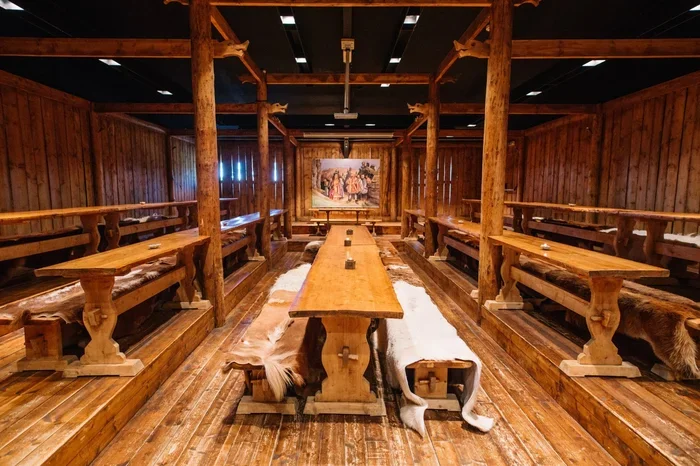
The heart of Valhalla was the great feast hall. It was enormous, with long wooden tables stretching as far as the eye could see. The roof was made of shields, and the beams were made of spears. Warriors sat together and shared meals of incredible food and drink in this feast hall.
The valhalla meaning in this context was about community and brotherhood. The Einherjar were not alone. They ate and drank together, shared stories of their lives, and strengthened their bonds. The feast hall was a place of camaraderie and celebration for those who earned the valhalla meaning.
The food in Valhalla was legendary and endless. A magical goat named Heidrun produced unlimited mead. And a great boar named Saehrimnir was cooked each night and eaten each morning, only to be reborn again. This endless supply of food and drink reflected the eternal nature of the Viking afterlife in Valhalla.
The Eternal Battle
But feasting was only half the story. The other half was the daily battle. Every evening, the Einherjar would step outside the great hall and fight each other with swords and axes in an eternal battle.
Why fight if you would just heal the next morning? The valhalla meaning included constant preparation. The Vikings believed these daily battles kept the warriors sharp and ready for Ragnarok. When the final battle came, the Valhalla warriors would need every ounce of their strength and warrior spirit.
And here is the beautiful part. Every morning, the wounds from the previous night’s battle would heal completely. The warriors would walk back into the hall with no scars, ready to feast again. This cycle of battle and healing was central to the valhalla meaning and to Norse mythology as a whole.
Expert Insight: Scholars believe the daily feast and battle cycle in Valhalla reflects the Viking way of life. Farming and fighting went hand in hand in Nordic culture. The valhalla meaning may have been designed to mirror the rhythm of Norse daily life — hard work, rest, and readiness for conflict.
The Role of the Valkyries in Valhalla
The Valkyries did not just choose who entered Valhalla. They also served the Einherjar inside the hall. They brought drinks, served food, and handed out mead from the great goat Heidrun. The Valkyries were essential to the valhalla meaning.
The Valkyries were powerful and respected figures in Norse mythology. They were not mere servants, though. They were divine beings with their own will and power. The valhalla meaning was shaped just as much by the Valkyries as by Odin himself and the Norse gods.
Some Norse legends tell of Valkyries falling in love with mortal men. These stories show that even the divine figures connected to Valhalla had their own struggles and desires. The valhalla meaning was woven into a rich tapestry of mythology legends and Norse mythology stories that have survived the centuries.
Valhalla vs. Other Viking Afterlife Realms
The valhalla meaning is often confused with the entire Viking afterlife. But Valhalla was just one of several realms where the dead could go. Understanding the differences helps us see the full picture of Norse mythology and the Norse gods realm.
| Realm | Who Goes There | What It Is Like | Ruled By |
|---|---|---|---|
| Valhalla | Brave slain warriors | Grand hall, feasting, daily battles | Odin |
| Folkvangr | Warriors chosen by Freyja | Beautiful meadow, peaceful feast | Freyja |
| Hel | Those who died of old age or sickness | Cold, dark, underground realm | Hel (goddess) |
| Niflheim | The wicked and dishonorable | Frozen, misty, harsh land | No single ruler |
This table shows that the valhalla meaning was specific and exclusive. It was not the default afterlife for all Vikings. Only the most heroic warriors earned their place in the great hall of Odin and experienced the true valhalla meaning.
The realm of Folkvangr is often overlooked. The goddess Freyja had the power to choose half of the slain warriors for her own hall. This means that Odin did not get all of them. The valhalla meaning was shared, in a way, with other divine figures in Norse mythology.
Meanwhile, Hel was the most common destination. Most Norse people who lived normal lives and died of natural causes went to Hel. The valhalla meaning was the exception, not the rule. It was the pinnacle of what a Viking could hope for in the Viking afterlife.
Quick Tip: If you want to sound knowledgeable, mention Folkvangr next time someone talks about Valhalla. It shows you know the full picture of Norse mythology and the different paths in the Viking afterlife.
The Symbolic Valhalla Meaning in Modern Times
The valhalla meaning has traveled far beyond ancient Norse mythology. Today, the word carries powerful symbolism in many areas of modern life and Nordic culture. People all over the world connect with the idea of a legendary hall of heroes.
When people use the word Valhalla today, they often mean a place of ultimate honor or glory. A sports team might call their home field their Valhalla. A soldier might speak of Valhalla as a metaphor for a place of ultimate sacrifice and respect. The valhalla meaning has evolved but kept its core power.
Valhalla in Popular Culture
Movies, TV shows, and video games have all borrowed the valhalla meaning. Marvel’s Thor movies brought Valhalla to a global audience. Video games like God of Thunder and Assassin’s Creed Valhalla explored the Norse mythology world in rich detail.
These modern takes often simplify the valhalla meaning. They focus on the fighting and the glory. But the deeper meaning — the ideas of honor, courage, and community — still shines through in the best adaptations of Norse mythology and mythology legends.
Valhalla in Tattoos and Art
One of the most popular uses of the valhalla meaning today is in tattoo art. People get Valhalla tattoos to honor their Norse heritage. Others get them as symbols of strength, courage, and a fearless approach to life. The valhalla meaning in body art is deeply personal.
The valhalla meaning in tattoo culture often represents personal struggle and triumph. It is a reminder that how you face challenges defines who you are. Just as the Vikings believed a heroic death defined a warrior, modern people use the symbol to define their own inner warrior spirit and strength.
Valhalla as a Metaphor for Living Fully
Beyond pop culture, the valhalla meaning offers a powerful life lesson. The Vikings believed you should live with such courage and purpose that your death would be worthy of Valhalla.
This idea translates beautifully to modern life. The valhalla meaning can inspire us to live boldly, face challenges head-on, and treat every day with purpose. It is not about seeking death or violence. It is about embracing life with the same intensity that the Vikings brought to their battles and their Nordic culture.
Common Mistake: Many people think the valhalla meaning is about violence or aggression. The Vikings valued courage, yes, but also wisdom, hospitality, and loyalty. The valhalla meaning was about a full and honorable life, not just fighting and battle.
The Deeper Spiritual Valhalla Meaning
To truly understand the valhalla meaning, we need to look at the spiritual side of Norse mythology. The Vikings did not see Valhalla as just a reward. They saw it as part of a larger cosmic plan that connected all Norse gods and realms.
The Norse gods knew that Ragnarok was coming. It was not a question of if, but when. Odin was gathering the Einherjar in Valhalla because he knew the final battle was inevitable. The valhalla meaning was tied to preparation and destiny for the fate of the world.
This gives the valhalla meaning a sense of urgency and purpose. Every warrior in the hall was training for the most important battle in existence. Their daily feast and fight was not just for fun. It was for survival and for the fate of Midgard and all the other realms in Norse mythology.
The Vikings also believed that Odin himself was gathering knowledge and allies for Ragnarok. He sacrificed his eye for wisdom. He hung from the world tree for nine days. The valhalla meaning reflects this same spirit of sacrifice and devotion that defined the Norse gods and their followers.
Expert Insight: Mythologist Dr. Jackson Crawford explains that the valhalla meaning was deeply connected to the Norse concept of fate. The Vikings believed in a destiny that could not be avoided. Valhalla was where you prepared for yours. This made the hall not just a reward but a necessity in the Norse mythology worldview.
The Connection Between Valhalla and the World Tree
In Norse mythology, the world tree Yggdrasil connects all realms. Valhalla sits in Asgard, the realm of the Norse gods. The tree connects Valhalla to Midgard (the world of humans) and to Hel, Jotunheim, and other realms.
This connection is important for understanding the valhalla meaning. The hall was not isolated from the rest of the cosmos. It was a vital part of the Norse worldview. The Einherjar in Valhalla were connected to the living world through the Norse gods and their actions in the mythology legends.
The Vikings saw the universe as an interconnected web. Valhalla was one thread in that web. Its valhalla meaning was tied to the fate of Midgard and all the other realms. Nothing existed in isolation in the Norse cosmos, and the Viking afterlife was no different.
Key Takeaways
- The valhalla meaning comes from Old Norse: “Valhöll” means the hall of the fallen. It was the home of slain warriors chosen by Odin in Norse mythology.
- Only the bravest warriors entered: The Valkyries selected the most heroic slain warriors to become Einherjar in the feast hall.
- Daily life was a cycle of feast and battle: Warriors feasted by day and fought by night, always preparing for Ragnarok and the final eternal battle.
- Valhalla was not the only afterlife: Folkvangr, Hel, and Niflheim were other options in Norse mythology for different kinds of Norse souls.
- The valhalla meaning still inspires today: From movies to tattoos to life philosophy, the concept of a heroic eternal hall resonates powerfully with modern audiences.
- It was about more than fighting: Honor, community, wisdom, and sacrifice were all part of the valhalla meaning and the warrior spirit it represented.
- Ragnarok was the ultimate purpose: Every warrior in Valhalla was preparing for the final battle of the Norse gods and the fate of the cosmos.
Conclusion
The valhalla meaning is one of the most fascinating concepts in all of Norse mythology. It represents honor, courage, community, and the belief that how you live and die shapes your eternal destiny. For the ancient Vikings, the valhalla meaning was not just a story. It was a guiding principle that shaped how they lived every day.
From the Old Norse word “Valhöll” to its place in modern pop culture, the valhalla meaning has endured for over a thousand years. The Vikings built their entire worldview around the idea of a heroic afterlife in a grand hall ruled by Odin and watched over by the Valkyries.
Understanding the valhalla meaning gives us a window into the Viking soul. It shows us what they valued most: bravery, loyalty, and a life lived with purpose. Whether you are a history enthusiast, a fan of Norse mythology, or just curious about the word, the valhalla meaning has something powerful to teach all of us.
So the next time you hear the word Valhalla, remember what it truly means. It is not just a cool-sounding name from old stories. It is a symbol of the human desire to live boldly, fight for what matters, and leave a legacy that echoes through eternity. The valhalla meaning reminds us that how we live our lives defines who we are — then and forever.
Frequently Asked Questions
What does the word Valhalla actually mean?
The valhalla meaning comes from Old Norse “Valhöll,” which translates to “Hall of the Slain.” It refers to the great hall where Odin welcomes the bravest warriors who died in battle. The word is a direct reflection of the Norse mythology belief in an afterlife for heroic slain warriors.
Who gets to go to Valhalla after death?
Only the bravest warriors who died in battle were chosen to enter Valhalla. The Valkyries, divine female figures, selected these Einherjar on the battlefield. Not every warrior who died in combat qualified — the Vikings believed that courage, honor, and a heroic death were all required to earn the valhalla meaning.
Is Valhalla the same as the Viking heaven?
Sort of, but not exactly. The valhalla meaning is closer to a warrior’s paradise than a traditional heaven. It was a place of feasting and battle, not just peace. Also, Valhalla was not the only afterlife in Norse mythology. Many Norse people went to Hel, and some warriors went to Folkvangr instead of Valhalla.
What happens to the warriors in Valhalla every day?
The Einherjar in Valhalla followed a daily cycle of feasting and fighting. They ate and drank in the great hall during the day and fought each other with weapons every night. Miraculously, they healed completely by morning and started the cycle again. This was all in preparation for Ragnarok and the final eternal battle.
Does the Valhalla meaning appear in modern culture?
Absolutely. The valhalla meaning shows up everywhere in modern culture. Marvel movies, video games like Assassin’s Creed Valhalla, and tattoo art all draw on the concept. Many people use the word to symbolize strength, courage, and living life with bold purpose and a fearless warrior spirit.
What is the connection between Valhalla and Ragnarok?
The valhalla meaning is deeply tied to Ragnarok, the end of the world in Norse mythology. Odin gathered the Einherjar in Valhalla specifically to prepare them for the final battle. The daily training and feasting were all in service of getting ready for Ragnarok, when the Norse gods would face their greatest enemies in the ultimate mythology legends.