
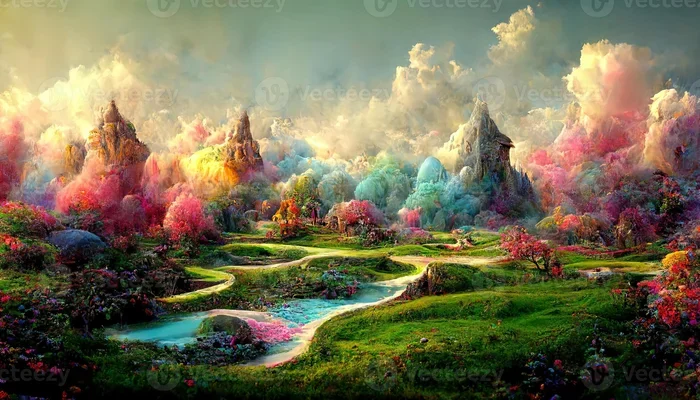
The surreal meaning refers to the deeper, often dreamlike significance behind art, images, or experiences that go beyond logical interpretation. Understanding surreal meaning helps you unlock creative thinking, emotional insight, and a richer appreciation of symbolism in everyday life. This guide breaks down everything you need to know.
Key Takeaways
- Surreal meaning goes beyond literal interpretation to reveal hidden, dreamlike significance in art and experiences.
- The surrealist movement, founded in the 1920s, shaped how we understand subconscious symbolism and creative expression today.
- Understanding
can improve your critical thinking, emotional intelligence, and problem-solving skills. - Famous artists like Salvador Dalí and René Magritte used surreal meaning to challenge reality and spark imagination.
- You can create your own surreal meaning through journaling, mixed media, and exploring your subconscious mind.
- Surreal interpretation is not about guessing — it is about connecting emotionally and symbolically with the artwork.
- Common mistakes include over-analyzing every detail and ignoring the emotional response a piece triggers in you.
📑 Table of Contents
- What Is Surreal Meaning And Why It Actually Matters
- What Does Surreal Meaning Actually Mean
- A Brief History of Surreal Meaning and the Surrealist Movement
- How Surreal Meaning Affects Our Daily Lives
- Famous Examples of Surreal Meaning in Art
- How to Create Your Own Surreal Meaning
- Common Mistakes People Make About Surreal Meaning
- The Power of Surreal Meaning in Personal Growth
- Conclusion: Why Surreal Meaning Really Matters
What Is Surreal Meaning And Why It Actually Matters
Have you ever looked at a painting and felt something strange? Maybe melting clocks hung from tree branches. Or maybe a giant stone face sat in a barren desert. You did not quite get it. But something inside you reacted. That reaction is the heart of surreal meaning.
Surreal meaning is the deeper significance found in dreamlike, irrational, or symbolic imagery. It goes beyond what you see on the surface. It taps into emotions, hidden thoughts, and the subconscious mind. Understanding this concept opens doors to richer art appreciation and sharper creative thinking.
In this article, we will explore the history, the psychology, and the practical power behind surreal meaning. You will learn how to recognize it, create it, and use it in your own life. Whether you are an art lover or just curious, this guide will change how you see the world around you.
The beauty of surreal meaning is that there is no single correct answer. It invites personal interpretation. It rewards emotional honesty. And it challenges the idea that everything must make logical sense. Let us dive in.
What Does Surreal Meaning Actually Mean
At its core, surreal meaning refers to the symbolic or emotional significance behind surreal content. Surreal content is anything that feels dreamlike, bizarre, or outside normal reality. Think of strange combinations. Think of impossible landscapes. Think of images that stir feelings you cannot explain with words.
The Difference Between Literal and Surreal Meaning
Literal meaning says: “This is a picture of a dog.” Surreal meaning says: “This dog is floating in the sky because the artist feels trapped.” The literal meaning gives facts. The surreal meaning gives depth. Most powerful art uses both layers together.
Consider this simple example. A painting shows a door in the middle of a desert. The literal meaning is just a door in a desert. But the surreal meaning could represent opportunity, isolation, or a transition between life stages. The viewer brings their own experiences to the interpretation.
Why Surreal Meaning Connects With the Subconscious Mind
Our brains process the world in two ways. We think logically. We also feel intuitively. Surreal meaning speaks directly to the intuitive side. It bypasses the rational mind and reaches the subconscious mind.
This is why surreal art often feels emotionally powerful even when it looks confusing. The dreamlike imagery triggers associations from deep within your memory and emotion. You may not know why a certain image moves you. But it does. That is surreal meaning at work.
A Brief History of Surreal Meaning and the Surrealist Movement
You cannot fully understand surreal meaning without knowing its roots. The word “surreal” comes from the French word “sur,” meaning “above” or “beyond.” It was first used in the early 20th century to describe a revolutionary art movement.
The Birth of Surrealism in the 1920s
André Breton launched the surrealist movement in 1924 with his manifesto. He wanted artists to break free from logic and reason. He believed the subconscious thoughts held the key to truth and beauty. Breton was inspired by Sigmund Freud’s theories about dreams and the unconscious.
The movement spread quickly. Artists embraced creative expression through painting, writing, film, and photography. They rejected traditional rules. They sought freedom. And they changed art forever.
Key Figures Who Shaped Surreal Meaning
Several iconic artists defined what surreal meaning looks like in practice:
- Salvador Dalí — Known for melting clocks and bizarre landscapes. His work explored time, dreams, and desire.
- René Magritte — Painted ordinary objects in strange contexts. His work challenged perception and symbolic interpretation.
- Max Ernst — Used collage and frottage to create dreamlike textures and fantasy art meaning.
- Frida Kahlo — Wove personal pain and cultural symbolism into deeply emotional artistic interpretation.
- Joan Miró — Used abstract shapes and bold colors to express the subconscious in playful ways.
Each artist brought their own version of surreal meaning to the world. Together, they built a legacy that still influences artists today.
How Surreal Meaning Affects Our Daily Lives
You do not need to visit a museum to encounter surreal meaning. It shows up in movies, advertisements, music videos, dreams, and even conversations. Understanding it gives you a sharper eye for the world around you.
Surreal Meaning in Popular Culture
Think about your favorite movies. Films by David Lynch, Christopher Nolan, and Guillermo del Toro are filled with irrational imagery and visual metaphor. They challenge viewers to look deeper. Music videos by artists like Björk and FKA Twigs also use dream world art to convey emotion beyond words.
Advertisers also use surreal meaning to grab attention. A surreal image sticks in your mind because it is unexpected. It makes you feel something. That emotional response drives memory and action.
Surreal Meaning in Dreams and Personal Reflection
Your dreams are naturally surreal. You fly. You talk to people who are not there. You walk through impossible spaces. These subconscious symbolism patterns carry emotional messages. Paying attention to dream imagery is a form of understanding surreal meaning in your own life.
When you journal about dreams, you practice interpreting hidden meanings in art and in your own thoughts. This builds self-awareness. It also strengthens your creative problem-solving skills.
Why Emotional Resonance Matters
Emotional resonance is the emotional punch behind surreal meaning. When a surreal image makes you feel uneasy, joyful, or nostalgic, that feeling is the message. The image is just the vehicle. Learning to trust your emotional responses is a key part of surreal interpretation.
Next time a piece of art confuses you, pause. Ask: “What do I feel right now?” That feeling is your starting point for understanding the deeper layer.
Famous Examples of Surreal Meaning in Art
Let us look at specific works that show how powerful surreal meaning can be. These examples will help you spot the same patterns in other art.
Salvador Dalí’s The Persistence of Memory
This painting features soft, melting clocks draped across a landscape. The psychological symbolism suggests that time is not rigid. It bends. It melts. Dalí was exploring how the subconscious mind perceives time differently than the waking world.
The surreal meaning here is about impermanence and the fluidity of experience. It invites each viewer to reflect on their own relationship with time.
René Magritte’s The Treachery of Images
You know this painting: “This is not a pipe.” Magritte painted a realistic pipe and wrote those words below it. The symbolic art form challenges assumptions. It asks: can a representation ever be the real thing?
The surreal meaning pushes you to question how you interpret the world. It is a simple image with a profound deeper meaning in art.
Frida Kahlo’s The Two Fridas
Kahlo painted two versions of herself sitting together, connected by a vein. One Frida wears traditional Mexican clothing. The other wears European-style clothing. The imaginative artwork explores identity, heartbreak, and duality.
The surreal meaning here is deeply personal yet universally relatable. Anyone who has ever felt split between two identities can connect with this piece.
Comparison: Two Approaches to Surreal Meaning
| Aspect | Dalí’s Approach | Magritte’s Approach |
|---|---|---|
| Style | Hyper-detailed dreamscapes | Simple, thought-provoking scenes |
| Focus | Subconscious desires and fears | Logic and perception |
| Viewer Response | Emotional and visceral | Intellectual and reflective |
| Symbolism | Personal and abstract | Conceptual and direct |
Both approaches use surreal meaning. But they take very different paths to get there. Dalí pulls you into a dream. Magritte asks you to think.
How to Create Your Own Surreal Meaning
You do not have to be a professional artist to work with surreal meaning. Anyone can explore it through simple creative practices. Here are practical ways to start.
1. Start with Dream Journaling
Write down your dreams as soon as you wake up. Do not filter or judge. Just capture the images, feelings, and strange details. Over time, patterns will emerge. These patterns are raw material for creative expression.
Ask yourself what each element might represent. A staircase might mean growth. A locked door might mean a barrier. This practice builds your skills in symbolic interpretation.
2. Use Mixed Media and Collage
Collect old magazines, photographs, fabric, and random images. Cut them out. Combine them in unexpected ways. Collage naturally creates dreamlike imagery because it merges unrelated things.
Do not worry about making it “good.” The goal is to let your subconscious guide your hands. The surreal meaning will emerge through the process itself.
3. Paint or Draw Without Rules
Set a timer for 15 minutes. Close your eyes. Start drawing or painting whatever comes to mind. Do not stop. Do not correct. Let your subconscious mind take over.
This technique is called automatic drawing. Many surrealist artists used it. It bypasses your inner critic and lets pure emotional resonance flow onto the page.
4. Explore Visual Metaphors in Daily Life
Look around your room. Find two unrelated objects. Now imagine them together in a scene. A teapot sitting on a mountain. A fish swimming through a window. This simple exercise trains your brain to see visual metaphor everywhere.
It also strengthens your ability to communicate complex ideas through images. This skill is valuable in design, writing, marketing, and more.
Quick Tips for Beginners
- Do not overthink. Let intuition lead the way.
- Keep everything you create. You will see patterns later.
- Study how your emotions respond to different images.
- Share your work with others and listen to their interpretations.
- Explore beyond visual art. Try surreal writing and photography too.
Common Mistakes People Make About Surreal Meaning
Even curious minds can trip up when exploring surreal meaning. Here are common mistakes to avoid.
Mistake 1: Trying to Find the “Right” Answer
Surreal interpretation is not a puzzle with one solution. If you search for the single correct meaning, you will miss the experience. Instead, notice what you feel. Then explore why. Multiple readings and multiple meanings are perfectly fine.
Mistake 2: Ignoring Your Emotional Response
Some people analyze surreal art so hard that they forget to feel. Your gut reaction matters. If a piece makes you anxious, that anxiety is data. If it makes you hopeful, that hope is data. Emotional resonance is a valid and important part of understanding surreal meaning.
Mistake 3: Confusing Surreal with Random
Surreal does not mean random. True dreamlike imagery usually has internal logic, even if that logic is dream logic. Random is just noise. Surreal carries meaning beneath its surface. Learning to spot the difference takes practice.
Mistake 4: Only Looking at Famous Art
While studying masters like Dalí and Magritte is valuable, limiting yourself to famous works narrows your perspective. Explore emerging artists, street art, digital art, and your own creations. Creative expression is everywhere.
Expert Insight
Art therapist Dr. Cathy Malchiodi has noted that engaging with surreal and symbolic imagery can unlock emotional processing in ways traditional talk therapy sometimes cannot. She emphasizes that the personal response to symbolic art forms is often more revealing than any external analysis. This reinforces the idea that your own reaction to surreal meaning is the most valuable tool you have.
The Power of Surreal Meaning in Personal Growth
Understanding surreal meaning is not just about art appreciation. It can genuinely transform how you think and grow as a person.
Building Empathy Through Symbolic Thinking
When you practice interpreting hidden meanings in art, you also practice understanding people. You learn to see beneath surface behavior. You become more comfortable with complexity. This builds empathy and strengthens relationships.
Think about it. If you can sit with a confusing painting and try to understand it, you can sit with a confusing person and try to understand them too. Subconscious thoughts drive both art and human behavior. The skills overlap.
Boosting Creativity and Innovation
Studies in psychology show that engaging with abstract and symbolic content enhances divergent thinking. Divergent thinking is the ability to generate many possible solutions. It is the foundation of creativity and innovation.
By regularly exploring surreal meaning, you exercise this mental muscle. You become more flexible in your thinking. You see connections others might miss. This gives you an edge in work, education, and everyday problem-solving.
Key Takeaways for Personal Growth
- Regular engagement with surreal meaning strengthens emotional intelligence.
- Practicing symbolic interpretation improves your ability to communicate complex ideas.
- Exploring the subconscious through art builds confidence in your own creative voice.
- Surreal thinking helps you navigate ambiguity and uncertainty with greater ease.
Conclusion: Why Surreal Meaning Really Matters
Surreal meaning is more than an art world concept. It is a way of seeing. It invites you to go deeper than the surface. It asks you to feel before you analyze. It celebrates the mystery and richness of human experience.
From the dreamscapes of Dalí to the quiet provocations of Magritte, surreal meaning has shaped culture for nearly a century. It has influenced film, advertising, therapy, education, and personal creativity. It continues to evolve as new artists explore subconscious symbolism in fresh and exciting ways.
Now you know what surreal meaning is. You know its history. You know how to recognize it, create it, and avoid common mistakes. The next step is simple. Start looking at the world with surreal eyes. Ask deeper questions. Trust your emotional responses. Explore your own subconscious through art and reflection.
The deeper meaning in art has always been there, waiting for you to notice it. Now you have the tools to find it. Use them. Create something strange. Feel something unexpected. That is where the real magic of surreal meaning lives.
Frequently Asked Questions
What is the simplest way to understand surreal meaning?
The simplest way is to focus on your emotional response. When you see something surreal, ask yourself how it makes you feel. That feeling is your starting point for understanding the deeper message behind the image or experience.
Is surreal meaning the same as abstract meaning?
No. Abstract meaning focuses on shapes, colors, and non-representational forms. Surreal meaning often uses recognizable objects placed in strange or dreamlike contexts. Both go beyond literal interpretation, but they work in different visual ways.
Can children understand surreal meaning?
Yes. Children naturally think in imaginative and symbolic ways. They often connect with surreal imagery intuitively. Encouraging children to explain what they see in surreal art builds their creative thinking and emotional vocabulary from an early age.
How does surreal meaning relate to psychology?
Surreal meaning is deeply connected to psychology. The surrealist movement was inspired by Freud’s theories about the subconscious mind. Today, therapists use symbolic art and dream interpretation to help patients explore hidden emotions and unresolved feelings.
Do I need to be an artist to explore surreal meaning?
Absolutely not. Anyone can explore surreal meaning through journaling, collage, dream analysis, or simply viewing art with curiosity. It is about how you think and feel, not about technical artistic skill.
What makes surreal meaning different from fantasy?
Fantasy creates entirely new worlds and rules. Surreal meaning takes familiar elements and places them in unexpected relationships. Fantasy entertains through escape. Surreal meaning challenges through symbolism and emotional depth. They overlap, but their purposes differ.