
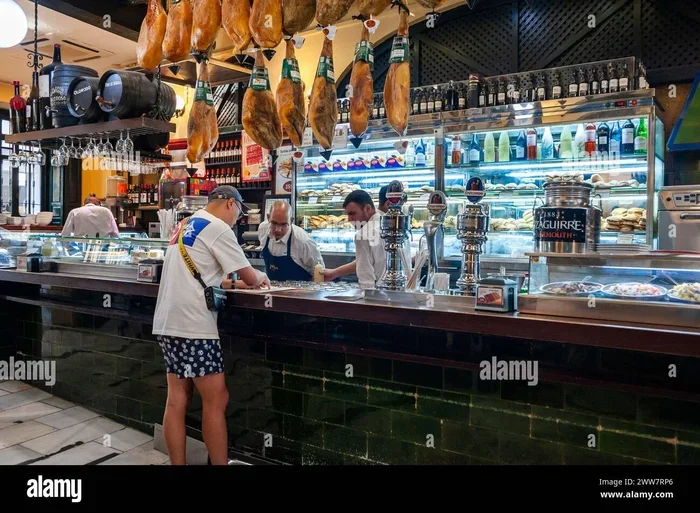
Knowing how to say order food in Spanish can transform your dining experience abroad or at home. This guide gives you practical phrases, menu vocabulary, and cultural tips to order with confidence. You will learn key words, avoid common mistakes, and feel comfortable in any Spanish-speaking restaurant.
Imagine walking into a restaurant in Madrid, Mexico City, or Buenos Aires. You sit down, the waiter approaches, and they start speaking rapid Spanish. Your heart races. You want to order food in Spanish, but your mind goes blank. This is a moment many travelers face. But it does not have to be stressful.
Learning how to say order food in Spanish is simpler than you think. With a handful of key phrases and some basic vocabulary, you can walk into any restaurant and feel confident. This guide breaks everything down into easy, bite-sized pieces. You will learn the exact phrases to use, how to read a Spanish menu, and cultural tips that make the whole experience smoother. Let us dive in.
Key Takeaways
- Master the basics: “Quisiera” and “Me gustaría” are the two most important phrases for ordering food in Spanish.
- Know your menu words: Understanding “entrada,” “plato principal,” and “postre” helps you navigate any menu.
- Avoid common mistakes: False friends and direct translations can cause confusion at the table.
- Use cultural tips: Greeting staff properly and understanding meal times makes a big difference.
- Practice daily: Even five minutes of daily practice builds real confidence in ordering food.
- Carry a cheat sheet: A small printed card with key phrases can save you in tough moments.
📑 Table of Contents
- Why Knowing How to Order Food in Spanish Matters
- Essential Phrases to Order Food in Spanish
- Understanding a Spanish Menu: Key Words You Need
- Common Mistakes When You Try to Order Food in Spanish
- Cultural Tips for Ordering Food in Spanish-Speaking Countries
- Quick Tips to Practice Ordering Food in Spanish at Home
- How to Handle Difficult Situations at the Restaurant
- Expert Insight: Why Confidence Beats Perfection
- Key Takeaways
- Conclusion
Why Knowing How to Order Food in Spanish Matters
Food is at the heart of every culture. In Spanish-speaking countries, meals are not just about eating. They are about connection, tradition, and enjoyment. When you can order food in Spanish, you open doors to richer experiences. You talk with locals. You discover hidden gems off the tourist menu. You show respect for the culture.
Even if you are not traveling, knowing Spanish food phrases helps at home. There are Spanish-speaking communities everywhere. Restaurants, food trucks, and home kitchens all use this language. A little knowledge goes a long way. It also builds your confidence to keep learning the language.
The Power of Simple Phrases
You do not need to become fluent overnight. Start with a few essential phrases. These small wins build momentum. Soon you will be ordering meals, asking for recommendations, and even making small talk with the waiter. The key is practice and repetition.
If you have ever used translation tools, you know how helpful they can be. For example, if you ever need to translate to English for other language tasks, similar tools exist for Spanish too. But having the phrases in your head is always better than relying on a screen at the table.
Essential Phrases to Order Food in Spanish
This is the core section. Here are the most useful phrases you need. Each one comes with a pronunciation guide and a real-world example.
1. “Quisiera” — The Polite Way to Order
“Quisiera” means “I would like.” It is the most common and polite way to start your order. You can use it in almost any situation.
- Quisiera una pizza, por favor. — I would like a pizza, please.
- Quisiera el menú del día. — I would like the daily menu.
This phrase works in every Spanish-speaking country. It sounds natural and respectful. Use it as your go-to phrase when you order food in Spanish.
2. “Me gustaría” — Another Friendly Option
“Me gustaría” also means “I would like.” It is slightly softer and more personal than “quisiera.” Both work perfectly well.
- Me gustaría una ensalada, por favor. — I would like a salad, please.
- Me gustaría probar el tacos, por favor. — I would like to try the tacos, please.
Use “me gustaría” when you want to sound warm and friendly. It is perfect for casual restaurants and street food stalls.
3. “Para mí” — Saying “For Me”
When the waiter asks who is ordering what, use “para mí” (for me). This keeps the conversation flowing naturally.
- ¿Y para usted, señor? — And for you, sir?
- Para mí, el pollo asado, por favor. — For me, the roast chicken, please.
4. “La cuenta, por favor” — Getting the Bill
Do not forget this one! When you are done eating, say “la cuenta, por favor” (the bill, please). This is a must-know phrase for every diner.
- La cuenta, por favor. — The bill, please.
- ¿Me puede traer la cuenta? — Can you bring me the bill?
Many learners forget to practice this phrase. But it is just as important as the ordering phrases. You do not want to sit there staring at the waiter, waiting.
Understanding a Spanish Menu: Key Words You Need
Menus in Spanish-speaking countries can look intimidating. But once you know a few key words, they become much easier to read. Here is a quick guide to menu vocabulary.
| Spanish Word | English Meaning | When You Will See It |
|---|---|---|
| Entrada | Starter / Appetizer | At the beginning of the menu |
| Plato principal | Main course | The biggest section of the menu |
| Postre | Dessert | Near the end of the menu |
| Bebida | Drink | Under drinks section |
| Del día | Of the day | Next to daily specials |
| Casero/a | Homemade | Next to traditional dishes |
| Picante | Spicy | Next to hot dishes |
| Sin… (sin gluten, sin carne) | Without… (gluten-free, meatless) | For dietary needs |
Knowing these words changes everything. Instead of pointing at the menu, you can read it and choose with confidence. This is especially helpful when you order food in Spanish at places that do not have pictures.
Common Dish Names You Should Recognize
Spanish menus often feature classic dishes with names you may already recognize. Here are some examples:
- Paella — A famous rice dish from Spain, often with seafood or chicken.
- Tacos — A staple of Mexican cuisine, filled with meat, beans, or vegetables.
- Ceviche — Fresh fish cured in lime juice, popular in Peru and coastal regions.
- Empanadas — Pastry pockets filled with meat, cheese, or vegetables.
- Tamales — Steamed corn dough filled with savory or sweet ingredients.
If you love Mexican cuisine, you might enjoy exploring Mexican food jokes to add some fun to your learning journey. Humor is a great way to remember vocabulary!
Common Mistakes When You Try to Order Food in Spanish
Even with the best intentions, learners make mistakes. Here are the most common ones and how to avoid them.
Mistake 1: Using Direct Translations
English and Spanish do not always line up perfectly. For example, the phrase “in lieu of” does not translate directly word-for-word. Understanding in lieu of meaning and similar phrases in other languages helps you think more flexibly about language. The same applies to food ordering. Direct translations can sound awkward or even confusing.
Instead of translating literally, learn the natural Spanish way to say things. For example, do not say “yo quiero la comida” (I want the food) in a formal setting. Use “quisiera” instead. It sounds much more polite.
Mistake 2: Ignoring Gender and Articles
Spanish nouns have gender. “El taco” is masculine. “La pizza” is feminine. Using the wrong article can sound odd to native speakers. It is a small detail, but it matters.
- El pollo (the chicken) — masculine
- La ensalada (the salad) — feminine
- El refresco (the soda) — masculine
- La cerveza (the beer) — feminine
Do not stress too much about this. Native speakers are forgiving. But getting the basics right shows effort and respect.
Mistake 3: Skipping “Por Favor”
Always say “por favor” (please). It is a simple addition that makes a huge difference. Leaving it out can sound rude, even if you did not mean to be. Politeness goes a long way in every culture.
Cultural Tips for Ordering Food in Spanish-Speaking Countries
Language is just one part of the equation. Culture plays a big role too. Here are tips that will help you feel more comfortable and natural.
Meal Times Are Different
In Spain, lunch is often late — around 2 or 3 PM. Dinner does not start until 9 or 10 PM. In Mexico and other Latin American countries, meal times can vary but tend to be later than in the US or UK. If you arrive at a restaurant at 6 PM in Madrid, you may find it nearly empty. That is normal!
Greeting the Staff
When you enter a restaurant, say “Buenos días,” “Buenas tardes,” or “Buenas noches” depending on the time of day. A simple greeting sets a positive tone. It shows you respect local customs. The staff will appreciate it.
Tipping Culture
Tipping varies by country. In Spain, tipping is not expected but appreciated. In Mexico, a 10-15% tip is standard. In Argentina, tips are usually around 10%. Check local customs before you travel so you feel prepared.
Sharing Food Is Common
In many Spanish-speaking cultures, meals are shared. Families and friends often order several dishes to share. If you are dining with others, be ready to pass dishes and try a little bit of everything. It is a social experience.
Quick Tips to Practice Ordering Food in Spanish at Home
You do not need to be in a Spanish-speaking country to practice. Here are easy ways to build your skills every day.
- Cook a Spanish recipe: Pick a dish like paella or tacos and read the recipe in Spanish. This builds food vocabulary naturally.
- Watch Spanish food videos: Search for cooking channels in Spanish on YouTube. You will hear natural pronunciation and common phrases.
- Practice with a friend: Find a language partner and role-play a restaurant scenario. Take turns being the waiter and the customer.
- Label your kitchen: Put Spanish sticky notes on food items in your fridge and pantry. “La leche,” “el pan,” “las frutas.”
- Use flashcard apps: Apps like Anki or Quizlet have Spanish food vocabulary decks. Five minutes a day adds up fast.
The more you expose yourself to the language, the more natural it becomes. You will start thinking in Spanish without even realizing it.
How to Handle Difficult Situations at the Restaurant
Even with preparation, sometimes things do not go as planned. Here is how to handle common challenges.
The Waiter Does Not Speak English
Stay calm. Use simple phrases and gestures. Point at the menu if needed. Say “¿Me puede ayudar?” (Can you help me?). Most people appreciate the effort and will be patient.
You Do Not Understand the Dish Name
Ask! Say “¿Qué es esto?” (What is this?) or “¿Qué lleva este plato?” (What does this dish contain?). This is especially important for people with food allergies or dietary restrictions.
The Dish Is Not What You Expected
Politely say “No es lo que esperaba” (It is not what I expected). Most restaurants will try to make it right. Being polite and clear solves most problems.
Expert Insight: Why Confidence Beats Perfection
Here is a secret most language learners do not know. Native speakers do not expect perfection. They appreciate the effort. Even if your pronunciation is not perfect, even if you mix up a gender or two, they will smile and help you. The goal is communication, not perfection.
When you walk into a restaurant and attempt to order food in Spanish, you are doing something brave. You are stepping outside your comfort zone. That alone deserves credit. So relax, smile, and enjoy the process.
Think about it this way. Every mistake is a lesson. Every attempt builds your confidence. Over time, you will notice that ordering food in Spanish gets easier and easier. What once felt scary becomes second nature.
Key Takeaways
- Start with “Quisiera” or “Me gustaría”: These are the two most important phrases for ordering food politely in Spanish.
- Learn menu vocabulary: Words like “entrada,” “plato principal,” and “postre” help you navigate any menu with ease.
- Avoid direct translations: Learn the natural Spanish expressions instead of translating from English word-for-word.
- Practice cultural norms: Greet staff, respect meal times, and understand tipping customs in different countries.
- Practice daily at home: Cook Spanish recipes, watch food videos, and use flashcards to build vocabulary consistently.
- Stay confident, not perfect: Native speakers value effort and politeness far more than flawless grammar.
Conclusion
Learning how to say order food in Spanish is one of the most practical and rewarding skills you can build. Whether you are planning a trip to Spain, Mexico, Colombia, or Argentina, these phrases will serve you well. You will feel more confident, more connected, and more independent.
Start with the basics. Practice a little every day. Do not be afraid to make mistakes. Every conversation is a chance to improve. The next time you sit down at a Spanish-speaking restaurant, you will know exactly what to say. And that feeling of confidence? It is worth every minute of practice.
So go ahead. Try out these phrases today. Order your next meal in Spanish. You might be surprised at how natural it feels.
Frequently Asked Questions
What is the easiest way to order food in Spanish?
The easiest way is to use “Quisiera” or “Me gustaría” followed by the name of the dish. Add “por favor” at the end to sound polite. For example, “Quisiera una paella, por favor.” These phrases work in every Spanish-speaking country and sound natural to native speakers.
Do I need to know grammar to order food in Spanish?
No, you do not need deep grammar knowledge. Learning a few set phrases is enough to handle most restaurant situations. Focus on memorizing key expressions like “La cuenta, por favor” and “¿Me puede traer…?” Grammar will improve naturally as you practice more.
What if the waiter does not understand my Spanish?
Stay calm and try again slowly. Use simple words and point at the menu if needed. Most Spanish speakers are patient and helpful. You can also say “¿Habla inglés?” (Do you speak English?) as a backup. But do not worry — even basic Spanish goes a long way.
How can I remember Spanish food vocabulary easily?
Use real-life practice. Cook Spanish recipes at home, label items in your kitchen, or watch Spanish cooking videos. Flashcard apps also help. The key is to connect words with things you can see, touch, and taste. This makes memory much stronger than just reading a list.
Is tipping required when dining in Spanish-speaking countries?
It depends on the country. In Spain, tipping is optional but appreciated. In Mexico, a 10-15% tip is standard. In Argentina, around 10% is typical. Always check local customs before you travel. When in doubt, a small tip is always a kind gesture.
Can I use these phrases in all Spanish-speaking countries?
Yes, the core phrases like “Quisiera,” “Me gustaría,” and “La cuenta, por favor” work everywhere. However, some words vary by region. For example, “refresco” means soda in Mexico but “bebida” is more common in Spain. The basics remain the same across all countries.