
Learning how to say money in Korean is easier than you think. This guide covers the Korean word for money, currency terms, and practical phrases you can use right away. You will also learn Korean numbers for counting won and common money expressions.
Key Takeaways
- The Korean word for money is “won” (원), and the currency is called the Korean won.
- You can say “money” in Korean as “돈” (don), which is the most common word used daily.
- Korean money vocabulary includes words for coins, bills, and financial terms that are simple to learn.
- Korean numbers play a big role in counting money, and there are two number systems you need to know.
- Practical phrases for shopping, bargaining, and talking about prices will boost your real-world Korean skills.
- Common mistakes like mixing up number systems can be avoided with simple practice tips.
📑 Table of Contents
- How to Say Money in Korean: A Complete Beginner Guide
- The Korean Word for Money: The Basics
- Korean Currency: Coins and Bills Explained
- Korean Numbers for Counting Money
- Money-Related Phrases You Will Use Every Day
- Tips for Learning Korean Money Words Fast
- Common Mistakes When Saying Money in Korean
- How Money Words Connect to Broader Korean Learning
- Conclusion
How to Say Money in Korean: A Complete Beginner Guide
If you have ever wondered how to say money in Korean, you are in the right place. Whether you are planning a trip to South Korea or just curious about the language, knowing money words is a must. The Korean language has simple and clear words for currency, and once you learn them, you will feel more confident in real-life situations.
Money is a part of everyday life. You need it to buy food, ride the subway, and shop at markets. Understanding Korean money vocabulary makes these tasks much easier. This guide breaks everything down into simple steps. You will learn the key words, how to pronounce them, and how to use them in real conversations.
Learning a new language can feel overwhelming at first. But when it comes to money words, the basics are very straightforward. The Korean word for money is short and easy to remember. Within minutes, you will be able to say it correctly and use it in simple sentences. Let us get started.
The Korean Word for Money: The Basics
The most common word for money in Korean is 돈 (don). It is a simple, one-syllable word that everyone uses in daily conversation. Think of it like the English word “cash.” You can use it in almost any situation when talking about money.
Another important term is 원 (won). This is the name of the Korean currency. Just like people say “dollars” in English, Koreans say “won” when they talk about their currency. The symbol for Korean won is ₩. You will see this on price tags everywhere in South Korea.
Here are the key terms you need to remember:
- 돈 (don) — Money (general word)
- 원 (won) — Korean currency unit
- 한국 원 (Hanguk won) — Korean won (full name)
- 동전 (dongjeon) — Coins
- 지폐 (jipye) — Banknotes
When you walk into a store in Seoul, you will hear these words all the time. The word 돈 comes up in almost every transaction. And 원 is attached to every price you see. For example, 5,000 won is written as 5,000원. The word “won” is always attached to the number.
If you want to say “I need money” in Korean, you would say 돈이 필요해 (don-i pil-yo-hae). This simple phrase can come in very handy. It is one of the first money-related sentences beginners should learn.
How to Pronounce Money Words in Korean
Pronunciation matters when you are learning a new language. The good news is that Korean money words are easy to say. The word 돈 sounds like “dohn” with a short “o” sound. The word 원 sounds like “wun” with a soft “w” at the start.
Here is a quick pronunciation guide:
- 돈 (don) — Rhymes with “done”
- 원 (won) — Rhymes with “pun” but starts with a “w” sound
- 동전 (dongjeon) — “dong” + “jun”
- 지폐 (jipye) — “jip” + “pyeh”
Try saying these words out loud a few times. Repetition helps your mouth get used to the sounds. If you can say “done” and “wun” clearly, you are already halfway there. The Korean language is phonetic, which means words are pronounced exactly as they are written.
Korean Currency: Coins and Bills Explained
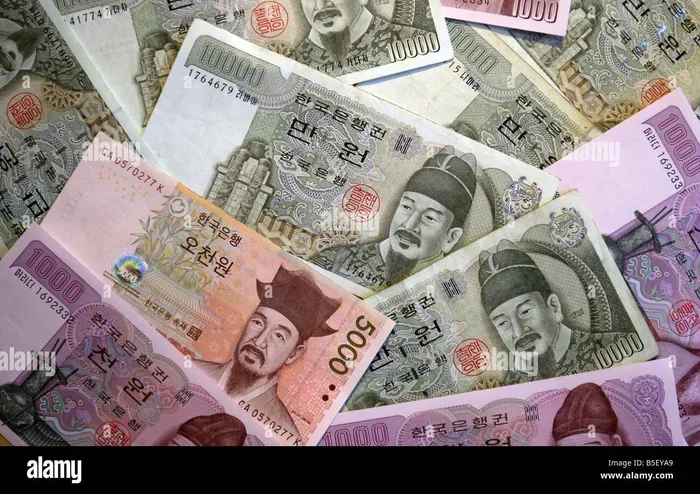
South Korea uses the Korean won as its official currency. The currency comes in both coins and bills. Each has a different value, and knowing them helps you when you are shopping or using an ATM.
Korean coins come in these denominations:
- 10원 (10 won) — Smallest coin
- 50원 (50 won)
- 100원 (100 won)
- 500원 (500 won) — Largest coin
Korean banknotes come in these denominations:
- 1,000원 (1,000 won)
- 5,000원 (5,000 won)
- 10,000원 (10,000 won)
- 50,000원 (50,000 won)
- 100,000원 (100,000 won)
When you say these amounts out loud, you simply add the word 원 (won) after the number. For example, 10,000 won is “man won” in Korean. The word “man” means ten thousand, and it is a very useful number word to know.
Coins are used for small purchases like a bottle of water or a bus ride. Bills are used for bigger purchases like meals at restaurants or items at shops. Most vending machines and convenience stores accept both coins and bills.
A Quick Look at Korean Banknote Designs
Each Korean banknote features a famous historical figure. The 1,000 won note shows a scholar from the Joseon dynasty. The 5,000 won note shows a famous Korean artist. The 10,000 won note shows a king. The 50,000 won note shows a female scholar. These designs make the currency easy to tell apart.
If you are visiting Korea, it helps to know these faces. It prevents you from confusing bills. And it shows respect for the culture when you handle the money carefully.
Korean Numbers for Counting Money
Counting money in Korean requires knowing the Korean number system. There are two number systems in Korean: the native Korean numbers and the Sino-Korean numbers. For counting money, Sino-Korean numbers are used most often.
Here are the Sino-Korean numbers you need for money:
- 하나 (hana) — One
- 둘 (dul) — Two
- 셋 (set) — Three
- 넷 (net) — Four
- 다섯 (daseot) — Five
- 여섯 (yeoseot) — Six
- 일곱 (ilgop) — Seven
- 여덟 (yeodeol) — Eight
- 아홉 (ahop) — Nine
- 열 (yeol) — Ten
For larger amounts, you need to know a few key multipliers:
- 백 (baek) — Hundred
- 천 (cheon) — Thousand
- 만 (man) — Ten thousand
- 억 (eok) — Hundred million
So when you see a price of 15,000 won, you would say “man daseot won” in Korean. That means “ten thousand five thousand won.” It sounds simple once you break it down.
Learning these numbers takes a little practice, but it is very worth it. You will use them every time you handle Korean money. Even if you just count coins at a market, knowing these numbers saves you time and confusion.
Money-Related Phrases You Will Use Every Day
Knowing individual words is great. But using them in real phrases is what makes you actually functional. Here are the most common money-related Korean phrases you will need.
Asking About Prices
- 이거 얼마예요? (igeo eolmayeyo?) — How much is this?
- 얼마예요? (eolmayeyo?) — How much is it?
- 이거 얼마입니까? (igeo eolma-imnikka?) — How much is this? (formal)
Paying and Bargaining
- 계산해 주세요 (gyesan-hae juseyo) — Check please / Can I pay?
- 카드로 결제할 수 있어요? (ka-deu-ro gyeolje-hal su isseoyo?) — Can I pay by card?
- 이것으로 지불해 주세요 (igeot-euro jibul-hae juseyo) — Pay with this, please.
Talking About Costs
- 비싸요 (bissayo) — It is expensive.
- 싸요 (ssayo) — It is cheap.
- 비싼 것 같아요 (bissan geot gateoyo) — It seems expensive.
These phrases are gold for anyone visiting Korea. You can use them at restaurants, shops, and even taxi rides. Most Koreans appreciate it when visitors try to speak even a few words of Korean. It shows effort and respect.
When you are at a traditional market, you might hear the phrase 깎아 주세요 (kkak-a juseyo), which means “Can you give me a discount?” This is very common in open-air markets. It is a fun phrase to practice, and it might even save you some 돈 (don).
Useful Money Vocabulary for Beginners
Here is a quick list of extra vocabulary that will help you talk about money in Korean with ease:
- 가격 (gagyeok) — Price
- 세금 (segeum) — Tax
- 할인 (halin) — Discount
- 잔돈 (jan-don) — Change (money)
- 영수증 (yeong-su-jeung) — Receipt
- 통장 (tongjang) — Bank account
- 입금 (ipgeum) — Deposit
- 출금 (chulgeum) — Withdrawal
These words cover most situations you will encounter. Whether you are at a bank or buying something at a store, these terms come in handy. Try to memorize a few each day. Before long, you will recognize them everywhere.
Tips for Learning Korean Money Words Fast
Learning new vocabulary can be fun if you use the right methods. Here are some practical tips to help you master how to say money in Korean quickly and confidently.
1. Use Flashcards Every Day
Write the Korean word on one side and the English meaning on the other. Review them for just five minutes a day. Flashcards use spaced repetition, which helps your brain remember words longer.
2. Watch Korean Shopping Videos
Search for Korean shopping vlogs on YouTube. Listen to how people talk about prices and money. This gives you real-world context and natural pronunciation. It is like learning from a live classroom.
3. Practice with a Language Partner
Find a language exchange partner online. Practice ordering food and asking about prices in Korean. Real conversation builds confidence faster than studying alone. You can also try apps that connect you with Korean speakers.
4. Label Items Around Your Home
Put sticky notes with Korean money words on items you buy often. For example, put “₩1,000” on your coffee mug. This creates visual reminders that reinforce your memory throughout the day.
5. Make It Fun with Games
Try solving money riddles that include Korean currency terms. Games make learning feel less like work and more like play. You will remember words better when you associate them with fun activities. You can also try reading Korean jokes that include money vocabulary for a lighthearted way to reinforce your learning.
Common Mistakes When Saying Money in Korean
Even the best learners make mistakes. Here are the most common errors people make when talking about Korean money, and how to avoid them.
Mixing Up the Two Number Systems
Korean has two number systems, and mixing them up is the number one mistake. When counting money, always use Sino-Korean numbers. Using native Korean numbers for prices will confuse the listener. For example, say “man won” not “yeol hae won” when talking about ten thousand won.
Forgetting to Say “원” After the Number
Every price in Korean ends with the word 원 (won). Forgetting it is a common error. If you just say “five thousand” without “won,” the listener might not understand you are talking about Korean currency. Always attach “원” to the number.
Using the Wrong Currency Name
Some learners confuse Korean won with Japanese yen or Chinese yuan. They are different currencies. The Korean currency is the Korean won (원). Make sure you use the correct name when speaking about South Korea’s money.
Overcomplicating Pronunciation
Korean money words are simple to pronounce. Do not overthink them. The word 돈 is just one syllable. 원 is also one syllable. Keep it short and clear. Native speakers will understand you even with a slight accent.
Ignoring Cultural Money Etiquette
In Korea, how you hand over money matters. Use both hands when giving or receiving bills. This is a sign of respect. It is a small cultural detail, but it makes a big impression. When you combine language skills with cultural awareness, you stand out as a thoughtful visitor.
How Money Words Connect to Broader Korean Learning
Learning how to say money in Korean is just one piece of the puzzle. It connects to broader language skills like counting, shopping, and even understanding cultural norms. If you want to go deeper into Korean language learning, resources like translate to English in Hindi meaning can give you insights into how different languages handle currency and number expressions. Understanding cross-linguistic patterns makes learning Korean money terms even easier.
Money vocabulary also opens the door to more advanced topics. You might want to learn about Korean banking, investing, or even discussing salaries. All of these start with the basic words you learned today. Building a strong foundation in money vocabulary gives you confidence to explore more complex financial conversations in Korean.
The beauty of learning Korean is that each word you master connects to the next. Once you know how to say money, you can start talking about prices, savings, and budgets. These are all practical skills that make your Korean learning journey more meaningful and useful in everyday life.
Conclusion
Learning how to say money in Korean does not have to be hard. The key words are simple, the phrases are practical, and the numbers are logical. You now know the word 돈 (don) for money, the word 원 (won) for the currency, and many useful phrases for real-life situations.
The best way to remember these words is to use them regularly. Practice saying prices out loud. Count Korean coins and bills. Use the phrases when you watch Korean shows or talk to native speakers. Every bit of practice strengthens your skills and builds your confidence.
Start small. Learn a few words today. Add a few more tomorrow. Before you know it, you will be able to handle money conversations in Korean with ease. The journey of learning a language is all about small steps that add up to big results. And now you have a solid foundation to build on.
So go ahead and put these words to use. Whether you are ordering food, shopping at a market, or just practicing on your own, every attempt counts. You are doing great, and your efforts will pay off. Keep learning, keep practicing, and keep having fun with the Korean language.
Frequently Asked Questions
What is the Korean word for money?
The Korean word for money is 돈 (don). It is a simple one-syllable word used in everyday conversation. You will hear it everywhere in South Korea when people talk about cash and currency.
How do you say “Korean won” in Korean?
The Korean currency is called 원 (won). The full term is 한국 원 (Hanguk won), which means “Korean won.” You will see the symbol ₩ on all Korean banknotes and coins.
What are the Korean coins and bills called?
Korean coins are called 동전 (dongjeon), and Korean banknotes are called 지폐 (jipye). Together, they make up the physical forms of the Korean won currency used in daily transactions.
Do I need to learn both Korean number systems for money?
For counting money, you mainly need the Sino-Korean number system. Native Korean numbers are used less often for prices. Focus on Sino-Korean numbers, and you will be able to read and say any Korean price correctly.
Is it hard to pronounce Korean money words?
No, Korean money words are very easy to pronounce. The words 돈 and 원 are short and phonetic. Korean is a phonetic language, so words are pronounced exactly as they are written, making pronunciation straightforward for beginners.
Can I use credit cards everywhere in Korea?
Credit cards are widely accepted in cities and shops across South Korea. However, traditional markets and smaller vendors often prefer cash. It is smart to carry some Korean won for these situations. Learning how to say money in Korean helps you handle both cash and card transactions smoothly.