
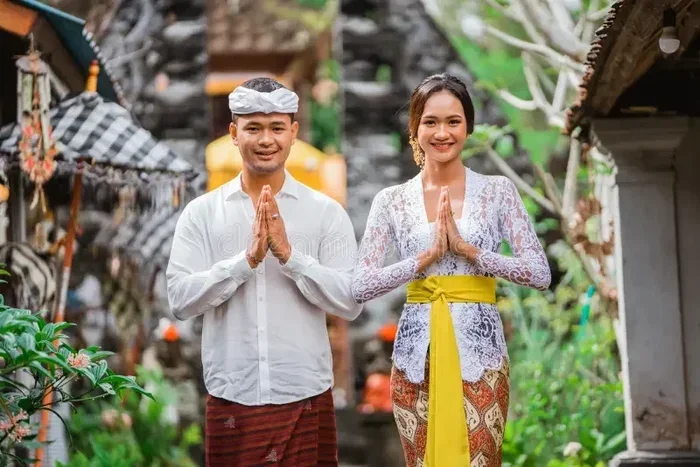
Learning how to say hello in Balinese opens doors to genuine cultural connections on the Island of the Gods. The most common greeting, Om Swastiastu, is a sacred Balinese Hindu prayer that wishes peace and prosperity. Whether you are visiting temples, markets, or villages, using the right Balinese greeting phrases shows deep respect and earns warm smiles from locals.
Imagine stepping off a plane in Bali and the first person you meet smiles at you and says something warm in a language you do not understand. Now imagine you respond with a perfect Balinese greeting that makes their eyes light up. That moment changes everything. You are no longer a tourist. You are a guest they are proud to welcome.
How to say hello in Balinese is more than just a language lesson. It is a gateway to the heart of Balinese culture. The people of Bali are known for their warmth, spirituality, and deep-rooted traditions. When you greet someone in their own language, you show that you care. You show that you did not just come for the beaches and temples. You came to connect.
This guide will teach you every essential Balinese greeting you need. From the sacred morning prayer to casual phrases you can use in markets, we cover it all. You will also learn about Balinese etiquette, common mistakes to avoid, and tips that will help you sound like a local. Let us dive in.
Key Takeaways
- Om Swastiastu is the most widely used and respectful Balinese hello.
- Balinese has different greetings for morning, afternoon, and evening.
- Understanding Balinese greeting etiquette goes beyond just words.
- Locals deeply appreciate when visitors make the effort to speak their language.
- Using the wrong greeting can unintentionally cause offense, so practice carefully.
- Learning a few Balinese phrases transforms your travel experience entirely.
📑 Table of Contents
- Why Learning Balinese Greetings Matters
- The Most Common Balinese Hello: Om Swastiastu
- Other Ways to Say Hello in Balinese
- Balinese Greeting Etiquette: How to Greet Like a Native
- Common Mistakes to Avoid When Greeting in Balinese
- Quick Tips for Greeting Like a True Balinese Native
- The Deeper Meaning Behind Balinese Greetings
- Conclusion
Why Learning Balinese Greetings Matters
Many travelers to Bali stick to English or basic Indonesian. That works fine in tourist areas. But Bali is not just a destination. It is a living culture with over 3 million people who follow unique traditions every single day. The Balinese language has its own charm, its own rhythm, and its own deep spiritual meaning behind everyday words.
When you learn how to say hello in Balinese, you do something powerful. You bridge a gap. You show humility. You tell the people you meet that their language and culture matter to you. This small effort can lead to incredible conversations, invitations to local ceremonies, and friendships that last a lifetime.
Here is why learning Balinese greetings matters more than you think:
- Respect goes a long way. Balinese people value respect deeply. Using their language shows you honor their identity.
- You stand out from other tourists. Most visitors never bother to learn even a single phrase in Balinese.
- It builds trust instantly. A warm greeting in someone’s native language breaks down walls faster than any translator app.
- It enriches your travel experience. You will see more, learn more, and feel more connected to the places you visit.
The Balinese language is part of the Austronesian family, closely related to Indonesian and Javanese. However, it has its own unique vocabulary, honorific levels, and cultural context. Understanding this helps you use greetings correctly and with the right tone.
The Most Common Balinese Hello: Om Swastiastu
If you learn only one phrase in Balinese, let it be Om Swastiastu. This is the universal Balinese greeting used by Hindus across the island. It is not just a casual hello. It is a sacred prayer that wishes peace, safety, and prosperity upon the person you are greeting.
Pronunciation Guide
Breaking it down makes it easy to say:
- Om — pronounced like “ohm” (the sacred sound in Hinduism)
- Swa — pronounced like “swah”
- sti — pronounced like “stee”
- astu — pronounced like “ahs-toot”
Put it together and you get: Ohm Swah-stee-ahs-toot. Say it with a calm, respectful tone. Do not rush it. Each syllable carries meaning and intention.
When to Use Om Swastiastu
Use this greeting in most situations. It works when you enter someone’s home, when you meet a local on the street, when you visit a temple, or when you start a conversation with a Balinese person. It is appropriate at any time of day.
You might also hear this phrase spoken at the beginning of prayers, ceremonies, and community gatherings. The word Om represents the universe and divine energy. Swastiastu means peace and well-being. Together, they create one of the most beautiful greetings in any language.
If you are curious about how the meaning of certain words translates across languages, you might find our translate to English in Hindi meaning guide helpful for understanding cross-linguistic connections.
Other Ways to Say Hello in Balinese
While Om Swastiastu is the most recognized greeting, Balinese actually has several different ways to say hello depending on the time of day and the level of formality. Let us explore each one so you can choose the right greeting for the right moment.
Suksma — A Polite and Universal Greeting
Suksma is a polite way to say thank you or hello in Balinese. It carries a sense of gratitude and kindness. You can use it when you want to be warm but not overly formal. It works well in casual settings like shops, warungs (local eateries), and when meeting neighbors.
Pronounce it as Sooks-ma. Keep your tone gentle and friendly. This greeting shows that you are approachable and respectful without being too ceremonial.
Rahajeng Semeng — Good Morning
Rahajeng Semeng is the Balinese way to say good morning. It is used from early dawn until around noon. The word Rahajeng means “good” or “well-being” and Semeng refers to the morning.
Pronounce it as Ra-hai-jeng Sem-eng. Use this greeting when you arrive at a local market in the early hours or when you meet someone during breakfast time. It shows that you understand the rhythm of daily Balinese life.
Rahajeng Peteng — Good Afternoon
As the day moves forward, switch to Rahajeng Peteng. This greeting covers the afternoon hours, roughly from midday until sunset. Peteng means afternoon or dusk in Balinese.
Pronounce it as Ra-hai-jeng Pe-teng. This is a great phrase to use when you are exploring Bali’s rice terraces, visiting local artisans, or chatting with vendors in the afternoon heat.
Rahajeng Wengi — Good Evening
When the sun sets and the temple bells ring in the evening, use Rahajeng Wengi. This is the Balinese good evening greeting. Wengi means night or evening.
Pronounce it as Ra-hai-jeng Wen-gi. Use this when you are attending a temple ceremony at dusk or enjoying a sunset dinner with new friends. It carries a peaceful and warm energy that fits perfectly with Balinese evening life.
You might come across text abbreviations or informal slang when chatting with younger Balinese people online. For those curious about modern text language, check out our wyo meaning in text guide to understand digital communication trends.
Quick Comparison Table
| Greeting | Meaning | When to Use |
|---|---|---|
| Om Swastiastu | Peace and well-being | Any time, any setting |
| Suksma | Thank you / polite hello | Casual, everyday use |
| Rahajeng Semeng | Good morning | Dawn to noon |
| Rahajeng Peteng | Good afternoon | Midday to sunset |
| Rahajeng Wengi | Good evening | Sunset to night |
Balinese Greeting Etiquette: How to Greet Like a Native
Words are only part of the equation. How you deliver a greeting matters just as much in Balinese culture. The Balinese greeting etiquette involves body language, gestures, and spiritual awareness. Getting these right makes your greeting feel complete and authentic.
The Handshake and Prayer Gesture
When greeting someone formally or when meeting an elder, Balinese people often bring their hands together in a prayer-like gesture called anjali or namaste. The hands are pressed together at the chest or slightly above the chin. A slight bow of the head accompanies this gesture.
You do not need to do this perfectly. Even a small, sincere gesture goes a long way. Balinese people will notice your effort and appreciate it deeply. This is especially important when visiting temples or attending ceremonies.
Eye Contact and Smiling
Balinese culture values warmth and kindness. When you greet someone, maintain gentle eye contact. Do not stare intensely, but also do not look away immediately. A genuine smile is your best tool. It says more than any word ever could.
Smiling while saying Om Swastiastu creates a feeling of genuine connection. It tells the other person that you are happy to be there and that you respect their presence.
Addressing Elders and Locals
In Balinese culture, age and social position matter. When greeting an elder or someone in a position of respect, use a slightly more formal tone. Add titles like Bapak (for men, meaning father or sir) or Ibu (for women, meaning mother or madam) before their name or after the greeting.
For example, you might say “Om Swastiastu, Bapak” or “Om Swastiastu, Ibu.” This small addition shows that you understand and respect Balinese social norms.
Sometimes you might need to use an alternative expression or substitute a greeting. Understanding the in lieu of meaning can help you navigate situations where you need to adapt your phrasing or choose a different word based on context.
Common Mistakes to Avoid When Greeting in Balinese
Learning a new language always comes with mistakes. But some mistakes in Balinese can be more than just funny—they can be disrespectful. Here are the most common errors travelers make when trying to greet locals.
- Using Indonesian instead of Balinese without context. Indonesian (Bahasa Indonesia) is the national language and is widely understood. But using Balinese greetings shows a much deeper level of respect and cultural awareness.
- Mispronouncing Om Swastiastu. The sacred nature of this greeting means getting it right matters. Practice slowly and listen to native speakers before using it in person.
- Skipping the prayer gesture entirely. While not mandatory, omitting the anjali gesture in formal or spiritual settings can feel incomplete.
- Using casual greetings with elders. Always match your greeting to the level of formality required. Casual phrases like “hi” or “hey” do not translate well in Balinese culture.
- Ignoring the time of day. Saying “good morning” at midnight confuses people and shows a lack of awareness. Use the appropriate time-based greeting.
Avoiding these mistakes will make your interactions smoother and more meaningful. Even if you stumble over the pronunciation, Balinese people will appreciate your sincerity and effort.
Quick Tips for Greeting Like a True Balinese Native
Want to make your Balinese greetings sound natural and confident? Follow these practical tips from people who live on the island every day.
- Listen first, then speak. Before you greet someone, listen to how locals greet each other. Pay attention to the rhythm, tone, and speed of the words.
- Practice out loud every day. Saying Om Swastiastu in front of a mirror or during your morning routine builds muscle memory and confidence.
- Start with the right greeting for the time of day. Match Rahajeng Semeng, Rahajeng Peteng, or Rahajeng Wengi to the current time. This shows awareness and thoughtfulness.
- Pair your greeting with a smile. The Balinese smile is warm, genuine, and disarming. It transforms any greeting from polite to magical.
- Learn a few follow-up phrases. After saying hello, try adding “Apa kabar?” (how are you?) or “Suksma” (thank you). This keeps the conversation flowing naturally.
- Be patient with yourself. Language learning is a journey. Every attempt you make brings you closer to sounding like a native.
The Deeper Meaning Behind Balinese Greetings
What makes Balinese greetings truly special is the spiritual layer behind them. Unlike casual hellos in many Western languages, Balinese greetings carry a sense of the sacred. They acknowledge the divine presence in every person you meet.
The phrase Om Swastiastu is rooted in Hindu philosophy. Om represents the ultimate reality and the vibration of the universe. Swastiastu is a wish for holistic well-being—physical, mental, and spiritual. When you say this greeting, you are not just saying hello. You are sending a blessing.
This spiritual dimension is what sets Balinese greetings apart from any other language. It reminds us that every human interaction can be an act of kindness, a moment of connection, and a shared wish for peace. In a world that moves too fast, this is a beautiful thing to carry with you.
As you explore more of the Balinese language and culture, you will discover that every word has a story behind it. Every greeting has a purpose. And every interaction becomes an opportunity to learn, grow, and connect with something deeper.
Conclusion
How to say hello in Balinese is a journey that goes far beyond vocabulary. It is about respect, connection, and understanding a culture that values harmony, spirituality, and human warmth. From the sacred Om Swastiastu to the time-specific Rahajeng Semeng and Rahajeng Wengi, each greeting carries its own beauty and purpose.
When you step onto the streets of Bali and greet a local in their own language, something shifts. The conversation becomes real. The connection becomes genuine. And your trip becomes something you will never forget.
Start practicing today. Say Om Swastiastu out loud. Try Rahajeng Semeng tomorrow morning. Let the words flow naturally and with heart. The Balinese people are waiting to welcome you with open arms. All you have to do is say hello the way they do.
Your journey into the Balinese language starts with a single greeting. Make it a beautiful one.
Frequently Asked Questions
What is the most common way to say hello in Balinese?
The most common and widely used Balinese greeting is Om Swastiastu. It is a sacred phrase that wishes peace, safety, and prosperity upon the person you are greeting. It is appropriate at any time of day and in most settings, from temples to casual encounters on the street.
Is Balinese different from Indonesian?
Yes, Balinese and Indonesian are different languages. Indonesian (Bahasa Indonesia) is the national language spoken across the country. Balinese is a regional language with its own vocabulary, grammar, and cultural significance. While many Balinese people also speak Indonesian, using Balinese greetings shows deeper cultural respect.
Do I need to learn the prayer gesture when greeting in Balinese?
The prayer gesture, called anjali, is not mandatory but highly recommended. It adds sincerity and cultural awareness to your greeting. Simply press your palms together at your chest, give a slight bow, and say your greeting with a warm smile. Even a small effort makes a big impression.
Can I use these greetings in any part of Bali?
Yes, these greetings work across all regions of Bali. Whether you are in Ubud, Seminyak, Uluwatu, or a remote village, Om Swastiastu and other Balinese greetings are understood and appreciated everywhere. The spiritual and cultural significance of these phrases is universal across the island.
What if I mispronounce the Balinese greetings?
Do not worry about being perfect. Balinese people are incredibly warm and forgiving. They will appreciate your effort even if your pronunciation is not flawless. The intention behind the greeting matters far more than getting every syllable exactly right. Practice, smile, and enjoy the process.
Are there informal Balinese greetings for casual settings?
Yes, Suksma works as a polite and casual greeting in everyday situations like visiting a warung or chatting with a local shopkeeper. You can also pair it with a simple smile and nod. For younger or more casual settings, Balinese people may also use informal Indonesian greetings, but the Balinese alternatives always feel more personal and meaningful.