
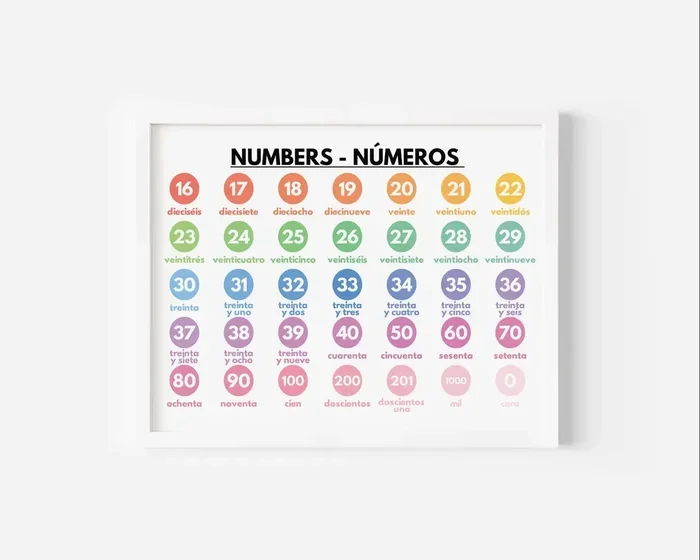
Knowing how to say 1999 in Spanish opens doors to real conversations and builds your confidence fast. The correct phrase is mil novecientos noventa y nueve, and once you break it down, it becomes surprisingly easy to remember. This guide walks you through every detail, from pronunciation tricks to cultural context, so you can sound like a local.
Key Takeaways
- Learn the exact Spanish phrase: “mil novecientos noventa y nueve” is the standard way to say 1999 in Spanish.
- Master the building blocks: Spanish numbers follow a logical pattern once you understand how thousands, hundreds, tens, and ones combine.
- Pronunciation is simpler than it looks: With a few tips, you can sound natural and confident when saying 1999 out loud.
- Context matters: Different Spanish-speaking regions may use slight variations, so knowing the nuances helps you connect better.
- Practice makes perfect: Using real-life examples and repetition will lock in the number so you never forget it.
- Impress native speakers: Going beyond just the number and understanding how years work in Spanish shows real language skill.
- Build on this knowledge: Once you know 1999, you can easily apply the same rules to any year or large number in Spanish.
📑 Table of Contents
- How to Say 1999 in Spanish: The Complete Guide
- Why Knowing How to Say 1999 in Spanish Matters
- Pronouncing 1999 in Spanish Like a Pro
- How Spanish Numbers Work: The Pattern Behind 1999
- Regional Variations in How People Say 1999
- Fun Ways to Practice Saying 1999 in Spanish
- Common Mistakes People Make When Saying 1999 in Spanish
- Expert Tips to Remember 1999 in Spanish Forever
- Key Takeaways
- Conclusion
How to Say 1999 in Spanish: The Complete Guide
Have you ever been in a conversation and needed to say a year in Spanish, only to freeze up? You are not alone. Many language learners struggle with how to say 1999 in Spanish because it looks intimidating at first glance. But here is the secret: it is way simpler than it seems.
The answer is mil novecientos noventa y nueve. That might look like a mouthful, but once you break it into pieces, it clicks into place fast. This article will show you exactly how to pronounce it, why it works the way it does, and how to use it like a native speaker. Let us dive in.
Why Knowing How to Say 1999 in Spanish Matters
Numbers are the backbone of everyday conversation. Whether you are talking about a birth year, a historical event, or just telling someone your age, numbers come up constantly. If you want to improve your Spanish language skills, mastering numbers like 1999 is a big step forward.
Think about it. When you travel to a Spanish-speaking country, you will hear years everywhere. Movie dates, historical landmarks, phone numbers, and prices all involve numbers. The more comfortable you become with Spanish numbers, the smoother your interactions will be. And how to say 1999 in Spanish is a perfect milestone number to tackle because it combines several number rules into one.
Also, knowing how to express years correctly shows respect for the culture. Native speakers notice when a visitor makes the effort. It builds trust and opens up deeper conversations. So let us get into the details.
The Building Blocks of 1999
The phrase mil novecientos noventa y nueve has five parts. Each part represents a different place value. Let us look at them one by one:
- Mil — This means “thousand.” In Spanish, you do not add an “s” for plural. One thousand is “mil,” and even two thousand is “dos mil.”
- Novecientos — This means “nine hundred.” It follows the same pattern as other hundreds in Spanish, like “doscientos” (two hundred) and “trescientos” (three hundred).
- Noventa y nueve — This means “ninety-nine.” In Spanish, you always use “y” (meaning “and”) between the tens and the ones when the number is between 21 and 29, and also for numbers like 99.
So when you put it all together, you get “one thousand nine hundred and ninety-nine.” The structure is logical and consistent. Once you understand the pattern, you can apply it to any large number.
Pronouncing 1999 in Spanish Like a Pro
Pronunciation is where many learners get stuck. But how to say 1999 in Spanish is actually quite manageable once you know the sounds. Let us break it down syllable by syllable.
Mil — pronounced like “meel.” The “i” sounds like a long “ee” in English. Keep it short and smooth.
Novecientos — pronounced “no-veh-see-EHN-tohs.” The stress falls on the third-to-last syllable, which is “ehn.” The “c” before “i” sounds like an “s” in most dialects.
Noventa y nueve — pronounced “noh-BEN-tah ee NWEH-beh.” Again, the “y” acts as a connector and sounds like the English letter “ee.” The “v” in “nueve” is pronounced more like a soft “b” in Spanish.
Common Pronunciation Mistakes to Avoid
Here are some pitfalls that trip up learners when they try to pronounce how to say 1999 in Spanish:
- Adding an “s” to mil: Some learners say “miles” by mistake. Always keep it singular — “mil.”
- Skipping the “y”: In “noventa y nueve,” the “y” is essential. Leaving it out changes the flow and sounds unnatural.
- Pronouncing the “v” like English: In Spanish, the “v” is much softer. It should sound close to a “b,” not a hard English “v.”
- Stressing the wrong syllable: Spanish has clear stress rules. Pay attention to where the emphasis falls in each word.
A great way to practice is to say the number slowly, then gradually speed up. Record yourself and compare with native audio. Over time, your mouth will adjust to the new sounds.
How Spanish Numbers Work: The Pattern Behind 1999
Understanding the logic behind Spanish counting makes learning numbers much easier. Spanish follows a base-10 system, just like English, but the way numbers are formed has some unique quirks.
For numbers between 1000 and 9999, the structure is straightforward:
- Thousands come first, followed by the remaining hundreds, tens, and ones.
- Hundreds are formed by combining a multiplier with “ciento” (one hundred) or its variations like “novecientos.”
- Tens and ones are connected with “y” for most numbers in the 21-29 range and for numbers ending in 1-9 after a multiple of ten.
This pattern is consistent across the entire number system. Once you grasp it, you can count up to 9999 with confidence. The key is practice and repetition. Try saying different years out loud — 1985, 2000, 2024 — and you will see how the same building blocks apply every time.
Quick Tip: How to Say Other Years
Once you know how to say 1999 in Spanish, you can easily handle other years. Here are a few examples:
- 1985 — mil novecientos ochenta y cinco
- 2000 — dos mil
- 2024 — dos mil veinticuatro
- 1500 — mil quinientos
Notice how the same rules apply. You just swap out the hundreds, tens, and ones as needed. This makes learning years in Spanish much less daunting.
Regional Variations in How People Say 1999
One interesting thing about the Spanish language is that it varies across regions. While the standard way to say 1999 is “mil novecientos noventa y nueve,” some speakers have different preferences.
In Spain, you might also hear people say “mil novecientos noventa y nueve” or even shorten it to “diecinueve noventa y nueve” in casual conversation. In Latin America, the full form is more common, especially in formal settings.
Some speakers in Mexico and other countries may also use “mil novecientos noventa y nueve” when reading dates aloud. The key takeaway is that the full, standard form is always understood everywhere. If you stick with that, you will never be misunderstood.
It is also worth noting that the way people write years can differ. In some regions, you might see “1.999” with a period as a thousands separator instead of a comma. But when it comes to speaking, the pronunciation remains the same across dialects.
Fun Ways to Practice Saying 1999 in Spanish
Learning does not have to be boring. Here are some fun and effective ways to practice how to say 1999 in Spanish until it becomes second nature:
- Use flashcards: Write the number on one side and the Spanish phrase on the other. Test yourself daily.
- Listen and repeat: Find audio clips of native speakers saying the number. Repeat after them, matching the rhythm and intonation.
- Tell a story: Create a sentence using 1999. For example, “Nací en mil novecientos noventa y nueve” (I was born in 1999). Storytelling makes numbers stick.
- Practice with a partner: Ask a friend to quiz you on different years. Take turns and keep it light and fun.
- Watch Spanish content: Movies, shows, and podcasts expose you to natural number usage. Pay attention when years come up in dialogue.
The more you expose yourself to the number in context, the faster it will become automatic. Repetition is your best friend when it comes to mastering Spanish vocabulary like this.
Connecting Numbers to Real-Life Situations
Think about when you would actually need to say 1999 out loud. Maybe you are discussing a historical event, like the year a famous movie came out or a significant world event. Perhaps you are talking about when someone was born or when a building was constructed.
In each of these situations, being able to say the year confidently in Spanish shows real language ability. It is one thing to know grammar rules, but it is another thing to use numbers naturally in conversation. That is what sets intermediate learners apart from advanced ones.
And here is a bonus insight: understanding how numbers work in Spanish also helps you with other language skills. It improves your listening comprehension because you will recognize years when you hear them. It boosts your speaking confidence because you will not hesitate when a number comes up. It all connects.
For those interested in how meaning works across different languages, you might enjoy exploring how Translate To English In Hindi Meaning works, since number systems and translation share interesting parallels across cultures.
Common Mistakes People Make When Saying 1999 in Spanish
Even motivated learners make errors. Here are the most common mistakes and how to avoid them:
- Saying “mil novecientos noventa nueve” without the “y”: The “y” between “noventa” and “nueve” is required. Omitting it sounds incomplete and unnatural.
- Confusing “mil” with “miles”: “Mil” is always singular in Spanish for counting. You would only use “miles” in expressions like “miles de personas” (thousands of people).
- Mispronouncing “novecientos”: Do not say “novi-cientos.” The correct form is “no-veh-see-EHN-tohs.” The “ce” makes an “s” sound in most dialects.
- Using English word order: In English, we might say “nineteen ninety-nine” for casual speech. In Spanish, you always use the full form “mil novecientos noventa y nueve,” even in casual conversation.
- Forgetting that “nueve” starts with an “n” sound: Some learners accidentally start with an “n” sound that is too heavy. Keep it soft and natural.
Being aware of these mistakes helps you avoid them from the start. And if you have already made some of them, do not worry. Awareness is the first step toward correction.
Just as understanding the meaning behind phrases like Wyo Meaning In Text requires knowing the context, mastering Spanish numbers requires understanding the cultural and structural context behind them.
Expert Tips to Remember 1999 in Spanish Forever
Memory tricks can make a huge difference. Here are some expert-backed tips to help you lock in how to say 1999 in Spanish:
- Chunk it: Break the number into three chunks — “mil,” “novecientos,” and “noventa y nueve.” Master each chunk separately, then combine them.
- Use rhythm: Say the number with a steady rhythm, almost like a song. “Mil… novecientos… noventa y nueve.” The beat helps your brain remember.
- Associate with a personal memory: Think of something that happened in 1999 — a movie you watched, a person you met, a place you visited. Connect the Spanish phrase to that memory.
- Write it by hand: Writing reinforces memory more than typing. Write “mil novecientos noventa y nueve” ten times and say it out loud each time.
- Teach someone else: Explaining the number to a friend or family member forces you to organize your knowledge and strengthens recall.
These techniques work because they engage multiple parts of your brain. You are not just memorizing a string of words. You are building a meaningful connection to the information.
Understanding the deeper meaning behind how language structures work, much like exploring In Lieu Of Meaning and how phrases carry different weight depending on context, can deepen your appreciation for the Spanish number system and how each part contributes to the whole.
Key Takeaways
- The standard phrase is “mil novecientos noventa y nueve”: This is the universally accepted way to say 1999 in Spanish across all regions.
- Break it into manageable chunks: “Mil,” “novecientos,” and “noventa y nueve” each represent a place value and follow consistent patterns.
- Pronunciation is straightforward: With practice, saying the number aloud becomes natural and fluid.
- Avoid common mistakes: Do not drop the “y,” do not pluralize “mil,” and watch your stress patterns.
- Regional variations exist but the standard form always works: You can confidently use the full phrase anywhere a Spanish speaker understands it.
- Practice with real-life context: Use the number in sentences, stories, and conversations to make it stick.
- Build on this foundation: The same rules that apply to 1999 apply to all large numbers in Spanish, so your learning compounds over time.
Conclusion
So there you have it. How to say 1999 in Spanish is a skill that is easier to master than you probably thought. The phrase “mil novecientos noventa y nueve” breaks down into logical, predictable parts. Once you understand the building blocks, you can say it with confidence and clarity.
Remember that language learning is a journey. Every number you learn, every phrase you practice, brings you closer to fluency. And 1999 is a great milestone number because it combines so many different elements of the Spanish counting system into one phrase.
Keep practicing. Use the tips and tricks in this guide. Soon, saying 1999 in Spanish will feel as natural as saying it in English. And who knows — maybe next you will tackle 2000, 2025, or even larger numbers. The foundation you build today will support all of that.
¡Buena suerte! (Good luck!) And happy counting in Spanish.
Frequently Asked Questions
What is the easiest way to remember how to say 1999 in Spanish?
Break it into three chunks: “mil” (thousand), “novecientos” (nine hundred), and “noventa y nueve” (ninety-nine). Practice each part separately, then combine them. Using rhythm or a song-like cadence also helps your memory retain the phrase much faster.
Do Spanish speakers ever say 1999 differently than the standard form?
In casual conversation, some speakers in Spain might shorten it, but the full form “mil novecientos noventa y nueve” is understood everywhere. It is always safe and correct to use the complete version, regardless of the region.
Is the pronunciation of 1999 in Spanish difficult for English speakers?
Not at all. The sounds are familiar and follow consistent Spanish pronunciation rules. The main challenge is the “v” in “nueve,” which sounds like a soft “b” in Spanish. Once you get used to that, the rest flows naturally.
Can I use the same rules to say other years in Spanish?
Absolutely. The same structure applies to any year between 1000 and 9999. You simply adjust the thousands, hundreds, tens, and ones parts. Once you know how to say 1999, you can say any year with confidence.
Why does Spanish use “y” between certain number parts?
The “y” (meaning “and”) connects the tens and ones in numbers between 21 and 29, and also for numbers like 31 through 99 when the ones digit is present. It is a grammatical rule that makes Spanish number formation unique compared to English.
How can I practice saying 1999 in Spanish every day?
Try saying it out loud during your daily routine — while brushing your teeth, driving, or walking. You can also use flashcards, listen to native audio, and write the number in sentences. Consistent, short practice sessions are more effective than long, infrequent ones.