
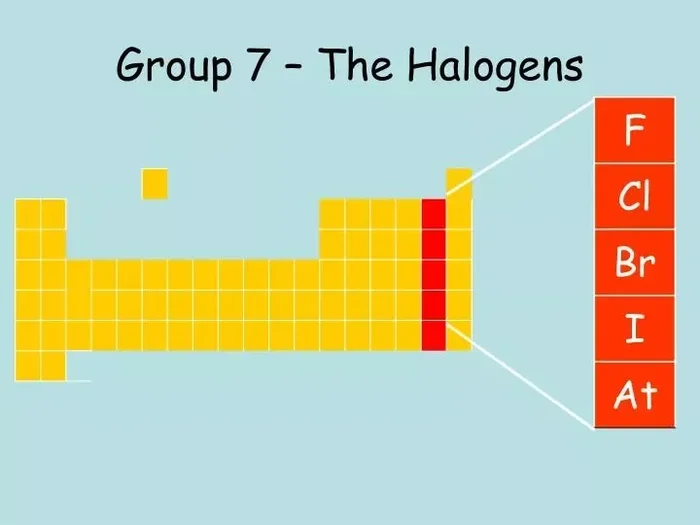
Group 7 refers to the halogen family in the periodic table, including fluorine, chlorine, bromine, iodine, and astatine. Understanding group 7 meaning helps students, professionals, and curious minds grasp why these elements are so reactive and essential to modern life. From water purification to medicine, halogens impact nearly every industry in powerful ways.
This is a comprehensive guide about group 7 meaning.
Key Takeaways
- Group 7 elements are called halogens: They sit in the second-to-last column of the periodic table and share similar chemical traits.
- Reactivity decreases down the group: Fluorine is the most reactive, while astatine is the least reactive of the group 7 elements.
- Halogens form salts: The name “halogen” literally means “salt-former,” and these elements combine with metals to create common salts we use every day.
- Group 7 has diverse real-world uses: From disinfecting water to making medicines and plastics, these elements drive countless industrial processes.
- Periodic trends explain group behavior: Atomic size, electronegativity, and oxidation states all follow predictable patterns down the group.
- Understanding group 7 meaning boosts science literacy: Knowing these fundamentals helps in chemistry class, lab work, and everyday decision-making about products and materials. What Does Group 7 Mean?
- F-B-C-I-A: Fluorine, Bromine, Chlorine, Iodine, Astatine — remember that fluorine is first and most reactive.
- State at room temperature: Gas, Gas, Liquid, Solid, Solid — this helps you visualize where each element falls.
- Color gradient: Light yellow to dark purple — the colors get deeper as you move down the group.
- Reactivity rule: Top is most reactive, bottom is least. This applies to gaining electrons and displacing other halogens.
- Salt connection: Remember that “halogen” means salt-former. Every halogen makes salts with metals.
When you hear the term group 7 meaning, it almost always points to the halogen group on the periodic table. But what exactly makes this group so special? And why do chemists and students spend so much time studying it?
In chemistry, the periodic table organizes elements by their atomic structure and properties. Group 7 sits in the 17th column of the modern periodic table. This group contains five main elements: fluorine, chlorine, bromine, iodine, and astatine. Together, they form a family known as the halogens.
The word “halogen” comes from Greek roots meaning “salt-former.” That is a huge clue about what these elements do. They readily combine with metals to create salts. Think of table salt, which is sodium chloride. That is a classic halogen compound formed when chlorine meets sodium.
Understanding group 7 meaning starts with recognizing a simple pattern. All these elements have seven valence electrons. That means their outermost electron shell is just one electron short of being full. This drives their intense reactivity and shapes nearly everything they do in chemical reactions.
So when someone asks, “What does group 7 mean?” the short answer is: it refers to a column of highly reactive nonmetal elements that play outsized roles in nature, industry, and technology.
The Elements That Make Up Group 7
Each element in group 7 brings its own personality to the table. Let us walk through them one by one so you can see what makes each unique.
Fluorine: The Most Reactive Halogen
Fluorine sits at the top of group 7. It is a pale yellow gas that is incredibly reactive. In fact, it is the most reactive nonmetal on the entire periodic table. Fluorine has the highest electronegativity of any element, which means it pulls electrons toward itself more aggressively than any other atom.
Because of its extreme reactivity, fluorine is rarely found in its pure form in nature. It bonds quickly with other elements. You will find it in toothpaste as fluoride, in Teflon coatings, and in many pharmaceutical compounds.
Chlorine: The Workhorse of the Group
Chlorine is probably the most familiar group 7 element. It is a greenish-yellow gas with a sharp, recognizable smell. People use chlorine to disinfect swimming pools and drinking water. It kills harmful bacteria and makes water safe for millions of people every day.
Chlorine also plays a massive role in manufacturing. It helps produce PVC plastic, solvents, and countless other products. When you think about group 7 meaning in practical terms, chlorine is often the first element that comes to mind.
Bromine: The Liquid Nonmetal
Bromine is unique because it is one of only two elements that are liquid at room temperature. It is a deep reddish-brown liquid that gives off a brownish vapor. Bromine is less reactive than chlorine but still very active chemically.
Historically, bromine compounds were used in fire retardants and sedatives. Today, bromine still finds use in water treatment, photography, and some pharmaceutical applications.
Iodine: The Essential Nutrient
Iodine is a dark purple solid that sublimes easily, meaning it turns directly from a solid into a violet gas. Your body needs iodine in small amounts to produce thyroid hormones. That is why iodized salt exists — to prevent iodine deficiency, which can cause serious health problems.
Iodine also serves as a powerful disinfectant. You may have used iodine-based solutions on cuts and scrapes. That is another practical example of group 7 meaning in everyday life.
Astatine: The Rare and Mysterious One
Astatine is the rarest naturally occurring halogen. It is highly radioactive and extremely scarce. Scientists have only observed tiny amounts of it. Because of its rarity and instability, astatine is the least studied element in group 7.
Researchers believe astatine might have niche applications in cancer treatment, specifically in targeted alpha therapy. But for now, it remains more of a scientific curiosity than a practical tool.
Chemical Properties That Define Group 7
Now let us dig into the chemical properties that make group 7 elements so interesting and important. These properties explain why halogens behave the way they do.
Seven Valence Electrons
Every element in group 7 has seven electrons in its outermost shell. This is the key to understanding their behavior. Atoms want stable electron configurations, and having a full outer shell is the goal. Since halogens are just one electron short, they aggressively seek to gain that missing electron.
This tendency to gain one electron makes halogens powerful oxidizing agents. They pull electrons away from other elements during chemical reactions. That single missing electron drives nearly all the chemistry of this group.
High Electronegativity
Electronegativity measures how strongly an atom attracts electrons in a bond. Halogens rank very high on the electronegativity scale. Fluorine tops the chart with a value of 4.0 on the Pauling scale. Chlorine comes in at 3.0, bromine at 2.8, and iodine at 2.5.
This trend matters because it explains reactivity patterns. The higher the electronegativity, the more aggressively the element reacts. That is why fluorine is the most reactive halogen and astatine is the least.
Oxidation States
Halogens commonly display a -1 oxidation state because they gain one electron to achieve stability. However, heavier halogens like chlorine, bromine, and iodine can also show positive oxidation states when they bond with more electronegative elements like oxygen or fluorine.
For example, chlorine can have oxidation states of -1, +1, +3, +5, and +7 depending on the compound. This flexibility gives halogens a wide range of chemical behavior and makes them useful in many different applications.
Formation of Diatomic Molecules
All group 7 elements exist as diatomic molecules in their natural state. That means they pair up with their own kind. Fluorine is F2, chlorine is Cl2, bromine is Br2, and iodine is I2. This pairing gives each atom the stable octet it craves.
This is an important detail when you are studying group 7 meaning in chemistry courses. Writing the correct molecular formula matters for balancing equations and understanding reactions.
Why Group 7 Elements Matter in Everyday Life
You might wonder why understanding group 7 meaning matters outside of a chemistry classroom. The truth is, halogens touch your life every single day.
Water Purification and Sanitation
Chlorine is the backbone of modern water treatment. Municipal water systems add chlorine or chloramine to kill bacteria, viruses, and other pathogens. Without this simple step, waterborne diseases would claim millions of lives worldwide. Fluoride, derived from fluorine, is also added to many water supplies to strengthen tooth enamel and prevent cavities.
When you turn on your tap and drink a glass of clean water, you are benefiting from group 7 chemistry.
Medicine and Health
Many medications contain halogen atoms. Chlorine appears in antibiotics and pain relievers. Fluorine is found in antiviral drugs and steroids that reduce inflammation. Iodine serves as an antiseptic in hospitals and homes around the world.
The pharmaceutical industry relies heavily on halogen chemistry. Drug designers often add halogen atoms to molecules to improve their stability, absorption, or potency. This is one of the most important reasons group 7 meaning matters in modern medicine.
Household Products
Walk into any kitchen or bathroom, and you will find halogen-based products. Bleach contains sodium hypochlorite, a chlorine compound. Toilet bowl cleaners often use hydrochloric acid. Even the nonstick coating on your frying pan, Teflon, is made with fluorine.
Bromine compounds appear in some flame retardants used in electronics and furniture. These products help meet fire safety standards in homes and buildings.
Agriculture and Food
Pesticides and herbicides sometimes contain halogen elements. These compounds help protect crops from pests and diseases, supporting global food production. Iodine fortification in salt prevents iodine deficiency disorders in populations that lack access to iodine-rich foods like seafood and dairy.
Understanding group 7 elements helps us appreciate the invisible chemistry that keeps our food supply safe and abundant.
Periodic Trends in Group 7
One of the most powerful things about the periodic table is that it reveals patterns. Group 7 follows clear trends that help predict how each element will behave.
Reactivity Decreases Down the Group
Fluorine is the most reactive halogen, and reactivity drops as you move down the group. This happens because atoms get larger as you go down. The incoming electron is farther from the nucleus and feels less attraction. So fluorine grabs an electron easily, while iodine struggles more to do the same.
This trend has practical implications. If you need a strong disinfectant, chlorine or fluorine-based compounds work well. For milder applications, iodine might be the better choice.
Melting and Boiling Points Increase Down the Group
Fluorine and chlorine are gases at room temperature. Bromine is a liquid. Iodine is a solid. This pattern follows the increase in atomic size and the strength of intermolecular forces, known as van der Waals forces.
Larger atoms have more electrons, which creates stronger temporary dipoles. These stronger forces require more energy to overcome, leading to higher melting and boiling points.
Color Deepens Down the Group
Fluorine is pale yellow. Chlorine is greenish-yellow. Bromine is reddish-brown. Iodine is dark purple. Astatine is predicted to be nearly black. The increasing number of electrons and electrons in higher energy levels absorbs different wavelengths of light, producing deeper colors.
This is a fun visual way to remember the order of group 7 elements and their relative positions.
Electronegativity Decreases Down the Group
We already touched on this, but it is worth repeating. Fluorine is the most electronegative element on the periodic table. As you move down to chlorine, bromine, and iodine, electronegativity drops steadily. This decline directly explains the reactivity trend.
When studying periodic trends, group 7 provides one of the clearest and most memorable examples of how atomic structure drives chemical behavior.
Common Uses and Industrial Applications
The group 7 elements have a staggering range of industrial applications. Here is a closer look at where they make the biggest impact.
Chlorine in Industry
Chlorine production is one of the largest chemical industries in the world. It is used to make PVC, which is in pipes, cables, and flooring. Chlorine-based chemicals also produce paper, textiles, and solvents. The demand for chlorine remains strong because of its versatility.
Fluorine in Technology
Fluorine compounds are critical in modern technology. Teflon, the nonstick coating, relies on fluorine. Refrigerants and air conditioning systems use fluorinated compounds. Semiconductor manufacturing also depends on fluorine-based etchants to create tiny circuits in computer chips.
As technology advances, the role of fluorine in innovation continues to grow.
Iodine in Medicine and Science
Iodine is essential for thyroid function in humans. Iodine-131, a radioactive isotope, is used in medical imaging and thyroid cancer treatment. In the lab, iodine serves as a starch indicator, turning blue-black when it contacts starch. This simple reaction is a staple of chemistry demonstrations worldwide.
Bromine in Fire Safety
Brominated flame retardants help prevent fires in electronics, building materials, and furniture. While there are environmental concerns about some brominated compounds, they remain important in fire safety applications. Researchers continue to develop safer and more sustainable bromine alternatives.
Quick Tips for Remembering Group 7
Here are some easy tricks to help you remember the group 7 elements and their properties:
Common Mistakes People Make With Group 7
Even students who study hard can stumble on group 7 concepts. Here are a few common pitfalls to avoid.
Confusing Group Numbering Systems
The old IUPAC numbering and the new IUPAC numbering differ. Group 7 in the old system was actually the halogens (now group 17). Always check which numbering system a source uses. When people search for “group 7 meaning,” they usually mean the modern group 17, which is the halogen group.
Forgetting That Halogens Are Diatomic
A common error is writing “F” instead of “F2” or “Cl” instead of “Cl2.” Remember, these elements exist as pairs in nature. This matters for writing correct chemical equations and understanding reaction stoichiometry.
Assuming All Halogens Have the Same Reactivity
Each halogen has a different level of reactivity. Fluorine is vastly more reactive than iodine. This difference affects displacement reactions, where a more reactive halogen can displace a less reactive one from its compounds.
Overlooking the Health Risks
While halogens have many beneficial uses, they can also be dangerous. Chlorine gas is toxic and was used as a weapon in World War I. Fluorine is extremely corrosive. Even iodine can be harmful in large doses. Always handle halogen compounds with proper safety precautions.
Expert Insights on Group 7 Chemistry
Chemistry educators and researchers emphasize that understanding group 7 meaning builds a foundation for grasping broader chemistry concepts. The halogen group serves as a perfect case study for periodic trends, electron configuration, and chemical bonding.
Experts also point out that group 7 elements sit at the intersection of several important chemistry subfields. Environmental chemistry studies chlorine and bromine in water systems. Biochemistry explores iodine’s role in hormones. Materials science investigates fluorine in advanced polymers. Pharmacology designs halogen-containing drugs for better therapeutic outcomes.
The versatility of these elements makes them indispensable in both academic study and real-world problem solving. Mastering group 7 chemistry opens doors to understanding much more complex chemical systems.
Conclusion
Group 7 meaning goes far beyond a single line in a textbook. It represents a family of elements — the halogens — that shape our world in profound ways. From the water we drink to the medicines we take, from the nonstick pans on our stoves to the plastics in our devices, group 7 elements are everywhere.
We explored what makes these elements reactive, how their properties follow predictable trends, and why they matter in daily life. We also looked at common mistakes to avoid and expert perspectives that highlight the broader significance of halogen chemistry.
Whether you are a student just starting chemistry, a professional working in industry, or simply someone curious about the world around you, understanding group 7 elements gives you valuable insight into the building blocks of matter. The halogens may be a small group on the periodic table, but their impact is enormous.
Take what you have learned here and apply it. Look for halogens in the products around your home. Think about how chlorine keeps your water safe. Appreciate the role of iodine in your health. The more you understand about group 7 meaning, the more you will see chemistry at work in everyday life.
Frequently Asked Questions
What is group 7 in the periodic table called?
Group 7 is called the halogen group. It contains fluorine, chlorine, bromine, iodine, and astatine. These elements are all nonmetals and are known for their high reactivity.
Why are group 7 elements so reactive?
Group 7 elements have seven valence electrons, which means they need just one more electron to achieve a stable octet. This drives them to react aggressively with other elements to gain that missing electron.
Is group 7 the same as group 17?
Yes, group 7 in the modern IUPAC numbering system is the same as group 17. Some older sources use the group 7 label for a different column. Always check which numbering system is being used when you see “group 7.”
What are the most important uses of group 7 elements?
Chlorine is widely used for water disinfection. Fluorine is found in toothpaste and nonstick coatings. Iodine is essential for thyroid health and used as an antiseptic. Bromine appears in flame retardants and some pharmaceuticals.
Which group 7 element is the most reactive?
Fluorine is the most reactive group 7 element. It has the highest electronegativity of any element and reacts with nearly all other elements. Reactivity decreases as you move down the group to chlorine, bromine, iodine, and astatine.
Can group 7 elements be dangerous?
Yes, many group 7 elements and their compounds can be hazardous. Chlorine gas is toxic, fluorine is highly corrosive, and bromine can irritate the skin and lungs. Always follow safety guidelines when handling halogen substances.