
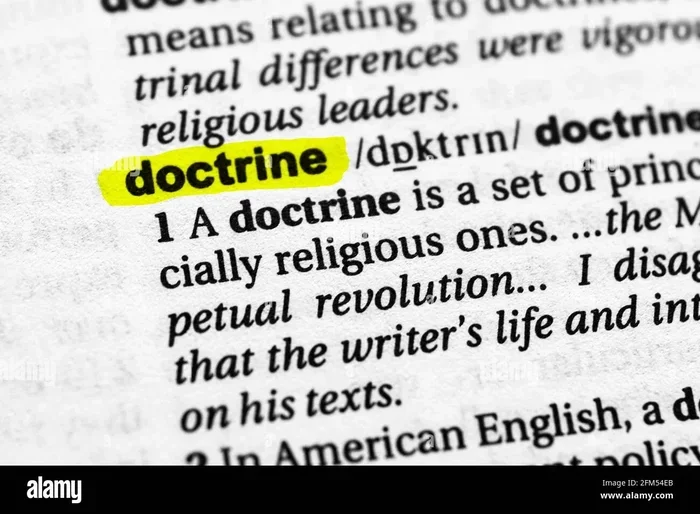
The doctrine meaning refers to a formal set of beliefs or teachings that guide behavior, decisions, and worldview. Whether rooted in religion, law, or philosophy, doctrine provides a framework that shapes communities, institutions, and individual lives. Understanding doctrine helps you navigate complex ideas about faith, justice, and moral principles with clarity and confidence.
Have you ever heard someone talk about doctrine and felt completely lost? You are not alone. The word doctrine can sound intimidating, formal, or even boring. But here is the truth — doctrine is everywhere. It shapes the way people believe, the way laws are made, and the way communities function. Understanding the doctrine meaning opens a door to seeing the world more clearly.
In this article, we will explore the doctrine meaning in plain, simple language. We will look at where doctrine comes from, how it shows up in different areas of life, and why it matters to you. Whether you are curious about religious doctrine, legal doctrine, or just want to understand what people mean when they use the word, this guide has you covered. Let us dive in.
Key Takeaways
- Doctrine is a structured set of beliefs: It serves as a guiding framework for groups, institutions, and individuals across many fields.
- Doctrine appears in religion, law, and philosophy: Each field uses doctrine differently, but the core idea remains the same — teaching and belief systems.
- Understanding doctrine meaning builds clarity: Knowing what doctrine really means helps you engage with complex topics more confidently.
- Doctrine shapes everyday decisions: From moral choices to legal rulings, doctrine quietly influences outcomes in real life.
- Common mistakes cause confusion: Misunderstanding doctrine leads to unnecessary debates and misinterpretations.
- Doctrine evolves over time: While rooted in tradition, doctrine can adapt and grow with new insights and societal changes.
- You don’t need to be an expert: Anyone can learn the doctrine meaning and apply it to better understand the world around them.
📑 Table of Contents
What Is the Doctrine Meaning?
A Simple Definition of Doctrine
The doctrine meaning is straightforward at its core. Doctrine is a collection of teachings or beliefs that a group, organization, or institution accepts as true. These beliefs guide how members think, behave, and make decisions. The word comes from the Latin word “doctrina,” which means “teaching” or “learning.”
In everyday terms, think of doctrine as a rulebook of ideas. A church has a doctrine that explains what it believes about God. A court system has a legal doctrine that explains how judges should interpret laws. A school might have a teaching doctrine that shapes how educators approach students. The doctrine meaning stays consistent — it is a set of principles that direct thought and action.
Why the Doctrine Meaning Matters
You might wonder why understanding doctrine is important. The answer is simple: doctrine influences real decisions. When a person or group follows a set of doctrinal teachings, those teachings shape their worldview. They affect how people vote, how they raise children, how they treat others, and how they respond to challenges.
For example, someone who follows a specific religious doctrine might make choices about marriage, charity, or community involvement based on what that doctrine teaches. A lawyer might rely on legal doctrine to argue a case in court. Even in science, certain doctrinal frameworks guide how researchers approach questions. The doctrine meaning matters because it quietly shapes so much of what happens around us.
The History Behind Doctrine
Where Did the Word Doctrine Come From?
The word doctrine has deep roots. It entered English from the Old French word “doctrine,” which itself came from the Latin “doctrina.” In Latin, “doctrina” means teaching or instruction. The related word “doctor” also comes from this root — a doctor was originally someone who taught.
In ancient times, doctrine was closely tied to philosophy and religion. Greek philosophers like Plato and Aristotle developed doctrinal systems that taught people how to think about truth, justice, and the good life. Early Christian leaders used doctrine to define what believers should accept as true about God, Jesus, and salvation. Over centuries, doctrine became a formal term used across many fields.
How Doctrine Has Evolved Over Time
Doctrine has not stayed frozen in the past. It has changed and grown with each generation. In the early church, doctrinal authority was established through councils and writings. The doctrine meaning expanded as different Christian traditions developed their own sets of beliefs.
In the legal world, doctrine evolved through court decisions. Judges created legal doctrines like “stare decisis,” which means standing by things decided. These doctrinal principles became building blocks of modern law. In philosophy, doctrinal frameworks shifted as new ideas emerged during the Enlightenment and beyond. Today, the doctrine meaning is broader than ever, covering teachings in religion, law, science, and even business.
Types of Doctrine in Different Fields
Religious Doctrine
Religious doctrine is probably the most well-known use of the word. Every major religion has a set of doctrinal teachings that define its beliefs. In Christianity, doctrine covers topics like the nature of God, the meaning of salvation, and how believers should live. The Catholic Church, for example, has a rich tradition of doctrinal authority that guides its followers.
In Islam, doctrine is found in the Quran and the Hadith. These texts teach believers about God, prayer, charity, and moral behavior. In Buddhism, doctrinal teachings focus on the Four Noble Truths and the Eightfold Path. No matter the religion, the doctrine meaning remains the same — it is a set of core beliefs that shape the community.
Legal Doctrine
Legal doctrine might sound very different from religious doctrine, but the core idea is the same. In law, doctrine refers to a set of principles that guide how courts interpret and apply the law. These doctrinal frameworks help ensure consistency and fairness in the justice system.
Some common examples of legal doctrine include:
- Stare decisis — the idea that courts should follow past decisions
- Due process — the principle that the law must be fair in all proceedings
- Separation of powers — the belief that government should be divided into branches
- Double jeopardy — the rule that a person cannot be tried twice for the same crime
Each of these doctrinal principles plays a huge role in how legal systems work. When you hear a lawyer talk about “the doctrine,” they are referring to an established legal doctrine that shapes court decisions.
Philosophical and Moral Doctrine
Philosophical doctrine explores ideas about truth, ethics, and human nature. Thinkers like Aristotle, Kant, and John Locke built doctrinal systems that still influence how we think about right and wrong. Moral doctrine focuses on what is right and what is wrong, and it often overlaps with religious doctrine.
In everyday life, you might follow a personal doctrine about honesty, kindness, or hard work. These beliefs act as your own guiding principles. Understanding the doctrine meaning in this context helps you see that everyone operates with some form of doctrinal framework, whether they realize it or not.
How Doctrine Shapes Everyday Life
Doctrine and Personal Beliefs
You might be surprised to learn how much doctrine affects your daily life. Your beliefs about honesty, fairness, and responsibility likely come from a doctrinal framework — whether it was taught by your family, your religion, or your community. The doctrine meaning in personal life is simple: it is the set of beliefs you live by.
For instance, if you were raised in a household that valued generosity, you might have a personal doctrine about giving to others. If your community teaches respect for elders, that doctrine shapes how you treat older people. These doctrinal teachings may not feel formal, but they are powerful. They guide your choices every single day.
Doctrine in Institutions and Organizations
Beyond personal beliefs, doctrine plays a major role in institutions. Schools, hospitals, businesses, and governments all operate with some form of doctrinal authority. A hospital might follow a doctrine of putting patient care first. A company might have a doctrine about customer service or ethical business practices.
In government, doctrine shapes policy and law. The Monroe Doctrine, for example, was a doctrinal principle that guided American foreign policy for decades. The doctrine meaning in institutions is clear — it provides a foundation for decision-making and helps groups stay aligned with their core values.
Doctrine and Community Identity
Doctrine also shapes community identity. When a group of people shares the same doctrinal teachings, they form a strong sense of belonging. Religious communities, for example, often bond over shared doctrine and doctrinal authority. The doctrine meaning in this context is about unity and shared purpose.
Even secular groups operate with a kind of doctrine. A sports team has a doctrine about teamwork and discipline. A social movement has doctrinal principles about justice and equality. Understanding the doctrine meaning helps you see the invisible threads that connect people within any group.
Common Misunderstandings About Doctrine
Doctrine Is Not Just for Religious People
One of the biggest misunderstandings about doctrine is that it only belongs to religion. While religious doctrine is very common, the doctrine meaning extends far beyond faith. Legal doctrine, philosophical doctrine, and even business doctrinal frameworks are all part of everyday life.
When people hear the word doctrine, they often think of church sermons or theological debates. But doctrine is simply a set of teachings that guide behavior. Anyone who follows a set of principles is operating within a doctrinal framework, whether they call it that or not.
Doctrine Is Not Rigid or Outdated
Another common mistake is thinking that doctrine is always rigid and unchanging. In reality, doctrine can evolve. Many religious traditions update their doctrinal teachings to reflect new understanding. Legal doctrine changes as courts interpret laws in new ways. The doctrine meaning is not frozen — it grows with the people who follow it.
For example, many churches have revisited their doctrinal authority on social issues in recent years. Courts have overturned old legal doctrines when society recognized they were unfair. Doctrine is a living thing. It adapts, and that adaptability is one of its greatest strengths.
Doctrine Is Not the Same as Dogma
People often confuse doctrine with dogma, but they are not exactly the same. Dogma refers to a belief that is accepted as absolutely true without question. Doctrine is broader — it includes teachings that can be discussed, debated, and developed over time. Understanding this distinction helps clarify the doctrine meaning and keeps conversations about doctrinal teachings productive.
Why Understanding Doctrine Matters
It Builds Critical Thinking
When you understand the doctrine meaning, you become a better thinker. You can look at a set of doctrinal teachings and ask smart questions. Who created this doctrine? Why does it matter? Does it still hold up today? This kind of thinking is called critical thinking, and it is one of the most valuable skills you can develop.
Critical thinking helps you in every area of life. It helps you evaluate news, make better decisions, and engage in respectful conversations with people who see things differently. Understanding doctrine gives you the tools to think more deeply and more clearly.
It Promotes Respect and Understanding
When you know what doctrine really means, you are less likely to dismiss someone else’s beliefs. You might not share the same religious doctrine as your neighbor, but understanding their doctrinal framework helps you respect where they are coming from. The doctrine meaning teaches us that every group has a set of guiding principles, and those principles deserve thoughtful consideration.
This kind of respect is especially important in diverse communities. When people understand that doctrine shapes how others see the world, they can have better conversations and build stronger relationships. The doctrine meaning is not just about ideas — it is about people.
It Helps You Navigate Complex Topics
From politics to philosophy, from law to faith, doctrine is at the center of many complex topics. When you understand the doctrine meaning, you can cut through confusion and find clarity. You will recognize when someone is appealing to a doctrinal principle and understand what that means for the conversation.
This skill is especially useful in today’s world, where information is everywhere and not all of it is reliable. Knowing how doctrine works helps you spot when someone is using doctrinal authority to push an agenda — and it helps you form your own informed opinions.
Quick Tips for Understanding Any Doctrine
- Start with the source: Find the original text or teaching that the doctrine comes from.
- Ask questions: Why was this doctrine created? What problem does it solve?
- Look for context: Understand the historical and cultural background of the doctrinal teachings.
- Compare with other views: See how different groups interpret the same doctrine.
- Apply it to real life: Think about how the doctrine affects decisions and behavior today.
- Stay open-minded: Be willing to update your understanding as you learn more.
Conclusion
The doctrine meaning is simpler and more powerful than most people think. At its heart, doctrine is just a set of teachings that guide how people live and believe. Whether it shows up in a church, a courtroom, a classroom, or your own home, doctrine shapes the world around you.
Understanding doctrine gives you a clearer lens for viewing the world. It helps you respect different perspectives, think critically, and navigate complex ideas with confidence. The doctrine meaning is not something to fear or avoid — it is something to embrace and explore.
So the next time you hear someone talk about doctrine, you will know exactly what they mean. And more importantly, you will understand why it matters. Take what you have learned here and use it to engage with the world more thoughtfully. The doctrine meaning is your gateway to deeper understanding, and now you have the key.
Frequently Asked Questions
What is the simplest way to explain the doctrine meaning?
The simplest way to explain doctrine meaning is this: it is a set of teachings or beliefs that a group or institution follows. These teachings guide how people think, act, and make decisions. Whether in religion, law, or daily life, doctrine provides a framework of ideas that shapes behavior and worldview.
How is doctrine different from a belief or opinion?
A personal belief or opinion is something one individual holds. Doctrine, on the other hand, is a formal set of teachings shared by a group or institution. Doctrinal teachings are usually established through tradition, authority, or official processes. While an opinion can change easily, doctrine tends to be more structured and consistent within the group that follows it.
Can doctrine change over time?
Yes, doctrine can and does change over time. Religious traditions may update their doctrinal teachings as society evolves. Legal doctrine shifts when courts reinterpret laws or overturn old precedents. The doctrine meaning is not fixed — it grows and adapts as new insights emerge and communities re-examine their core principles.
Is doctrine only related to religion?
No, doctrine is not limited to religion. While religious doctrine is the most common use, doctrine also appears in law, philosophy, science, and even business. Legal doctrine guides how courts interpret laws. Philosophical doctrine explores ideas about ethics and truth. The doctrine meaning is broad and applies to any organized set of teachings.
What role does doctrinal authority play in a group?
Doctrinal authority refers to the power or legitimacy a group has to define and enforce its doctrine. In religion, this might be a church leader or council. In law, it might be a supreme court ruling. Doctrinal authority ensures that the group’s teachings remain consistent and trusted. It gives members a reliable foundation for their beliefs and actions.
Why should a non-religious person care about doctrine?
Even if you are not religious, doctrine still affects your life. Laws, workplace policies, and community norms all operate with doctrinal frameworks. Understanding the doctrine meaning helps you make sense of how institutions work and why people hold certain views. It also strengthens your ability to think critically and engage respectfully with diverse perspectives in everyday life.
=== META DESCRIPTION ===
Discover the doctrine meaning and how it influences religion, law, and daily life. Learn key examples, types, and why understanding doctrine matters today.