
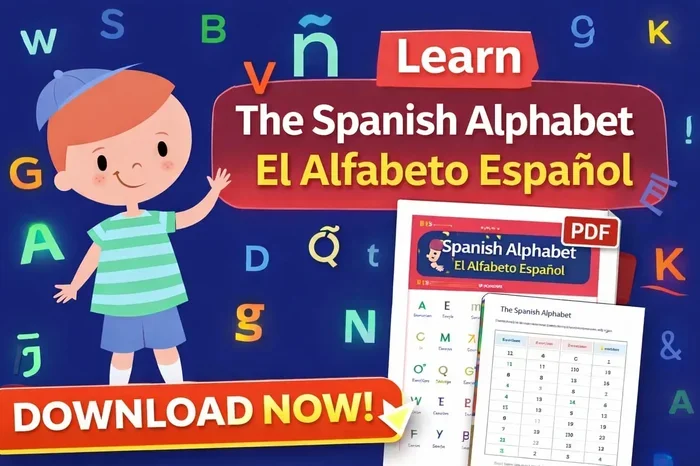
Learning how to say E in Spanish is one of the easiest yet most important steps for beginners. The Spanish letter E has a consistent sound that stays the same in every word, unlike English. This guide covers pronunciation, common mistakes, and practical tips to help you master the Spanish vowel E quickly. You will also learn how the letter E works in real words and sentences.
When you first start learning a new language, the smallest details matter the most. The letter E in Spanish might seem simple, but getting it right makes a huge difference. If you have ever wondered how to say E in Spanish, you are in the right place. This guide breaks everything down in plain, easy-to-follow steps. You will learn the exact sound, see real examples, and pick up tips that actually work.
Spanish is a phonetic language, which means words are pronounced exactly as they are spelled. The letter E follows this rule perfectly. Unlike English, where the same letter can sound different in “bed,” “eat,” or “hero,” Spanish keeps it simple. One letter, one sound, every single time. Once you understand this, your pronunciation will improve fast.
Key Takeaways
- Spanish E has one consistent sound: It always sounds like the “e” in “let” or “bed” in English.
- Practice with real words: Using examples like “mesa” and “pero” helps you hear and say the sound correctly.
- Avoid common mistakes: Don’t add extra vowels or change the sound based on spelling.
- Listen and repeat: Regular listening practice builds natural pronunciation over time.
- The letter E is a vowel: It works the same way in every Spanish word, making it predictable and easy to learn.
- Use native resources: Tools like translation guides and text-based learning can reinforce your skills.
📑 Table of Contents
- What Does the Letter E Sound Like in Spanish?
- How to Pronounce E in Spanish: Step-by-Step Guide
- Common Mistakes English Speakers Make with Spanish E
- The Letter E in Spanish Words and Sentences
- Practice Tips to Master Spanish E Pronunciation
- Quick Tips for Perfecting the Spanish E Sound
- Common Questions About the Letter E in Spanish
- Conclusion
What Does the Letter E Sound Like in Spanish?
The Spanish letter E makes a short, open vowel sound. Think of the “e” in the English word “let.” That is the exact sound you want. It is not the long “e” sound you hear in “see” or “be.” It is short, crisp, and relaxed.
Here are the key features of the Spanish E sound:
- It is always short. Never stretch it out like the English “ee” sound.
- Your mouth stays relaxed. Do not widen your mouth too much.
- The tongue stays low and flat. It should rest near the bottom of your mouth.
- The sound is pure. There is no extra vowel added before or after it.
How It Differs from English E Sounds
In English, the letter E can make many different sounds. Think about how “e” sounds in “met,” “me,” “they,” and “scene.” That is confusing for Spanish learners. In Spanish, how to say E in Spanish is always the same. It never changes. This consistency is one of the best things about learning Spanish pronunciation.
When you say the Spanish E, your mouth forms a slightly open position. Your lips are not rounded. The sound comes from the front of your mouth. If you practice saying “eh” like a soldier, you are very close to the correct Spanish sound.
How to Pronounce E in Spanish: Step-by-Step Guide
Mastering the Spanish E pronunciation takes a few simple steps. Follow along and practice each one. You will notice improvement fast.
- Open your mouth slightly. Keep your jaw relaxed and barely open.
- Place your tongue low. Let it rest flat behind your bottom teeth.
- Say “eh.” Keep it short and natural. Do not drag the sound out.
- Add no extra sounds. Do not add a “y” or “uh” at the end.
- Practice with words. Use simple Spanish words that start with E.
Example Words to Practice
Here are some easy Spanish words that use the letter E. Say each one slowly and focus on the vowel sound:
- Ella (she) – say it like “eh-yah”
- Estrella (star) – say it like “es-treh-yah”
- Energía (energy) – say it like “eh-ner-hee-ah”
- Ensalada (salad) – say it like “en-sah-lah-dah”
- Español (Spanish) – say it like “es-pah-nyol”
Notice how the E sound stays the same in every word. It never changes, no matter where it appears in the word. That is the beauty of Spanish vowel sounds. They are predictable and reliable.
Common Mistakes English Speakers Make with Spanish E
Even though the Spanish E is simple, English speakers often make a few common errors. Knowing these mistakes helps you avoid them.
Mistake 1: Making the E Sound Too Long
The biggest mistake is stretching the E sound. In English, we often hold vowels longer. In Spanish, keep the E short and quick. If you say “ee” instead of “eh,” native speakers might have trouble understanding you.
Mistake 2: Adding a Silent Vowel
Some learners add an extra vowel sound after the E. For example, they might say “eh-uh” instead of just “eh.” This happens because English has a habit of adding extra sounds. Keep it clean and simple.
Mistake 3: Confusing E with I
The Spanish I sound is close to the E sound, but they are different. The I is higher and tighter. The E is lower and more open. Practice distinguishing between “e” and “i” by saying pairs of words like “pero” (but) and “piro” (not a real word, but useful for practice).
If you want to learn more about how letters carry meaning across languages, you can check out resources like Translate To English In Hindi Meaning to understand how sounds and meanings shift between languages.
The Letter E in Spanish Words and Sentences
The letter E appears very frequently in Spanish. It is the most common vowel in many Spanish words. Understanding how it works in context helps you use it naturally.
E at the Start of Words
When E starts a word, it is always pronounced the same way. Here are some examples:
- Estar (to be) – “es-tar”
- Esperar (to wait) – “es-peh-rar”
- Escuela (school) – “es-kweh-lah”
E in the Middle of Words
In the middle of words, the E sound stays consistent. It does not change based on the letters around it:
- Mesa (table) – “meh-sah”
- Pero (but) – “peh-roh”
- Clase (class) – “klah-seh”
E at the End of Words
Even at the end of a word, the E keeps its short sound:
- Te (you, formal) – “teh”
- Here (here) – “eh-reh”
- Tarde (afternoon) – “tar-deh”
You might also come across text abbreviations and slang when learning Spanish online. Understanding Wyo Meaning In Text can help you navigate informal digital communication in Spanish and other languages, where letters and sounds often get shortened or altered.
Practice Tips to Master Spanish E Pronunciation
Pronunciation improves with regular practice. Here are some proven methods to help you perfect the Spanish E sound.
1. Listen and Repeat
Find audio clips of native Spanish speakers. Listen to how they say words with E. Then repeat after them. This method works because your ear learns the sound before your mouth does. Try apps, podcasts, or YouTube videos focused on Spanish pronunciation.
2. Record Yourself
Record yourself saying Spanish words with the letter E. Play it back and compare it to a native speaker. You will hear differences you might not notice in real time. This is one of the fastest ways to improve.
3. Use Tongue Twisters
Spanish tongue twisters, called “trabalenguas,” are fun and effective. Try saying these slowly at first, then speed up:
- “Tres tristes tigres tragaban trigo en un trigal.”
- “El perro de San Roque no tiene rabo porque Ramón Ramírez se lo ha robado.”
4. Practice Daily
Even five minutes a day makes a big difference. Set a routine. Practice the E sound every morning while you drink coffee or brush your teeth. Consistency beats intensity every time.
5. Learn Phrases That Use E
Practice the letter E in Spanish within real phrases. This helps you use it in natural conversations:
- “¿Cómo estás?” (How are you?)
- “Estoy bien, gracias.” (I am fine, thank you.)
- “¿Dónde está el libro?” (Where is the book?)
When learning a new language, sometimes you need to express ideas that do not have a direct match. Understanding In Lieu Of Meaning can help you grasp how Spanish speakers use substitute expressions and phrases in place of others, which is common in everyday conversation.
Quick Tips for Perfecting the Spanish E Sound
Here are some fast, practical tips you can use right away:
- Keep it short. The Spanish E is never long or drawn out.
- Stay relaxed. Tension in your jaw or tongue changes the sound.
- Watch your mouth. Your mouth should be slightly open, not wide.
- Use a mirror. Watch yourself speak and compare with native speakers.
- Focus on one sound at a time. Do not try to master everything at once.
Expert Insight
Language experts agree that the key to mastering Spanish vowels is repetition and listening. The letter E is one of the five Spanish vowels, and it has only one sound. This makes it one of the easiest letters to learn. Focus on hearing the correct sound many times before trying to produce it yourself. Your brain needs time to map the new sound. Be patient and trust the process.
Common Questions About the Letter E in Spanish
Many learners have the same questions about this letter. Here are answers to the most common ones.
You might also be curious about how different languages handle letter meanings and translations. If you are exploring language learning further, check out Wyo Meaning In Text for insights into how abbreviations and letter meanings work in digital communication across languages.
Is the Spanish E the same as the English E?
Not exactly. The Spanish E sounds like the short “e” in English words like “let” or “bed.” It is never the long “ee” sound you hear in “see” or “we.” The consistency of the Spanish E is what makes it easier to learn than English vowels.
Does the letter E ever change its sound in Spanish?
No. The letter E always makes the same sound in Spanish. It does not change based on its position in a word or the letters around it. This predictability is one of the best features of the Spanish language.
How long does it take to master the Spanish E?
With daily practice, most learners can pronounce the Spanish E correctly within a few weeks. The key is consistent listening and repetition. Do not rush. Let the sound become natural over time.
Can I use online tools to practice?
Absolutely. There are many free resources available. You can use pronunciation apps, YouTube channels, and language exchange websites. These tools give you instant feedback and plenty of examples to practice with.
Why is the letter E so important in Spanish?
The letter E is one of the most frequently used letters in Spanish. It appears in countless words, from basic greetings to complex sentences. Mastering this single letter improves your overall pronunciation and comprehension significantly.
What should I do if I still struggle with the sound?
Go back to basics. Practice the “eh” sound in isolation. Then add it to simple words. Listen to native speakers every day. If possible, work with a tutor or language partner who can give you real-time feedback. Progress takes time, and every bit of practice counts.
Conclusion
Learning how to say E in Spanish is a foundational skill that opens the door to better speaking and listening. The Spanish E is short, consistent, and straightforward. It does not change its sound, no matter where it appears in a word. Once you get this one vowel right, your confidence will grow, and other parts of Spanish pronunciation will feel easier too.
Remember to keep your practice short and regular. Listen often, repeat daily, and do not be afraid to make mistakes. Every error is a step toward improvement. The letter E might be small, but mastering it gives you a strong start on your Spanish language journey.
Use the tips and examples in this guide. Practice with real words and phrases. Soon, the Spanish E will feel natural and effortless. Keep going, and enjoy the process of learning something new every day.