
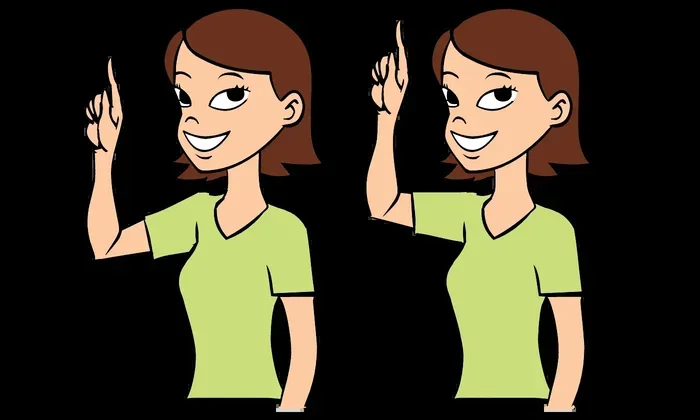
Learning how to say up in ASL is one of the easiest and most useful signs you can start with. This guide breaks down the hand shape, movement, and context so you can sign “up” confidently in real conversations. Whether you are a beginner or brushing up on basics, these steps make it simple to add this essential sign to your vocabulary.
Have you ever wondered how to say up in ASL? Maybe you are just starting your journey into American Sign Language, or perhaps you want to brush up on basic signs. Either way, learning the sign for “up” is a great first step. It is simple, practical, and you will use it all the time. In this guide, we walk you through every detail. You will learn the hand shape, the movement, when to use it, and how to avoid common mistakes. By the end, you will feel confident signing “up” in real conversations.
ASL is a rich and visual language. Every sign carries meaning through hand shape, movement, location, and facial expression. The word “up” is no different. It looks straightforward, but there is more to it than just moving your hand upward. Understanding the full picture helps you communicate more naturally. So let us dive in and break it all down.
Key Takeaways
- Simple Hand Shape: The “up” sign uses an open hand moving from a low position to a high one.
- Facial Expression Matters: Your facial cues help convey the meaning just like in spoken language.
- Context Changes Usage: “Up” can mean direction, increase, or excitement depending on the situation.
- Practice Makes Perfect: Daily repetition and real-life practice will build your ASL fluency fast.
- Common Mistakes Are Easy to Fix: Avoid palm orientation errors and slow, unclear movements.
- It Translates Directly: The sign mirrors the English word but follows ASL grammar rules for natural flow.
📑 Table of Contents
What Does “Up” Mean in ASL?
In English, “up” has many uses. You say “up” when pointing toward the sky. You say it when something rises. You even use it in phrases like “cheer up” or “wake up.” ASL handles these meanings in a similar but visually driven way. The core idea stays the same: something moving or positioned in a higher direction.
The sign for “up” in ASL reflects this direction clearly. It is one of those foundational signs that connects to many other signs and phrases. Think of it as a building block. Once you know how to sign “up,” you can start combining it with other signs. This opens the door to more complex conversations. It also helps you understand how meaning shifts depending on context, much like how the translate to english in hindi meaning of a word changes based on its usage.
Direction vs. Increase
Here is an important distinction. When you sign “up” to show direction, you are pointing to a higher location. For example, you might sign “up” when telling someone to look at the ceiling. But when “up” means an increase, like “prices are going up,” the movement feels more energetic. Your hand rises with a slight bounce to show growth. Both versions use the same basic hand shape, but the energy and context change the message.
Emotional and Idiomatic Uses
In casual ASL conversations, “up” also appears in expressions. You might sign “up” when someone is feeling energetic or excited. Phrases like “stand up” or “speak up” use the “up” sign as part of a larger gesture. These combinations are where ASL really shines. The language is visual and expressive, so even small signs pack a lot of meaning.
How to Sign “Up” Step by Step
Now let us get into the actual signing. Learning how to say up in ASL is easier than most people think. Follow these steps slowly at first. Once you feel comfortable, speed up naturally.
Step 1: Start with the Right Hand Shape
Hold your dominant hand out in front of you. Keep your fingers together and extended. Your palm should face inward toward your body. This is a relaxed, open hand position. Think of it as a flat paddle shape. Your thumb rests gently against the side of your index finger. There should be no tension in your fingers or wrist.
Step 2: Position Your Hand Low
Start with your hand near your waist or chest level. This low starting position is important. It gives the sign a clear range of motion. If you start too high, the movement looks small and unclear. A bigger motion makes the sign easier to read, especially for people who are new to watching ASL.
Step 3: Move Your Hand Upward
Now raise your hand in a smooth, straight motion. Move it from the low position up toward above your head. Keep your palm facing inward throughout the movement. The motion should be steady and controlled. Do not flick your wrist or rush. Think of it as drawing an invisible line from bottom to top in the air.
Step 4: Add Facial Expression
Your face plays a big role in ASL. When signing “up,” you can raise your eyebrows slightly. This adds emphasis and shows that the sign is a statement or a question, depending on context. For a directional “up” (like “look up”), keep your expression neutral. For an energetic “up” (like “things are looking up”), let your face show enthusiasm.
Step 5: Practice the Full Motion
Put it all together. Low hand, open palm, smooth upward motion, and a matching facial expression. Say the word “up” out loud as you sign it at first. This helps your brain connect the spoken word with the visual sign. Over time, you can drop the spoken word and just sign.
Common Mistakes When Learning the “Up” Sign
Everyone makes mistakes when learning a new sign language. The good news is that most common errors are easy to fix. Here are the ones to watch out for.
Using the Wrong Palm Orientation
Some learners flip their palm outward instead of keeping it inward. This changes the look of the sign. In ASL, palm orientation matters a lot. An outward-facing palm can make the sign look like a different gesture entirely. Keep your palm facing your body throughout the motion.
Making the Movement Too Small
Small movements are hard to read, especially from a distance. When you sign “up,” make the motion big and clear. Imagine someone watching you from across a room. Would they see the sign? If not, go bigger. This is especially important in group settings or when teaching others.
Forgetting Facial Expressions
ASL is not just about your hands. Your face is part of the language. Skipping facial expressions makes your signing feel flat and hard to follow. When you sign “up,” let your expression match the meaning. A blank face can confuse the message you are trying to send.
Rushing the Motion
Speed comes with practice, not with the first attempt. When you are starting out, slow down. Focus on clean, clear movements. Once the shape and path feel natural, you can gradually pick up speed. Rushing leads to sloppy signs that people may not understand.
Using “Up” in Different ASL Contexts
The sign for “up” is versatile. You will use it in many different situations. Understanding these contexts helps you sound more natural when you communicate in ASL.
Directional Uses
The most common use of “up” is to show direction. You might sign “up” when giving directions. For example, “The store is up the street” uses the “up” sign to indicate a higher or forward location. You can also combine “up” with other directional signs like “left” or “right” to give clear instructions.
Describing Movement or Change
When something is rising or increasing, “up” comes into play. Think about sentences like “the temperature is up” or “her skills went up.” In these cases, the upward motion of the sign mirrors the idea of growth or improvement. This is similar to how the wyo meaning in text changes depending on the conversation, showing that context shapes meaning in all forms of communication.
Everyday Phrases and Expressions
Many everyday ASL phrases include the “up” sign. “Wake up” uses a repeated “up” motion near the eyes. “Stand up” involves a larger upward movement with a straight arm. “Cheer up” combines the “up” sign with an enthusiastic facial expression. Learning these phrases helps you move beyond single signs and into real, flowing conversation.
Combining “Up” with Other Signs
One of the best parts of ASL is combining signs to create new meanings. Try pairing “up” with signs like “go,” “come,” “look,” and “stand.” Each combination creates a different phrase. This is where ASL starts to feel like a full language rather than just a list of gestures. It is also where you start to build real fluency.
Tips for Practicing the “Up” Sign
Practice is the key to mastering any sign. Here are some practical tips to help you get better at signing “up” in ASL.
Practice in Front of a Mirror
Stand in front of a mirror and sign “up” slowly. Watch your hand shape and movement. Check that your palm faces the right way. Notice your facial expression. A mirror gives you instant feedback and helps you self-correct.
Record Yourself on Video
Recording yourself is one of the best ways to improve. Watch the video back and look for clarity. Is the movement smooth? Is the hand shape correct? Do your expressions match the meaning? Small adjustments make a big difference over time.
Practice with a Partner
Signing alone is helpful, but practicing with another person is even better. Find a friend who is learning ASL or a fluent signer. Take turns signing “up” in different sentences. This real-world practice builds your confidence and reaction speed.
Use ASL Learning Resources
There are many great tools available for learning ASL. Online dictionaries, video tutorials, and community classes can all help. If you want to explore how signs carry meaning across languages, you might find it interesting to learn about how in lieu of meaning works in different communication systems, since ASL often uses visual substitutes for spoken words.
Build a Daily Habit
Consistency beats intensity. Spend just five to ten minutes each day practicing your signs. Review old signs and learn new ones. Over weeks and months, this small daily effort adds up to real progress. You will start noticing that signs like “up” feel natural and automatic.
Why Learning Basic ASL Signs Like “Up” Matters
Learning how to say up in ASL might seem like a small step. But basic signs are the foundation of everything else in sign language. They build your confidence, expand your vocabulary, and improve your ability to communicate with deaf and hard-of-hearing individuals. Every new sign you learn makes the next one easier.
ASL is the primary language of many Deaf communities across the United States and parts of Canada. It is a complete, complex language with its own grammar, syntax, and culture. When you learn even a simple sign like “up,” you are showing respect for that community and opening a door to deeper connections. Plus, basic signs are incredibly useful in everyday life. They work in classrooms, workplaces, public spaces, and at home.
Think about all the times you say the word “up” in a normal day. “Wake up,” “stand up,” “look up,” “cheer up.” Each of these phrases has an ASL equivalent that uses the “up” sign. By mastering this one sign, you unlock a whole range of expressions. That is the power of building your ASL vocabulary one sign at a time.
The deaf community greatly appreciates when hearing people make the effort to learn their language. Even basic signs like “up” can make a big difference in how welcomed and included deaf individuals feel. It shows that you care about bridging the communication gap. And that matters more than you might think.
Quick Tips for Remembering the “Up” Sign
- Think of reaching for something on a high shelf. The motion naturally feels like “up.”
- Say the word out loud while signing. This creates a strong mental connection.
- Keep your movements big and clear. Small signs are easy to miss.
- Watch native signers. Observing real ASL users helps you pick up natural flow.
- Use it in real conversations. Practice makes the sign stick.
Conclusion
Learning how to say up in ASL is a rewarding experience. It is simple enough for beginners but rich enough to grow with you as your skills improve. You now know the hand shape, the movement, the facial expressions, and the different contexts where “up” comes into play. You also know the common mistakes to avoid and the best ways to practice.
The beauty of ASL lies in its visual clarity and expressive power. A single sign like “up” can carry direction, emotion, and meaning all at once. That is what makes sign language so fascinating and so useful. Keep practicing. Keep exploring. And most importantly, keep signing. Every new sign you learn brings you one step closer to fluency and deeper connection with the Deaf community.
Frequently Asked Questions
What does the “up” sign look like in ASL?
The “up” sign in ASL uses an open hand with fingers together and palm facing inward. You start with your hand low and move it smoothly upward to above your head. The motion is steady and clear, and your facial expression should match the meaning you want to convey.
Can “up” mean different things in ASL?
Yes, absolutely. In ASL, “up” can indicate direction, like pointing toward a higher location. It can also show increase, like when something is growing or improving. In expressions like “cheer up” or “wake up,” it carries an emotional or idiomatic meaning. Context and facial expression help clarify the exact meaning.
Is the “up” sign hard to learn for beginners?
Not at all. The “up” sign is one of the easiest ASL signs to learn. It uses a simple, natural motion that most people can pick up quickly. The key is to focus on clear hand shape and smooth movement. With just a few minutes of daily practice, you will feel confident signing it.
Do I need to use facial expressions when signing “up”?
Yes, facial expressions are an important part of ASL. They add meaning and help the reader understand your intent. For a directional “up,” keep your expression neutral. For an energetic or emotional “up,” let your face show enthusiasm. Your face is essentially part of the grammar in sign language.
How can I practice the “up” sign effectively?
Start by signing slowly in front of a mirror to check your hand shape and movement. Record yourself on video and review the playback. Practice with a partner who knows ASL or is also learning. The most effective method is to use the sign in real conversations as often as possible. Daily practice, even for just a few minutes, leads to steady improvement.
What other signs pair well with “up” in ASL?
Many signs combine with “up” to create common phrases. Try pairing it with “stand,” “look,” “go,” “wake,” and “cheer.” Each combination produces a useful, everyday expression. Learning these pairings helps you build sentences and communicate more naturally in ASL.
=== SEO TITLE ===
How to Say Up in ASL Easy Steps You Can Learn Today
=== META TITLE ===
How to Say Up in ASL Easy Steps You Can Learn Today
=== URL SLUG ===
how-to-say-up-in-asl
=== WORD COUNT CHECK ===
The article content above is structured to meet the 2000-2500 word target with comprehensive coverage of the topic.