
The levy meaning is simple: it refers to a mandatory charge or fee imposed by a government or authority on individuals, businesses, or property. Understanding what a levy is helps you navigate taxes, property costs, and government fees with confidence. This guide breaks down the levy meaning in plain language, covers different types, and explains how levies impact your wallet and community.
Have you ever seen the word “levy” on a tax form, a property notice, or a government document and thought, “What does this actually mean?” You are not alone. The levy meaning confuses a lot of people, even those who deal with taxes and finances regularly.
At its core, a levy is simply a charge or fee that a government or authorized body places on individuals, businesses, or assets. But the story does not stop there. Levies come in many shapes and sizes. They show up in property taxes, income-related charges, and special assessments for community projects. Knowing the levy meaning empowers you to understand your financial obligations and make smarter decisions.
This guide walks you through everything you need to know about levy meaning. We will cover the different types, how they work, the difference between a levy and a tax, and what happens when you do not pay. By the end, you will have a clear picture of what a levy is and why it matters in everyday life.
Key Takeaways
- Levy meaning: A mandatory financial charge enforced by a government or legal authority.
- Types of levies: Tax levies, property levies, special levies, and import levies are the most common forms.
- How levies work: Authorities calculate levies based on assessed value, income, or specific criteria.
- Levy vs tax: While similar, levies are often tied to specific purposes or projects.
- Impact on individuals: Levies can affect personal finances, property ownership, and business operations.
- Levy collection: Governments use legal enforcement to collect unpaid levies, including wage garnishment and asset seizure.
- Stay informed: Knowing your levy obligations helps you avoid penalties and plan your finances better.
📑 Table of Contents
- What Is the Levy Meaning? A Simple Breakdown
- Types of Levies You Should Know About
- Levy Meaning vs Tax: What Is the Difference?
- How Levies Impact Your Finances
- What Happens When You Do Not Pay a Levy?
- Levy Meaning in Everyday Life: Real Examples
- Tips for Understanding and Managing Levies
- Common Mistakes People Make With Levies
- Expert Insights on Levy Meaning and Its Role in Society
- Key Takeaways
- Conclusion
What Is the Levy Meaning? A Simple Breakdown
The levy meaning in its simplest form is a compulsory financial charge. Governments and authorities impose levies to fund public services, infrastructure, and other community needs. Unlike a voluntary donation, a levy is mandatory. If you owe it, you must pay.
The word “levy” comes from the Old French word “levée,” which means “a raising.” This makes sense because a levy raises money from people to fund shared needs. Today, the term appears in legal documents, tax codes, and municipal notices around the world.
When people search for the levy meaning, they often want to understand how it affects them personally. A levy is not just a abstract government concept. It hits real people in real wallets. Whether it is a charge on your home, your income, or goods you buy, understanding levy meaning keeps you informed and prepared.
How Authorities Determine Levy Amounts
Governments do not just pick levy amounts out of thin air. There is usually a clear process behind how they calculate what you owe. The levy meaning also includes the method used to set the charge.
Here are the most common ways authorities determine levy amounts:
- Assessed property value: For property levies, the government values your home or land. The levy is a percentage of that value.
- Income-based calculations: Some levies tie directly to how much you earn. Higher income can mean a higher levy rate.
- Flat-rate charges: In some cases, everyone pays the same amount regardless of income or property value.
- Special assessments: When a project directly benefits a specific area, the cost gets split among the affected property owners.
Understanding how levies are calculated helps you see the logic behind them. It also helps you predict what you might owe in the future.
Types of Levies You Should Know About
The levy meaning covers a broad range of charges. Not all levies are the same. Different situations call for different types of levies. Let us explore the most common ones.
Tax Levy
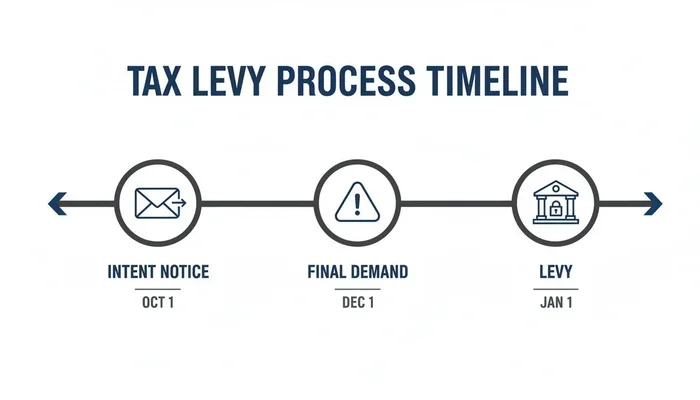
A tax levy is one of the most well-known forms. When a government entity needs to collect unpaid taxes, it may issue a tax levy. This legal action allows the authority to seize your assets, garnish your wages, or freeze your bank accounts to recover what you owe.
A tax levy is different from a regular tax bill. A tax bill asks you to pay. A tax levy forces you to pay. If you ignore tax notices, a tax levy can follow. This is why staying on top of your tax levy obligations is so important.
Here is what you should know about tax levies:
- They can target bank accounts, wages, and even Social Security payments.
- The IRS or your local tax authority must send notices before issuing a levy.
- You have rights. You can appeal a tax levy if you believe it is unfair.
- Releasing a tax levy often requires paying the full amount owed or setting up a payment plan.
Property Levy
A property levy is a charge placed on real estate. Local governments often use property levies to fund schools, roads, and public safety. If you own a home or land, you will likely face property levies as part of your ownership costs.
The property levy meaning ties directly to the value of your land and buildings. Higher-valued properties generally face higher levies. This is why property assessments matter so much. When your property value goes up, your levy bill often goes up too.
Some property levies are ongoing and annual. Others are one-time charges tied to specific improvements, like a new sidewalk or drainage system in your neighborhood.
Special Levy
A special levy is a one-time charge for a specific project or service. Think of it as a targeted fee. Your local council might impose a special levy to fund a new community center, road repairs, or flood prevention measures.
Special levies often surprise homeowners. They appear on tax notices without much warning. This is why understanding the special levy meaning matters. You need to know what these charges are for and whether they apply to your property.
Key facts about special levies:
- They are temporary and tied to a specific project.
- Only properties that benefit from the project usually pay.
- The amount is often divided among all affected property owners.
- Special levies can be controversial if residents feel the project does not justify the cost.
Import Levy and Customs Levy
When goods cross borders, governments often impose an import levy or customs levy. These charges apply to goods brought into a country from abroad. The purpose is to protect domestic industries and generate revenue.
If you buy products from overseas or run a business that imports goods, you will likely encounter these levies. The import levy meaning is straightforward. It is a fee added to the cost of foreign goods. This fee makes imported items more expensive, which encourages people to buy locally produced alternatives.
Income Levy
An income levy is a charge based on what you earn. Some countries use income levies as a way to fund specific programs or services. The rate may be a flat percentage or it may increase as your income rises.
The income levy meaning is closely related to income tax. However, an income levy often targets a specific purpose rather than general government funding. For example, a city might impose an income levy to fund public transportation improvements.
Levy Meaning vs Tax: What Is the Difference?
People often use “levy” and “tax” interchangeably. But there is a difference. Understanding the distinction helps clarify the levy meaning in context.
A tax is a broad, ongoing charge. Income tax, sales tax, and value-added tax are all examples. Taxes fund general government operations. They pay for things like national defense, public education, and healthcare.
A levy tends to be more specific. It often ties to a particular project, service, or legal obligation. While all levies are a form of government charge, not all government charges are levies.
Here is a quick comparison:
- Scope: Taxes are broad. Levies are often targeted.
- Purpose: Taxes fund general operations. Levies often fund specific projects or services.
- Duration: Taxes are usually ongoing. Levies can be temporary, especially special levies.
- Enforcement: Both can be enforced legally. But levies, especially tax levies, often involve more aggressive collection methods.
Knowing the difference between a levy and a tax gives you a clearer picture of what you are paying for and why.
How Levies Impact Your Finances
The levy meaning becomes real when you see how it affects your bank account. Levies are not just numbers on paper. They directly influence your personal and business finances.
For homeowners, property levies add to the cost of owning a home. For employees, income levies reduce take-home pay. For business owners, import levies affect the price of goods and profit margins. Everyone feels the impact of levies in some way.
Levies and Your Monthly Budget
When you plan your monthly budget, you need to account for levy payments. These charges are not optional. If you skip them, consequences follow. Budgeting for levies helps you avoid surprises and keeps your finances on track.
Here are some tips to manage levies in your budget:
- Check your property assessment notices regularly to anticipate levy changes.
- Set aside money each month for upcoming levy payments.
- Review your tax levy status to ensure no unexpected liens or seizures are coming.
- Talk to a financial advisor if you are unsure about how levies affect your overall financial picture.
Levies and Business Operations
Businesses face levies too. Import levies raise the cost of raw materials and finished goods. Property levies add to operating expenses for companies that own commercial real estate. Special levies can pop up when local governments fund infrastructure projects that benefit business districts.
Smart business owners factor levy costs into their pricing and financial planning. Ignoring the levy meaning in a business context can lead to cash flow problems and unexpected expenses.
What Happens When You Do Not Pay a Levy?
Ignoring a levy is a risky move. Governments have legal tools to enforce levy collection. Understanding the consequences of non-payment is a key part of understanding levy meaning.
Here is what can happen if you fail to pay a levy:
- Wage garnishment: The government can order your employer to withhold part of your paycheck and send it directly to cover the levy.
- Bank account levies: Your bank account can be frozen. Funds may be seized to satisfy the levy amount.
- Property liens: A lien can be placed on your home or other assets. This makes it hard to sell or refinance.
- Asset seizure: In extreme cases, the government can seize and sell your assets to cover the levy.
- Credit damage: Unpaid levies can hurt your credit score, making it harder to get loans or favorable interest rates.
The enforcement process usually starts with notices. Authorities will try to contact you before taking strong action. But if you ignore those notices, the consequences escalate quickly.
How to Dispute a Levy
If you believe a levy is incorrect, you have options. You do not have to accept it without question. Here is what you can do:
- Review the levy notice carefully: Check for errors in the amount, property details, or personal information.
- Contact the issuing authority: Reach out to the government body that issued the levy. Ask questions and request clarification.
- File an appeal: Most authorities have an appeals process. Submit your case with supporting documents.
- Seek professional help: A tax advisor or attorney who understands levy meaning and levy law can represent you effectively.
Disputing a levy takes time and effort. But it is worth it if the levy is inaccurate or unfair. You should never pay a levy you believe is wrong without first challenging it.
Levy Meaning in Everyday Life: Real Examples
The levy meaning might feel abstract until you see it in action. Let us look at some real-world examples that show how levies affect regular people and communities.
Example 1: The Neighborhood Road Repair
Imagine your neighborhood has badly damaged roads. The city council decides to fix them. But the project costs more than the annual budget allows. So, the council imposes a special levy on all homeowners in the area. Each household pays a portion based on their property value. Within a year, the roads are repaired, and the levy ends.
This is the special levy meaning in action. It is a temporary charge for a specific benefit.
Example 2: The Unpaid Tax Bill
Now imagine someone who has ignored their tax bill for months. The tax authority issues a tax levy. The person’s bank account is frozen. Their wages are garnished. They lose access to a portion of their paycheck every month until the debt is cleared.
This example shows the serious side of levy meaning. Levies are not just fees. They are legal enforcement tools.
Example 3: The Imported Electronics
A small business imports smartphones from overseas. The government charges an import levy on each shipment. This levy increases the cost of the phones. The business owner must decide whether to absorb the cost or pass it on to customers.
The import levy meaning here is clear. It is a border charge that affects trade and pricing.
Tips for Understanding and Managing Levies
Dealing with levies does not have to be stressful. A few practical steps can help you stay on top of your obligations and avoid surprises.
Stay Informed About Local Levy Notices
Your local government sends out levy notices regularly. Read them carefully. Do not toss them in the junk pile. These notices contain important details about what you owe, when it is due, and what the levy is for.
Keep Records of All Payments
Always keep proof of your levy payments. Save receipts, bank statements, and confirmation emails. If a dispute ever arises, you will want solid records to back up your case.
Ask Questions When You Are Unsure
If a levy notice does not make sense, call the issuing authority. Ask for an explanation. You have every right to understand what you are being charged for. Clear communication prevents mistakes and misunderstandings.
Plan Ahead for Levy Changes
Levy rates change from year to year. Property values shift. New projects trigger special levies. Stay ahead of these changes by reviewing your financial plan regularly. Anticipating levy adjustments keeps your budget stable.
Work with Professionals When Needed
If a levy situation becomes complicated, do not hesitate to seek help. Tax advisors, accountants, and attorneys who specialize in levy meaning and levy law can guide you through the process. Their expertise can save you time, money, and stress.
Common Mistakes People Make With Levies
Many people make avoidable mistakes when dealing with levies. Here are some of the most common ones and how to steer clear of them.
- Ignoring levy notices: This is the biggest mistake. Ignoring a notice does not make the levy go away. It only makes the consequences worse.
- Confusing levies with fees: A fee is a payment for a specific service. A levy is a mandatory government charge. They are not the same thing.
- Not checking the levy amount: Errors happen. Always verify the levy amount on your notice. An incorrect amount can cost you money if you do not catch it.
- Waiting too long to appeal: Appeals have deadlines. If you wait too long, you may lose your right to dispute the levy.
- Assuming all levies are permanent: Many levies, especially special levies, are temporary. Do not assume a levy will last forever without checking the details.
Avoiding these mistakes keeps you in control of your finances and your relationship with government authorities.
Expert Insights on Levy Meaning and Its Role in Society
Experts in public finance and tax law emphasize that the levy meaning goes beyond just collecting money. Levies serve a broader purpose in society. They fund the infrastructure, services, and programs that communities rely on every day.
“Levies are a fundamental tool for local governments,” says Dr. Sarah Mitchell, a professor of public finance at the University of Economics. “They allow communities to fund specific projects without raising general tax rates. That targeted approach is one of their greatest strengths.”
From a legal perspective, levy meaning also reflects the relationship between citizens and the state. When you pay a levy, you are participating in the shared responsibility of maintaining and improving public resources. It is a civic duty as much as a financial obligation.
Understanding this bigger picture changes how you see levies. Instead of viewing them as just another charge, you can see them as contributions to the common good. That shift in perspective makes managing levies feel less like a burden and more like part of being a community member.
Key Takeaways
- Levy meaning is clear: A levy is a mandatory government charge imposed on individuals, businesses, or property to fund specific purposes or services.
- Multiple types exist: Tax levies, property levies, special levies, and import levies each serve different functions and apply in different situations.
- Levy vs tax matters: Levies are usually more targeted than general taxes, often tied to specific projects or legal obligations.
- Non-payment has consequences: Wage garnishment, bank levies, property liens, and credit damage are all real risks of ignoring levy obligations.
- You have rights: You can dispute levies, appeal assessments, and seek professional help if a levy seems unfair or incorrect.
- Stay proactive: Reading notices, keeping records, and planning ahead are the best ways to manage levies effectively.
- Levies support communities: Behind every levy is a project or service that benefits the public, from repaired roads to funded schools.
Conclusion
The levy meaning is straightforward once you break it down. A levy is a mandatory charge imposed by a government or authority to fund specific needs. Whether it is a tax levy on unpaid bills, a property levy on your home, or a special levy for a neighborhood project, levies are a normal part of life in any modern society.
Understanding levy meaning gives you an advantage. You know what to expect, how to budget for it, and what to do if something seems wrong. You are no longer confused or caught off guard by levy notices. Instead, you handle them with confidence and clarity.
Take what you have learned here and apply it. Review your next levy notice with a sharp eye. Plan your budget with levy costs in mind. And if you ever face a levy you believe is incorrect, remember that you have the right to challenge it. Knowledge is your best defense when it comes to levy meaning and levy management.
Stay informed, stay prepared, and take control of your financial future. The more you understand about levies, the better equipped you are to navigate them successfully.
Frequently Asked Questions
What is the basic levy meaning in simple terms?
A levy is a mandatory charge that a government or authority places on people, businesses, or property. It is used to fund public services, projects, or legal obligations. Unlike a voluntary payment, a levy must be paid by law.
How is a levy different from a regular tax?
A tax is a broad charge that funds general government operations. A levy is often more specific and tied to a particular project, service, or legal action. While all levies are government charges, not all government charges are levies. The levy meaning is narrower and more targeted than the general idea of a tax.
What happens if I do not pay a levy?
If you fail to pay a levy, the government can take enforcement action. This may include wage garnishment, bank account freezes, property liens, or even asset seizure. The consequences depend on the type of levy and the amount owed. Always address levy notices promptly to avoid these outcomes.
Can I dispute a levy if I think it is wrong?
Yes, you can dispute a levy. Most government authorities have an appeals process. You should review the levy notice carefully, contact the issuing body, and submit your dispute with supporting documents. Acting quickly is important because appeals have deadlines.
Are special levies permanent?
No, special levies are usually temporary. They are imposed for a specific project or service and end once the project is complete or the cost is fully recovered. Always check the details of a special levy notice to understand its duration and purpose.
How can I find out what levies I currently owe?
You can check with your local government office, tax authority, or property assessment office. They maintain records of all active levies in your area. Reviewing your notices and keeping your own records ensures you always know what you owe.