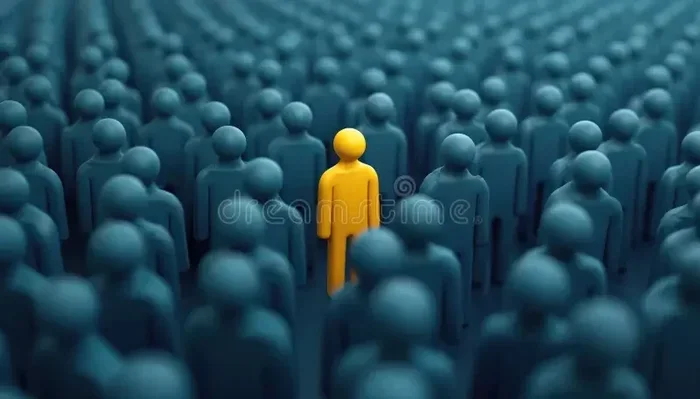
The idiosyncrasy meaning refers to a unique, individual trait or behavior that sets a person apart from others. These personal quirks shape how we think, react, and interact with the world every single day. Understanding your own idiosyncrasies can boost self-awareness, improve relationships, and help you embrace what makes you genuinely you.
The idiosyncrasy meaning might sound like a big, fancy word. But the idea behind it is simple and something you experience every day. An idiosyncrasy is just a unique trait, habit, or behavior that belongs to one specific person. Think of it as your personal fingerprint on the way you live, think, and act.
Why does this matter? Because these little quirks shape who you are. They influence your choices, your reactions, and even how others see you. Whether it is the way you always organize your desk or the specific song that lifts your mood, these individual quirks tell a story about you. In this article, we will break down the idiosyncrasy meaning in plain language and show you why paying attention to these traits can change your life for the better.
Key Takeaways
- Idiosyncrasy meaning: A unique, personal trait or behavior that is specific to an individual and not shared by others.
- Everyone has them: Idiosyncrasies are a natural part of human psychology and appear in every culture and age group.
- They matter in relationships: Understanding personal quirks helps build stronger, more empathetic connections with others.
- Workplace value: Unique traits can boost creativity, problem-solving, and innovation in professional settings.
- Language has quirks too: Idiosyncrasies appear in how people use words, phrases, and communication styles.
- Embrace, don’t suppress: Accepting your individual traits leads to greater confidence and mental well-being.
📑 Table of Contents
- The Simple Idiosyncrasy Meaning
- Where Do Idiosyncrasies Come From?
- Examples of Idiosyncratic Behavior in Daily Life
- Idiosyncrasy in Psychology and Mental Health
- Idiosyncrasies in Language and Communication
- How to Embrace Your Unique Traits
- The Bigger Picture: Why Idiosyncrasies Matter for Society
- Conclusion
The Simple Idiosyncrasy Meaning
At its core, the idiosyncrasy meaning is straightforward. It refers to a distinctive or peculiar trait that belongs to a single person. The word comes from Greek roots. “Idios” means one’s own, and “synkrasis” means blending. So an idiosyncrasy is essentially your own unique blend of characteristics.
These traits can show up in many ways. Some people have a peculiar habit of tapping their fingers when they think. Others have a strong preference for certain textures or sounds. Some individuals always take a specific route to work, even if a faster option exists. None of these are wrong. They are simply personal idiosyncrasies that make each person different.
The idiosyncrasy meaning is not about being weird or strange. It is about being authentically you. Every person on this planet has a set of these unique features. They are part of what makes human beings so diverse and interesting. When you understand this, you stop seeing your quirks as flaws and start seeing them as strengths.
Let us look at a quick comparison of how idiosyncrasies show up in different areas of life.
| Area of Life | Example of Idiosyncrasy | Why It Matters |
|---|---|---|
| Daily Habits | Always drinking water from a specific cup | Creates comfort and routine |
| Work Style | Listening to music while solving problems | Boosts focus and creativity |
| Communication | Using unique phrases or expressions | Shows individual personality |
| Emotional Reactions | Needing silence when stressed | Reveals coping mechanisms |
| Physical Behavior | Humming while cooking | Reflects subconscious comfort |
As you can see, idiosyncratic behavior is everywhere. It is not something to fix or change. It is something to understand and accept.
Where Do Idiosyncrasies Come From?
Now that we know the idiosyncrasy meaning, you might wonder where these traits come from. The answer is not simple. A mix of factors shapes who you are and what makes you unique. Let us explore the main sources.
Genetic and Biological Factors
Your DNA plays a big role in shaping your personality. Research in behavioral genetics shows that many traits run in families. If your parent is a night owl, you might be one too. If your sibling has a quirky sense of humor, you might share it.
Brain chemistry also matters. The way your brain processes information creates unique behavioral patterns. Some people are naturally more sensitive to stimuli. Others are more laid back. These differences are not good or bad. They are simply part of your biological makeup.
Environmental Influences
Your surroundings shape you just as much as your genes do. The culture you grow up in, the family dynamics you experience, and the communities you join all leave a mark.
For example, a child raised in a loud household might develop a quiet idiosyncratic trait as a balance. Someone who traveled a lot as a kid might pick up unique habits from different cultures. These environmental factors mix with your biology to create a one-of-a-kind combination.
Personal Experiences and Learning
Your own life experiences add another layer. Traumatic events, joyful moments, and everyday lessons all contribute to your unique way of being. A bad experience with dogs might make you develop a specific eccentric behavior around animals. A positive experience with music might lead you to hum constantly.
These learned responses become part of your personality over time. They feel natural to you, even if they seem odd to others. This is the beauty of the idiosyncrasy meaning it is deeply personal and rooted in your own journey.
Examples of Idiosyncratic Behavior in Daily Life
You might be wondering what idiosyncratic behavior looks like in real life. Let us walk through some common examples. These are the kinds of things you or someone you know probably does every day.
In the Workplace
Have you ever noticed a coworker who always organizes their pens by color? Or someone who refuses to start a meeting without a specific snack? These are classic examples of workplace idiosyncrasies.
Some people need complete silence to focus. Others work best with background noise. Some leaders have a very specific way of giving feedback. These characteristic patterns are not random. They reflect how each person’s brain works best.
In fact, many companies now value these unique traits. A team made up of people with different individual differences tends to be more creative and innovative. When everyone thinks the same way, ideas get stale. When each person brings their own unique perspective, the results are often better.
In Personal Relationships
Idiosyncrasies show up in relationships too. Maybe your partner always checks the locks three times before bed. Or your best friend has a very specific way of ordering food at restaurants. These eccentric behaviors can be endearing once you understand them.
They also play a big role in how we communicate. Some people need time to process before responding in a conversation. Others jump in immediately. Both styles are valid. They are simply different behavioral patterns shaped by each person’s history and personality.
When you recognize these traits in the people you love, you build more patience and empathy. Instead of getting frustrated, you can appreciate what makes them special. This is one of the most practical benefits of understanding the idiosyncrasy meaning.
Idiosyncrasy in Psychology and Mental Health
Psychology has long studied the idiosyncrasy meaning and its role in human behavior. These unique traits are not just interesting. They are also important for mental health and personal growth.
When Quirks Become Concerns
Most of the time, idiosyncrasies are harmless. They add flavor and personality to who we are. But sometimes, a trait can become problematic. If a habit causes distress or interferes with daily life, it might need attention.
For example, a minor preference for symmetry is normal. But if the need to arrange objects perfectly causes hours of distress, it could signal something deeper. This is where the line between a quirky trait and a clinical concern becomes important.
Understanding this distinction helps people seek help when they need it. It also reduces stigma around mental health. Not every unusual behavior is a disorder. Many of them are simply part of being human.
The Role of Self-Awareness
One of the biggest benefits of exploring the idiosyncrasy meaning is building self-awareness. When you understand your own unique traits, you can make better choices.
Self-aware people know what triggers their habitual responses. They understand why they react certain ways in specific situations. This knowledge gives them power. They can adjust their behavior when needed, without losing their authentic selves.
Research in positive psychology shows that self-acceptance leads to greater happiness. When you embrace your personal quirks, you stop wasting energy trying to be someone else. That energy goes back into living a more fulfilling life.
Idiosyncrasies in Language and Communication
The idiosyncrasy meaning extends beyond behavior. It also applies to language. Every speaker has their own way of using words, phrases, and expressions. These linguistic idiosyncrasies are fascinating and deeply personal.
Think about how you describe things. Do you use a specific phrase that nobody else in your family uses? Do you have a unique way of greeting people? These are linguistic quirks that make your communication style one of a kind.
In the workplace, these differences can be both a challenge and an asset. A team where everyone communicates the same way might miss creative angles. A team with diverse communication styles brings fresh ideas to the table.
Even within a single language, idiosyncratic expressions vary widely. Some people say “I’m good” when asked how they are. Others say “I’m doing well.” Some people add filler words like “like” or “you know.” None of these are wrong. They are simply part of each person’s unique subjective interpretation of language.
Understanding this helps us become better listeners and communicators. When someone uses an unusual phrase or has a distinct speaking style, it is not something to judge. It is something to appreciate. It is another window into their idiosyncratic nature.
How to Embrace Your Unique Traits
Now that you understand the idiosyncrasy meaning and where it comes from, the next step is simple. Embrace it. Here are some practical ways to do that.
1. Practice Self-Observation
Take time to notice your own habits and preferences. What do you do that feels uniquely yours? Keep a journal if it helps. Writing things down makes patterns easier to spot.
Over time, you will see a clear picture of your personal idiosyncrasies. This awareness is the first step toward self-acceptance.
2. Share Your Quirks with Trusted People
When you feel safe, share your unique traits with people you trust. You might be surprised by how relatable they are. Most people have their own set of quirks. Opening up creates deeper connections.
3. Stop Comparing Yourself
Comparison is the enemy of self-acceptance. Your distinctive features are not better or worse than anyone else’s. They are just different. Focus on being the best version of yourself, not a copy of someone else.
4. Use Your Quirks as Strengths
Your unique traits can be superpowers. A strong preference for routine can make you reliable and organized. A creative eccentric behavior can fuel artistic expression. A deep need for alone time can make you a great thinker and problem solver.
Look at your characteristic patterns and ask yourself how they can serve you. This shift in mindset changes everything.
5. Build a Supportive Circle
Surround yourself with people who appreciate you for who you are. A supportive circle lets your true self shine. You do not have to hide your quirks or pretend to be someone else.
This does not mean you need a perfect social circle. It means you need people who respect your personal preferences and celebrate your individuality. Quality matters more than quantity here.
The Bigger Picture: Why Idiosyncrasies Matter for Society
Understanding the idiosyncrasy meaning is not just a personal exercise. It has broader implications for society as a whole.
Diverse communities are stronger communities. When people with different behavioral patterns come together, they bring a wide range of ideas and solutions. Innovation happens at the intersection of different perspectives.
Schools, workplaces, and communities all benefit from embracing individual differences. Instead of pushing everyone toward the same standard, we can create spaces where each person’s unique characteristic is valued. This leads to healthier, more creative, and more compassionate societies.
Research in organizational psychology confirms this. Teams that embrace diversity of thought and behavior outperform homogeneous groups. The same principle applies to families, friendships, and entire cultures. Our singular traits are not obstacles. They are assets.
The next time you notice something unique about yourself or someone else, pause. Instead of labeling it as strange, try to see it as a valuable part of the human experience. That shift in perspective can be transformative.
In the end, the idiosyncrasy meaning is really about one simple truth. You are not meant to be like everyone else. You are meant to be exactly who you are. And that is something worth celebrating.
Conclusion
The idiosyncrasy meaning is more than just a dictionary definition. It is a lens through which we can understand ourselves and others better. These unique traits are not quirks to fix. They are features to celebrate.
From the way you organize your space to the phrases you use in conversation, your personal idiosyncrasies tell the story of who you are. They connect you to your past, shape your present, and influence your future. Embracing them is one of the most powerful things you can do for your mental health and relationships.
So take a moment today. Reflect on what makes you different. Honor those differences. And remember that the things that make you feel a little “odd” might just be the things that make you extraordinary. The idiosyncrasy meaning is yours to define, and it is something truly beautiful.
Frequently Asked Questions
What does idiosyncrasy mean in simple terms?
In simple terms, an idiosyncrasy is a unique trait or habit that belongs specifically to one person. It is something that makes you different from everyone else in a small but noticeable way. These traits can be habits, preferences, reactions, or behaviors that feel natural to you but might seem unusual to others.
Is having idiosyncrasies a sign of a mental health issue?
No, having idiosyncrasies is completely normal and healthy. Everyone has unique traits that make them who they are. These personal quirks only become a concern if they cause significant distress or interfere with daily functioning. Most of the time, they are simply part of being human.
Can idiosyncrasies change over time?
Yes, they can evolve. As you grow and have new experiences, your behavioral patterns may shift. Some traits stay with you for life, while others fade or transform. This is a natural part of personal development and self-discovery.
Are idiosyncrasies the same as personality traits?
They are related but not the same. Personality traits are broader patterns of behavior and thinking. Idiosyncrasies are more specific and unique to an individual. A personality trait like introversion is shared by many people. An idiosyncratic behavior like always tapping your left foot is specific to you.
How can understanding the idiosyncrasy meaning improve my relationships?
When you understand that everyone has their own unique traits, you become more patient and empathetic. Instead of judging someone for being different, you can appreciate what makes them special. This understanding builds deeper trust and stronger connections in all types of relationships.
What are some common examples of idiosyncrasies?
Common examples include always using a specific mug, needing a certain routine before bed, humming while working, or having a unique way of greeting people. Some people have a distinctive feature in how they organize things or a particular phrase they use often. These are all normal and natural expressions of individuality.