
The pansexual meaning refers to the capacity to feel attraction to people regardless of their gender identity or biological sex. Pansexuality is an orientation on the broader LGBTQ+ spectrum that emphasizes connection based on personality, values, and emotional bonds rather than gender. Understanding the pansexual meaning helps foster inclusive language, greater acceptance, and deeper empathy in everyday conversations and relationships.
Have you ever heard someone use the word pansexual and wondered what it really means? You are not alone. Many people hear this term and feel confused about how it fits into the bigger picture of sexual orientation and gender identity. The pansexual meaning is simpler than most people think, but the conversations around it can be rich and deeply personal.
This guide breaks down everything you need to know. We will cover the pansexual definition, how it differs from bisexuality, the history behind the term, and why it really matters in today’s world. Whether you are exploring your own identity or just want to understand a friend better, this article has you covered.
The goal here is simple: give you clear, honest, and respectful information. No jargon. No assumptions. Just real talk about attraction, identity, and what it means to feel connected to another person.
Key Takeaways
- Pansexual meaning: Attraction to people regardless of gender, including those who are male, female, nonbinary, genderqueer, or anywhere else on the spectrum.
- It is not the same as bisexuality: While both fall under the bisexual umbrella, pansexuality specifically highlights gender-blind attraction.
- The term has deep roots: It evolved from early psychological and queer communities and has gained mainstream visibility in recent years.
- The pansexual flag uses pink, yellow, and blue: Each color represents a different part of the gender spectrum.
- Common myths persist: Many people wrongly assume pansexuality is just a phase or that it means attraction to everyone.
- Understanding matters: Knowing the pansexual meaning supports inclusive language, mental health, and stronger relationships.
- Self-discovery is personal: Labels like pansexual help some people feel seen, but no one owes anyone a label.
📑 Table of Contents
What Does Pansexual Mean?
The Simple Definition
At its core, the pansexual meaning is straightforward. A pansexual person feels romantic, emotional, or sexual attraction to people of all gender identities. This includes men, women, nonbinary individuals, genderqueer people, and anyone else on the gender spectrum. The key idea is that gender does not determine who a pansexual person finds attractive.
Think of it this way. When a pansexual person meets someone new, they do not first think about that person’s gender. Instead, they notice personality, humor, kindness, shared interests, and emotional chemistry. Gender simply does not act as a filter for attraction.
This is why many people describe pansexuality as being gender-blind or gender-free in terms of attraction. The word itself comes from the Greek prefix “pan,” which means “all.” So literally, it means attraction to all genders.
Where the Word Comes From
The term has roots in psychology and early discussions about human sexual orientation. In the early 20th century, researchers began exploring the idea that attraction was not strictly limited to two genders. Over time, the word gained traction in queer communities as a way to describe an experience that felt broader than what existing labels captured.
By the 2010s, pansexuality started appearing more frequently in mainstream media. Celebrities, activists, and everyday people began using the label to describe their experiences. Today, it is one of the most recognized terms on the LGBTQ+ spectrum.
Quick Tips for Understanding
- Pansexual and bisexual are not the same, though they overlap.
- The prefix “pan” means “all,” which hints at the core idea.
- Attraction for pansexual people can include romantic, emotional, and sexual dimensions.
- Gender identity and biological sex are not gatekeepers of attraction for pansexual individuals.
Pansexual vs Bisexual vs Omnisexual
Key Differences at a Glance
One of the most common questions people ask is how pansexuality differs from bisexuality. The truth is that these terms overlap, but they carry different nuances. Let us break it down.
Bisexuality traditionally means attraction to two or more genders. Some people interpret this as attraction to their own gender and other genders. Others see it as attraction to both men and women, with less focus on nonbinary identities. However, the modern bisexual definition has evolved significantly, and many bisexual people are fully inclusive of all gender identities.
Pansexuality goes a step further for some people. It emphasizes that gender is not a factor at all in who they find attractive. The attraction is based entirely on the person, not their place on the gender spectrum.
Omnisexuality is another related term. Omnisexual people are attracted to all genders, but they do notice gender as part of their attraction. In other words, gender plays a role for omnisexual people, even if they are attracted to many or all genders. For pansexual people, gender is not part of the equation.
| Aspect | Pansexual | Bisexual | Omnisexual |
|---|---|---|---|
| Core Attraction | Gender-blind; attraction to all people | Attraction to two or more genders | Attraction to all genders; gender noticed |
| Role of Gender | Not a factor in attraction | Varies by individual | Gender is noticed and plays a role |
| Common Symbol | Pansexual flag (pink, yellow, blue) | Bisexual flag (pink, purple, blue) | Omnisexual flag (pink, blue, purple) |
| Prefix Origin | Greek “pan” (all) | Latin “bi” (two) | Greek “omni” (all) |
| Overlap | Falls under the bisexual umbrella | Broader umbrella term | Falls under the bisexual umbrella |
Why the Distinction Matters
You might wonder why these distinctions even matter. The answer is simple: language shapes identity. For many people, finding the right label brings clarity, validation, and a sense of community. When someone says “I am pansexual,” they are describing a specific experience of attraction that feels different from bisexuality to them.
Respecting these distinctions also shows that we value people’s self-understanding. It tells them that their experience is real and worthy of recognition. That kind of validation can be incredibly powerful, especially for young people who are still figuring out who they are.
Common Mistakes People Make
- Assuming bisexuality excludes nonbinary people. Many bisexual people are fully attracted to all genders. The label does not limit them.
- Thinking pansexuality means attraction to everyone. Pansexual people still have preferences. They are not attracted to every single person they meet.
- Using these terms interchangeably without asking. Some people strongly identify with one label over another. Always respect how someone describes themselves.
The History and Evolution of the Term
Early Uses of the Word
The word pansexual has been around longer than most people realize. In the late 1800s and early 1900s, psychologists like Sigmund Freud used the term to describe the idea that sexual energy was a fundamental human drive present from birth. Freud’s pansexual theory suggested that all human behavior was rooted in sexual energy, even in children.
Of course, that early usage is very different from how the word is used today. Modern pansexuality has nothing to do with Freud’s theories. Instead, it is a self-identified label that belongs to the LGBTQ+ community and reflects lived experience.
The modern pansexual identity began taking shape in queer communities during the late 20th century. As people explored the full range of human sexual orientation and gender identity, they found that existing labels did not always fit. The term pansexual offered a way to describe attraction that was truly open to all genders.
How the Meaning Has Shifted
Over the past few decades, the pansexual meaning has continued to evolve. In the early 2000s, the term was still relatively niche. By the 2010s, it entered mainstream conversations through social media, television, and public figures who came out as pansexual.
Today, pansexuality is widely recognized as a valid and distinct sexual orientation. It sits comfortably within the broader bisexual umbrella, which includes any attraction to more than one gender. The sexual orientation spectrum is vast, and pansexuality is one of many beautiful points on that spectrum.
Expert Insight
Dr. Lisa Diamond, a researcher who studies sexual fluidity, has noted that labels like pansexual help people articulate experiences that rigid categories cannot capture. She emphasizes that sexual orientation is not always fixed and that sexual fluidity is a normal part of human experience. This research supports why many people feel the pansexual label fits their journey.
The Pansexual Flag and Symbols
What the Colors Represent
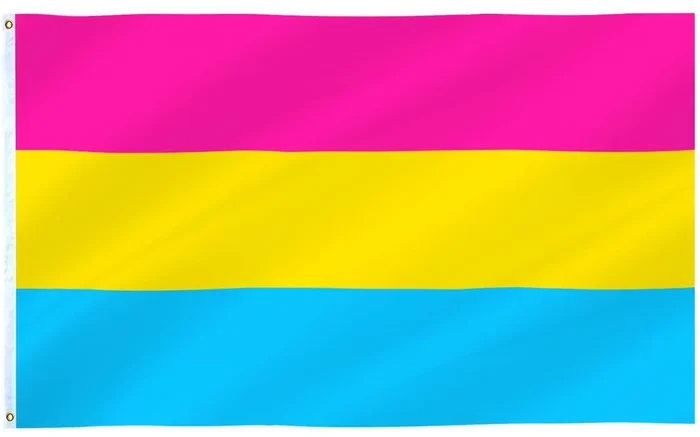
Every identity in the LGBTQ+ community often has its own flag, and the pansexual flag is no exception. The flag features three horizontal stripes: pink on top, yellow in the middle, and blue on the bottom.
Each color carries meaning:
- Pink represents women and female-identifying people.
- Blue represents men and male-identifying people.
- Yellow represents people who fall outside the gender binary, including nonbinary, genderqueer, and genderfluid individuals.
Together, the three colors show that pansexual attraction spans the entire gender spectrum. The flag is a powerful symbol of inclusivity and visibility.
Other Symbols of Pansexuality
Beyond the flag, other symbols help people express their pansexual identity. The pansexual symbol is often a lowercase “p” with a tail that resembles an arrow or a phoenix. Some people also use the double Venus and Mars symbols combined with a genderless circle.
These symbols matter because they give people a way to express their identity visually. They also help build community recognition. When someone sees the pansexual flag or symbol, they immediately know they are in a safe space with someone who understands their experience.
Common Myths and Misconceptions
Myth vs Reality
There is a lot of misinformation out there about pansexuality. Let us clear up some of the most common myths.
Myth 1: Pansexuality is just a fancy word for bisexuality. Reality: While the two overlap, many pansexual people feel that their experience is distinct. They emphasize that gender does not influence their attraction, which is not always the focus of bisexual identity.
Myth 2: Pansexual people are attracted to everyone. Reality: This is simply not true. Pansexual people have preferences, just like anyone else. They are not attracted to every person they meet. Attraction is selective and personal.
Myth 3: Pansexuality is a phase. Reality: For most people, their sexual orientation is a deep and stable part of who they are. Calling it a phase dismisses their experience and can cause real emotional harm.
Myth 4: Pansexual people are confused about their gender. Reality: The pansexual meaning is about who they are attracted to, not about their own gender. Many pansexual people are very clear about their own gender identity.
Myth 5: You can only be pansexual if you have dated people of multiple genders. Reality: Labels describe orientation, not experience. A person does not need to have dated multiple genders to identify as pansexual. Self-identification is what matters.
Quick Tips for Being a Better Ally
- Listen first. Let people define their own identity. Do not tell someone what their label should mean.
- Use inclusive language. Avoid assumptions about someone’s orientation based on who they date.
- Educate yourself. Read books, articles, and personal stories from pansexual voices.
- Correct misinformation gently. If you hear someone spreading myths, share facts with kindness.
- Respect privacy. Not everyone is comfortable sharing their orientation publicly. Never out someone without permission.
Why Understanding Pansexuality Matters
Building a More Inclusive World
Understanding the pansexual meaning is not just an academic exercise. It has real-world impact on people’s lives. When we take the time to learn about different sexual orientations, we build a world that is more empathetic, more welcoming, and more just.
Inclusive language plays a huge role here. When you use words like “partner” instead of assuming someone’s gender, or when you ask people what pronouns they use, you send a powerful message. You say, “I see you. I respect you. Your identity is valid.”
This matters especially for young people. Studies show that LGBTQ+ youth who feel supported and understood have significantly better mental health outcomes. They are less likely to experience depression, anxiety, and suicidal thoughts. Simple acts of understanding can literally save lives.
How You Can Show Support
If you want to be a better ally to pansexual people, here are practical steps you can take today:
- Educate yourself by reading resources from LGBTQ+ organizations like GLAAD, The Trevor Project, and PFLAG.
- Use inclusive language in your daily conversations. Avoid gendered assumptions about who someone might be attracted to.
- Amplify pansexual voices. Share articles, books, and content created by pansexual people.
- Challenge biphobia and panphobia when you see it, whether in person or online.
- Support LGBTQ+ rights and policies that protect people from discrimination based on sexual orientation.
- Check in with your pansexual friends and let them know you are there for them.
Expert Insight
Dr. Jack Turban, a psychiatrist specializing in gender identity and adolescent mental health, has emphasized that creating safe spaces for identity exploration is critical. He notes that when people feel free to explore labels like pansexual without judgment, they develop stronger self-esteem and healthier relationships. Inclusive environments are not just nice to have; they are essential for well-being.
The Role of Sexual Fluidity
It is also important to understand that sexual orientation is not always fixed. Many people experience sexual fluidity, meaning their attraction can shift over time or in different contexts. Some people identify as pansexual for years and then find a different label that fits better. Others move between labels throughout their lives.
This fluidity is completely normal. The attraction spectrum is broad, and human experience does not fit neatly into boxes. What matters most is that each person finds the language that feels true to them and that others respect that language.
Labels like pansexual, bisexual, queer, and omnisexual are tools. They help us understand ourselves and connect with others. But they are not cages. No one is required to stick with one label forever, and no label is more valid than another.
Coming Out and Self-Acceptance
The Journey of Self-Discovery
For many people, understanding the pansexual meaning is a turning point. It can bring relief, clarity, and a sense of belonging. When someone realizes that their feelings of attraction make sense within the pansexual definition, it can be an incredibly freeing moment.
However, the journey to self-acceptance is not always easy. Some people face rejection from family, friends, or communities. Others struggle with internalized shame or confusion. This is where support systems become vital. Friends, support groups, therapists, and online communities can make all the difference.
Coming Out on Your Own Terms
If you are considering coming out as pansexual, remember that there is no right or wrong way to do it. Some people tell their closest friends first. Others write a letter. Some share on social media. Whatever approach feels safest and most authentic to you is the right one.
Here are a few tips for navigating the coming-out process:
- Start with someone you trust. A supportive friend or family member can be a great first step.
- Prepare for different reactions. Some people will be supportive, and some may need time to adjust. Both responses are normal.
- You do not owe anyone an explanation. Your identity is valid whether or not others understand it.
- Seek community. Connecting with other pansexual people can provide validation and strength.
- Give yourself grace. Self-acceptance is a journey, not a destination. Be patient with yourself.
The Bigger Picture: Pansexuality in Today’s Culture
In recent years, pansexual visibility has grown significantly. More celebrities, athletes, and public figures have come out as pansexual, helping to normalize the conversation. This visibility matters because representation helps people feel less alone and more confident in their identity.
At the same time, there is still work to be done. Many people still confuse pansexuality with bisexuality or do not understand the distinction. Some people hold outdated beliefs about sexual orientation that do not reflect the richness of human experience. Education, empathy, and open conversation are the best tools we have to close these gaps.
The LGBTQ+ community is stronger when it is inclusive of all identities, including pansexuality. Every label on the attraction spectrum represents real people with real stories. Honoring those stories is what makes our communities more vibrant and more just.
Conclusion
The pansexual meaning is clear: it is the experience of feeling attraction to people regardless of their gender. It is a valid, meaningful, and important identity within the LGBTQ+ spectrum. Understanding pansexuality helps us build a more inclusive world where everyone can feel seen and respected.
Whether you identify as pansexual, know someone who does, or are simply curious about the attraction spectrum, the most important thing is to approach the topic with openness and respect. Labels are tools for self-understanding, not boxes that limit us. They help us connect, communicate, and celebrate the beautiful diversity of human experience.
Take what you have learned here and carry it forward. Use inclusive language. Challenge myths when you encounter them. Support the pansexual people in your life. And if the label pansexual ever resonates with you, know that it is valid, it is welcome, and it is understood.
The world is full of different kinds of love and attraction. Embracing that diversity is not just smart, it is essential. And understanding the pansexual meaning is one powerful step toward a kinder, more accepting world for everyone.
Frequently Asked Questions
Is pansexuality the same as bisexuality?
They overlap but are not identical. The pansexual meaning emphasizes gender-blind attraction, while bisexuality is traditionally defined as attraction to two or more genders. Some people use both labels for themselves, and others prefer one over the other. Both are valid orientations on the sexual orientation spectrum.
Can a pansexual person be monogamous?
Absolutely. Sexual orientation has nothing to do with relationship structure. A pansexual person can be monogamous, polyamorous, or choose any relationship style they prefer. Attraction and relationship preferences are separate aspects of a person’s identity.
Do pansexual people experience gender dysphoria?
Not necessarily. Pansexuality describes attraction, not gender identity. Some pansexual people are cisgender, some are transgender, and some are nonbinary. Gender identity and sexual orientation are separate dimensions of a person’s experience.
Is pansexuality considered part of the bisexual umbrella?
Yes. The bisexual umbrella includes any orientation that involves attraction to more than one gender. This includes bisexuality, pansexuality, omnisexuality, and other related identities. The umbrella is broad and inclusive by design.
How can I support a pansexual friend or family member?
Start by listening without judgment. Use the name and pronouns they prefer. Educate yourself about the pansexual meaning and avoid making assumptions. Simply being present, respectful, and supportive can make a huge difference in someone’s life.
Do I need to have dated multiple genders to identify as pansexual?
No. A sexual orientation label describes your pattern of attraction, not your dating history. You can identify as pansexual even if you have only dated one gender. What matters is how you experience attraction, not who you have been with.
=== END ===